Mountaineering & Climbing Hardware
Carabiners
71 products
This category covers Power Honour's main carabiner range: aluminium alloy and 7075 aluminium connectors with screw-gate, twist-lock and triple-lock locking gates, and non-locking straight, bent and wire gates. Most frames are listed between 22 and 28 kN on the major axis, with gate openings from 12 mm to 31 mm and weights from 30 g. The range also includes a steel quickdraw with quick link, a swivel carabiner, a parachute carabiner and a forged aluminium snap hook. Typical uses are climbing and mountaineering, belaying, rescue, rope access, arborist work and equipment racking. Climbing connectors are generally certified to EN 12275 or UIAA 121, and connectors used in fall protection to EN 362; the certification route should be defined per product and market. Every model can be supplied OEM or under a private label, or modified to a customer drawing.
Products
71 products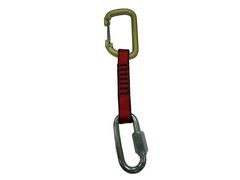 308WR-7350SQD
 Steel Quickdraw with Quick Link and Nylon Sling
308WR-7350SQD is a quickdraw made from one 308WR alloy steel carabiner, one 7350S-8 quick link and a nylon sling. The carabiner is rated at 35 kN and the sling at 22 kN, and the assembly is offered in 11, 17 and 25 cm lengths.
View product A005KNS
 7075 Aluminium Key-Lock Straight-Gate Carabiner
A005KNS is a non-locking key-lock carabiner in 7075 aluminium alloy with a solid straight gate, weighing 45 g. Rated at 24 kN major axis, 8 kN minor axis and 8 kN gate open, it is typical of the connectors used on sport-climbing quickdraws and gear racks.
View product A005KSG
 7075 Aluminium Key-Lock Screw-Gate Carabiner
A005KSG is a compact 7075 aluminium alloy screw-gate carabiner with a key-lock nose, weighing 50 g. It is rated at 24 kN major axis and 8 kN minor axis and gate open, making it a light locking connector for alpine, climbing and equipment-attachment roles.
View product A006WR
 7075 Aluminium Wire-Gate Carabiner
A006WR is a 30 g wire-gate carabiner in 7075 aluminium alloy with a 23.5 mm gate opening. Rated at 22 kN major axis, 7 kN minor axis and 8 kN gate open, it is a light non-locking connector for quickdraws, alpine racks and gear organisation.
View product A007WR
 7075 Aluminium Wire-Gate Carabiner with SS304 Wire
A007WR is a non-locking wire-gate carabiner with a 7075 aluminium alloy body and an SS304 stainless steel wire gate. It opens to 28 mm and is rated at 25 kN major axis, 7 kN minor axis and 8 kN gate open, for quickdraws and racking where easy clipping matters.
View product A11096KNB
 Aluminium Key-Lock Bent-Gate Carabiner
A11096KNB is a 40 g aluminium alloy carabiner with a key-lock nose and a solid bent gate, rated at 24 kN major axis, 8 kN minor axis and 7 kN gate open. The bent gate and 23 mm opening make it suited to the rope end of sport-climbing quickdraws.
View product A11096KNS
 Aluminium Key-Lock Straight-Gate Carabiner
A11096KNS is a non-locking aluminium alloy carabiner with a key-lock nose and solid straight gate, weighing 40 g. Rated at 24 kN major axis, 8 kN minor axis and 7 kN gate open, it fits the bolt end of quickdraws and general gear racking.
View product A11096KSG
 Aluminium Key-Lock Screw-Gate Carabiner
A11096KSG is a light aluminium alloy screw-gate carabiner with a key-lock nose, weighing 45 g. Rated at 24 kN major axis, 8 kN minor axis and 7 kN gate open, it serves as a compact locking connector for climbing and equipment-attachment tasks.
View product A12110KSG
 Aluminium Key-Lock Screw-Gate Carabiner
A12110KSG is an aluminium alloy key-lock carabiner with a manual screw gate, a 25 kN breaking strength and an 18 mm gate opening. It is a general-purpose locking connector for climbing, rope-work and rescue kits where the user closes the gate by hand.
View product A12110KTL
 Aluminium Key-Lock Twist-Lock Carabiner
A12110KTL is an auto-locking aluminium alloy carabiner with a twist-lock gate and key-lock nose, rated at 25 kN. With a listed 27 mm gate opening on a 115 x 59.5 mm frame, it is intended for users who want the gate to lock itself after every clip.
View product A12110KTL-3
 Aluminium Key-Lock Triple-Lock Carabiner
A12110KTL-3 is an aluminium alloy climbing carabiner with a triple-lock gate and key-lock nose, rated at 25 kN with a 17 mm gate opening. The triple-action gate is chosen where accidental opening must be made as unlikely as possible, for example in rope work, rescue and belaying.
View product A12116KSG
 Aluminium Key-Lock Screw-Gate Carabiner
A12116KSG is a 25 kN aluminium alloy carabiner with a key-lock nose and manual screw gate. Its 23 mm gate opening and 116.8 x 72.3 mm frame give room for a rope and several slings, making it a practical general locking connector for climbing and rope-work kits.
View product A12116KTL
 Aluminium Key-Lock Twist-Lock Carabiner
A12116KTL is an aluminium alloy carabiner with a self-locking twist-lock gate and key-lock nose, rated at 25 kN. It offers a 22.5 mm gate opening on a 116.8 x 72.3 mm frame for users who need a connector that relocks every time it is released.
View product A12116KTL-3
 Aluminium Key-Lock Triple-Lock Carabiner
A12116KTL-3 is an aluminium alloy climbing carabiner with a triple-lock gate and key-lock nose, rated at 25 kN. A 23 mm gate opening on a 116.8 x 72.3 mm frame makes it suited to belaying, anchors and rope-work systems that call for a three-action gate.
View product A12117KSG
 Aluminium Key-Lock Screw-Gate Carabiner
A12117KSG is an aluminium alloy key-lock carabiner with a manual screw gate and a 25 kN breaking strength. The 23.5 mm gate opening and 117 x 75 mm frame make it a roomy locking connector for climbing anchors, belays and rope-work kits.
View product A12117KTL
 Aluminium Key-Lock Twist-Lock Carabiner
A12117KTL is a twist-lock aluminium alloy carabiner with a key-lock nose and a 25 kN breaking strength. It combines a 24 mm gate opening with automatic locking, for rope-work, rescue and climbing users who need the gate to secure itself every time.
View product A12117KTL-3
 Aluminium Key-Lock Triple-Lock Carabiner
A12117KTL-3 is a triple-lock aluminium alloy climbing carabiner with a key-lock nose, a 25 kN breaking strength and a 23.5 mm gate opening. It is designed for locking roles where a three-action gate is preferred, such as belaying, anchors and rope-work connections.
View product A12120KSG
 Aluminium Key-Lock Screw-Gate Carabiner
A12120KSG is a large aluminium alloy key-lock carabiner with a manual screw gate, rated at 25 kN. Its 121.5 x 76 mm frame and 22 mm gate opening suit belaying, anchor building and other climbing or rope-work roles that need room for a rope and hitch.
View product A12120KTL
 Aluminium Key-Lock Twist-Lock Carabiner
A12120KTL is a large-frame aluminium alloy carabiner with a self-locking twist-lock gate and key-lock nose, rated at 25 kN. A 24 mm gate opening on a 121.5 x 76 mm frame makes it suitable for belay, anchor and rope-work set-ups where automatic locking is wanted.
View product A12120KTL-3
 Aluminium Key-Lock Triple-Lock Carabiner
A12120KTL-3 is the triple-lock version of the A12120 large-frame aluminium alloy climbing carabiner, rated at 25 kN with a 24 mm gate opening. It is aimed at belaying, rescue and rope-work connections where a three-action gate adds security.
View product A12123TL
 Aluminium Twist-Lock Carabiner with Hook Nose
A12123TL is a large aluminium alloy twist-lock carabiner with a hook-type nose, rated at 25 kN with a 25 mm gate opening. It is a self-locking connector for belay, anchor and rope-work set-ups that need a big frame and an automatic gate.
View product A12123TL-3
 Aluminium Triple-Lock Carabiner with Hook Nose
A12123TL-3 is a large hook-nose aluminium alloy carabiner with a triple-lock gate, rated at 25 kN and opening to 25 mm. It suits rescue, rope-work and belay connections where a big frame and a three-action gate are both required.
View product A12220KNS
 7075 Aluminium Key-Lock Straight-Gate Carabiner
A12220KNS is a compact non-locking carabiner in 7075 aluminium alloy with a key-lock nose and straight gate. It weighs 45 g, measures 97.55 x 59 mm and is rated at 24 kN major axis and 8 kN minor axis and gate open, for quickdraws and gear racking.
View product A12222KNB
 7075 Aluminium Key-Lock Bent-Gate Carabiner
A12222KNB is a 7075 aluminium alloy carabiner with a key-lock nose and a solid bent gate that opens to 25 mm. Rated at 24 kN major axis and 8 kN minor axis and gate open, it is designed for fast rope clipping at the rope end of a quickdraw.
View product A12222KNS
 7075 Aluminium Key-Lock Straight-Gate Carabiner
A12222KNS is a non-locking 7075 aluminium alloy carabiner with a key-lock nose and solid straight gate, opening to 21 mm. Rated at 24 kN major axis and 8 kN minor axis and gate open, it is suited to the bolt end of quickdraws and to racking gear.
View product A12222KSG
 7075 Aluminium Key-Lock Screw-Gate Carabiner
A12222KSG is a 60 g screw-gate carabiner in 7075 aluminium alloy with a key-lock nose, rated at 24 kN major axis and 8 kN minor axis and gate open. It is a light locking connector for climbing racks, personal anchors and equipment attachment.
View product A12224KSG
 7075 Aluminium Key-Lock Screw-Gate Carabiner
A12224KSG is a large 7075 aluminium alloy screw-gate carabiner with a key-lock nose and a 28 kN major-axis rating. With 8 kN minor-axis and gate-open strengths and a 22 mm gate opening, it suits belay, anchor and rope-work applications.
View product A12224KTL
 7075 Aluminium Key-Lock Twist-Lock Carabiner
A12224KTL is a large self-locking carabiner in 7075 aluminium alloy, with a twist-lock gate, a key-lock nose and a 28 kN major-axis rating. It is intended for belay, rescue and rope-work connections where the gate must relock automatically.
View product A12225KTL
 7075 Aluminium Key-Lock Twist-Lock Carabiner
A12225KTL is a 7075 aluminium alloy twist-lock carabiner with a key-lock nose, rated at 28 kN major axis and 8 kN minor axis and gate open. It is a large self-locking connector for belay, rescue and rope-work systems.
View product A204KTL
 Aluminium Swivel Carabiner, Twist-Lock
A204KTL is an aluminium alloy swivel carabiner with a twist-lock gate and a stated working capacity of 8 kN. The swivel lets the attached lanyard, sling or rope rotate freely, which keeps it from twisting during use.
View product A2448PSG
 Aluminium Screw-Gate Carabiner
A2448PSG is an aluminium alloy screw-gate carabiner rated at 22 kN major axis, 8 kN minor axis and 8 kN gate open. With a 20 mm gate opening and a weight of 90 g, it is a sturdy manual-locking connector for climbing, rescue and rope-work kits.
View product A2448PTL
 Aluminium Twist-Lock Carabiner with Hook Nose
A2448PTL is an aluminium alloy twist-lock carabiner with a hook-type nose, rated at 22 kN major axis and 8 kN minor axis and gate open. It is a self-locking connector with a 20 mm gate opening for rescue, work-positioning and climbing kits.
View product A2550KNS
 Aluminium Key-Lock Straight-Gate Carabiner
A2550KNS is a non-locking aluminium alloy carabiner with a key-lock nose and a solid straight gate, rated at 25 kN major axis and 9 kN minor axis and gate open. Its 23 mm gate opening makes it easy to clip with gloves or thick slings.
View product A2550SG
 Aluminium Screw-Gate Carabiner
A2550SG is an aluminium alloy screw-gate carabiner rated at 25 kN along the major axis and 7 kN across the minor axis and with the gate open. It is a 70 g manual-locking connector with a 19 mm gate opening for anchors, belays and equipment attachment.
View product A2550TL
 Aluminium Twist-Lock Carabiner
A2550TL is a self-locking aluminium alloy carabiner with a twist-lock gate, rated at 25 kN major axis and 7 kN minor axis and gate open. Weighing 80 g with a 19 mm gate opening, it suits work-positioning, rescue and rope-work connections.
View product A715KSG
 Aluminium Key-Lock Screw-Gate Climbing Carabiner
A715KSG is a compact aluminium alloy climbing carabiner with a key-lock nose and screw gate, weighing 50 g. It is rated at 25 kN major axis and 9 kN minor axis and gate open, which is high for its size, and suits belay devices, personal anchors and light locking roles.
View product A716KNB
 Aluminium Key-Lock Bent-Gate Carabiner
A716KNB is a non-locking aluminium alloy carabiner with a key-lock nose and solid bent gate, rated at 23 kN major axis and 7 kN minor axis and gate open. Its 23.5 mm gate opening and 105 x 60 mm frame suit the rope end of quickdraws.
View product A716KNS
 Aluminium Key-Lock Straight-Gate Carabiner
A716KNS is a non-locking aluminium alloy carabiner with a key-lock nose and straight gate, rated at 23 kN major axis and 7 kN minor axis and gate open. With a 20 mm opening and 105 x 60 mm frame, it is suited to the bolt end of quickdraws and racking.
View product A716KSG
 Aluminium Key-Lock Screw-Gate Carabiner
A716KSG is an aluminium alloy screw-gate carabiner with a key-lock nose, rated at 23 kN major axis and 7 kN minor axis and gate open. It weighs 60 g and provides a light manual-locking option in the A716 family.
View product A717D
A717D Aluminium Screw-Gate Carabiner with Lock Indicator
A717D is an aluminium alloy screw-gate carabiner with a visual lock indicator: a red marking appears when the screw sleeve has not been tightened. Rated at 25 kN major axis and 9 kN minor axis and gate open, it is aimed at beginners, climbing walls and training.
View product A718KSG
 Aluminium Key-Lock Screw-Gate Carabiner, 31 mm Opening
A718KSG is a large aluminium alloy screw-gate carabiner with a key-lock nose and a 31 mm gate opening, the widest in this range. Rated at 22 kN major axis and 8 kN minor axis and gate open, it is used where thick ropes, several slings or large anchor points must be clipped.
View product A718KTL
 Aluminium Key-Lock Twist-Lock Carabiner, 31 mm Opening
A718KTL is a large self-locking aluminium alloy carabiner with a twist-lock gate, a key-lock nose and a 31 mm gate opening. Rated at 22 kN major axis and 8 kN minor axis and gate open, it suits rescue, rigging and anchor connections that must lock automatically.
View product A729
A729 Forged Aluminium Snap Hook with Eye
A729 is a forged snap hook with an integral eye, made with an anodised aluminium alloy body and a stainless steel latch. Rated at 30 kN with a 24 mm gate opening, it is typically fixed to the end of a lanyard or rope and clipped to an anchor or structure.
View product A740KNB
 Aluminium Key-Lock Bent-Gate Carabiner
A740KNB is a 35 g aluminium alloy carabiner with a key-lock nose and solid bent gate, rated at 24 kN major axis, 8 kN minor axis and 9 kN gate open. It is a lightweight rope-end carabiner for sport-climbing quickdraws.
View product A740KNS
 Aluminium Key-Lock Straight-Gate Carabiner
A740KNS is a 35 g aluminium alloy carabiner with a key-lock nose and straight gate, rated at 25 kN major axis, 8 kN minor axis and 9 kN gate open. It is a lightweight bolt-end carabiner for quickdraws and a racking carabiner for climbing gear.
View product A740KSG
 Aluminium Key-Lock Screw-Gate Carabiner
A740KSG is a 40 g aluminium alloy screw-gate carabiner with a key-lock nose, rated at 24 kN major axis, 8 kN minor axis and 9 kN gate open. It is one of the lightest locking carabiners in the range, suited to alpine racks, personal anchors and equipment attachment.
View product A740WR
 Aluminium Wire-Gate Carabiner
A740WR is a 30 g aluminium alloy wire-gate carabiner with a 28 mm gate opening, rated at 24 kN major axis, 8 kN minor axis and 9 kN gate open. It is a lightweight connector for quickdraws, alpine racks and gear organisation.
View product A766KTL
 Aluminium Parachute Carabiner, Twist-Lock
A766KTL is an aluminium alloy parachute carabiner with a twist-lock gate and a 20 kN breaking strength. Its near-square 72.7 x 69.9 mm frame and 12 mm gate opening suit connecting webbing in parachute equipment.
View product A780WR
 Aluminium Wire-Gate Carabiner
A780WR is an aluminium alloy wire-gate carabiner with a 24 kN breaking strength and a 20.5 mm gate opening. Measuring 104.35 x 70.47 mm and weighing 70 g, it is a full-size non-locking connector for quickdraws and climbing racks.
View product A781KNS
 Aluminium Key-Lock Straight-Gate Carabiner
A781KNS is an aluminium alloy carabiner with a straight gate and key-lock nose, rated at 24 kN. Measuring 107.75 x 69.22 mm and weighing 80 g, it is a robust non-locking connector suited to the bolt end of durable quickdraws.
View product AL-9628
 Anodised Aluminium Climbing Carabiner
AL-9628 is an anodised aluminium alloy climbing carabiner with a 25 kN minimum breaking strength, a 15 mm gate opening and a 60 g weight. It is a compact locking connector for climbing kits, personal anchors and equipment attachment.
View product B211
B211 Aluminium Alloy Carabiner, 23 kN
B211 is an aluminium alloy carabiner made from 10 mm bar, with a 23 kN breaking strength and a 21 mm gate opening. It measures 107 x 66 mm, weighs 65 g and is pictured with a locking sleeve, making it a general-purpose connector for climbing and rope-work kits.
View product B212K
B212K Aluminium Auto-Locking Carabiner
B212K is an auto-locking aluminium alloy carabiner made from 10 mm bar, rated at 23 kN with a 20 mm gate opening. The self-locking gate makes it suited to work-positioning, rescue and climbing connections that are opened and closed often.
View product B214K
B214K Aluminium Alloy Carabiner, 24 mm Opening
B214K is a 55 g aluminium alloy carabiner made from 10 mm bar, with a 23 kN breaking strength and a 24 mm gate opening. It is the lightest model on the 107 x 66 mm B21 frame and is pictured with a plain solid gate for racking and quickdraw use.
View product B231K
B231K Aluminium Alloy Carabiner, 28 kN
B231K is a high-strength aluminium alloy carabiner made from 11 mm bar, rated at 28 kN with a 22 mm gate opening. Its 113 x 72 mm frame and locking sleeve, as pictured, suit belay, anchor and rope-work connections.
View product B232K
B232K Aluminium Alloy Carabiner, 28 kN
B232K is an aluminium alloy carabiner made from 11 mm bar with a 28 kN breaking strength and a 22 mm gate opening. At 85 g it is the heaviest of the B23 series and is pictured with a long locking sleeve, for high-strength belay, rescue and rope-work connections.
View product B233K
B233K Aluminium Alloy Carabiner, 28 kN
B233K is an 80 g aluminium alloy carabiner made from 11 mm bar, rated at 28 kN with a 22 mm gate opening. It completes the B23 series of high-strength 113 x 72 mm connectors and is pictured with a silver locking sleeve.
View product B251
B251 Aluminium Alloy Carabiner, 26 mm Opening
B251 is an aluminium alloy carabiner formed from 11 mm bar, with a 25 kN breaking strength and a 26 mm gate opening on a 113 x 72 mm frame. It is pictured with a screw-type locking sleeve and serves as a wide-opening locking connector for climbing and rope-work kits.
View product B252
B252 Aluminium Alloy Carabiner, 26 mm Opening
B252 is an aluminium alloy carabiner made from 11 mm bar, rated at 25 kN with a 26 mm gate opening on a 113 x 72 mm frame. Pictured with a silver locking sleeve, it is a wide-opening locking connector for anchors, rescue and rope-work kits.
View product B271K
B271K Aluminium Alloy Carabiner, 9 mm Bar
B271K is a compact aluminium alloy carabiner made from 9 mm bar, rated at 22 kN with a 16 mm gate opening. It measures 100 x 56 mm, weighs 50 g and is pictured with a locking sleeve, making it a light locking option in the B27 series.
View product B274K
B274K Aluminium Alloy Carabiner, 9 mm Bar
B274K is a 40 g aluminium alloy carabiner made from 9 mm bar, rated at 22 kN with a 20 mm gate opening. Pictured with a straight solid gate, it is a light non-locking connector for the bolt end of quickdraws and for racking gear.
View product B275WR
 Aluminium Wire-Gate Carabiner
B275WR is a 35 g aluminium alloy wire-gate carabiner made from 9 mm bar, with a 22 kN breaking strength and a 27 mm gate opening. It is the lightest of the B27 series and is suited to quickdraws, alpine racks and gear organisation.
View product B276K
B276K Aluminium Alloy Carabiner, 9 mm Bar
B276K is a 40 g aluminium alloy carabiner made from 9 mm bar, rated at 22 kN with a 24 mm gate opening. Pictured with a bent solid gate, it is a light rope-end carabiner for sport-climbing quickdraws.
View product B511
B511 Aluminium Alloy Carabiner, 10 mm Bar
B511 is a 55 g aluminium alloy carabiner made from 10 mm bar, with a 24 kN breaking strength and a 19 mm gate opening. Pictured with a screw-type locking sleeve, it is a light general-purpose locker for climbing and equipment-attachment roles.
View product B515WR
 Aluminium Wire-Gate Carabiner, 10 mm Bar
B515WR is a 40 g aluminium alloy wire-gate carabiner made from 10 mm bar, rated at 24 kN with a 27 mm gate opening. It is a light non-locking connector for quickdraws, alpine racks and gear organisation.
View product B611K
B611K Aluminium Alloy Carabiner, 11 mm Bar
B611K is an aluminium alloy carabiner made from 11 mm bar, rated at 24 kN with a 20 mm gate opening and a 111 x 60 mm frame. Pictured with a screw-type locking sleeve, it is a general-purpose locker for climbing, rope-work and equipment attachment.
View product B612/B613
 Aluminium Auto-Lock and Triple-Lock Carabiners
B612/B613 is an aluminium alloy carabiner offered with either an auto-lock or a triple-lock gate. Both share an 11 mm bar, a 24 kN breaking strength, a 20 mm gate opening and a 111 x 60 mm frame, for rope-work, rescue and climbing connections that must lock automatically.
View product B614K
B614K Aluminium Alloy Carabiner, 11 mm Bar
B614K is a 65 g aluminium alloy carabiner made from 11 mm bar, with a 24 kN breaking strength, a 22 mm gate opening and a 111 x 60 mm frame. Pictured with a plain straight gate, it is a non-locking connector for racking and general equipment use.
View product B711K
B711K Aluminium Alloy Carabiner, 12 mm Bar
B711K is a large aluminium alloy carabiner made from 12 mm bar, rated at 25 kN major axis and 8 kN minor axis and gate open. With a 26 mm gate opening on a 114 x 75 mm frame and a screw-type sleeve as pictured, it suits belay, anchor and rescue connections.
View product B712K
B712K Aluminium Alloy Carabiner, 12 mm Bar
B712K is an aluminium alloy carabiner made from 12 mm bar, rated at 25 kN major axis and 8 kN minor axis and gate open, with a 25 mm gate opening. Pictured with a long locking sleeve on a 114 x 75 mm pear-style frame, it is aimed at belay, rescue and rope-work systems.
View product B713K
B713K Aluminium Alloy Carabiner, 12 mm Bar
B713K is an 80 g aluminium alloy carabiner made from 12 mm bar, rated at 25 kN major axis and 8 kN minor axis and gate open. It has a 22 mm gate opening on a 114 x 75 mm frame and is pictured with a dark locking sleeve, for heavy-use belay, rescue and rope-work roles.
View product
Frequently asked questions
- What is the difference between screw-gate, twist-lock and triple-lock carabiners?
- A screw gate is locked by turning a threaded sleeve by hand, so the user decides when it is locked. A twist-lock sleeve springs back and locks automatically when released, and a triple-lock gate adds a further movement before it can open. Automatic gates remove the risk of a sleeve being left undone, which is why they are common in rope access, rescue and work positioning.
- What do the three kN figures on a carabiner mean?
- They are breaking strengths in three directions: along the major axis with the gate closed, across the minor axis, and along the major axis with the gate open. The major-axis figure applies only when the carabiner is loaded correctly along its spine. For comparison, EN 12275 requires a basic (Type B) climbing carabiner to hold at least 20 kN, 7 kN and 7 kN in those directions.
- What is a key-lock nose and why does it matter?
- A key-lock nose has a smooth, notch-free profile where the gate closes, instead of a hook and pin. It is less likely to snag on slings, rope, bolt hangers or harness loops when clipping and unclipping. Hook-nose designs are robust and traditional, but catch more easily.
- Which gate type should a quickdraw use?
- The usual arrangement is a straight solid gate on the bolt end, where a bent gate could be levered open by the hanger, and a bent or wire gate on the rope end for easier clipping. Wire gates are lighter, less prone to gate flutter and less likely to freeze. Non-locking carabiners should not be used for belaying or other connections that must stay closed.
- Aluminium or steel carabiners: which should I specify?
- Aluminium alloys, including 7075, give a high strength-to-weight ratio and can be anodised in colour, which suits climbing and portable kits. Steel is heavier but more resistant to rope-groove wear and abrasion, so it is used for fixed quickdraws and industrial connectors.
- What should a carabiner RFQ include?
- State the model or drawing, the gate type, the standard the finished part must be certified to, the destination market, quantities, colours, marking content and packaging. If you plan to modify an existing frame, include the target strength figures and gate opening so feasibility can be checked early.
How these are made
Carabiner Shapes Explained: D vs Offset-D vs Oval vs HMS Pear
Among carabiner shapes, the D is strongest for its weight, offset-D trades a little strength for a wider gate, oval keeps devices centred and HMS pear suits Munter belays and anchors.
Read more →What Does kN Mean? kN to kg and lbf, MBS vs WLL
1 kN is about 102 kgf or 225 lbf, so a 22.2 kN connector is rated to about 5,000 lbf. What kN, minimum breaking strength and WLL mean on safety hardware.
Read more →OEM Carabiner Manufacturing: Aluminium vs Steel and Certification
How an OEM carabiner manufacturer chooses between 7075-T6 aluminium and steel, and why the body is hot forged rather than machined. Covers EN 12275, EN 362 and the kN markings on the spine.
Read more →What Is UIAA Certification? Essential Standards for Climbing Gear
UIAA is one of the most important certification standards for climbing equipment worldwide. We cover its importance, applicable products, test standards, and how certification is obtained.
Read more →Need this in a different specification?
Different size, material, finish, strength rating or gate, or a part that is not here at all. Send a drawing or a sample and we will come back with a DFM review and a quotation.
- A reply within two business days from our team in Taipei.
- NDA on request before drawings or specifications change hands.
- An engineering and DFM review, not a sales pitch — we will say so if we are the wrong fit.
Prefer email? Write to service@fall-protect.com.