Snap Hook Manufacturer in Taiwan for Fall Protection and Rigging Brands
Forged steel and aluminium double-locking snap hooks, rebar and scaffold hooks, swivel hooks and stainless snaps, manufactured in Taiwan to your drawing and the standard your market requires.
Power Honour is a snap hook manufacturer in Taiwan that forges, machines, heat treats and finishes double-locking snap hooks and other industrial safety hooks — rebar and scaffold hooks, swivel snap hooks and stainless steel hooks for fall protection and rigging brands to sell under their own name. In US construction, snap hooks in a personal fall arrest system must be a locking type under OSHA 29 CFR 1926.502(d), and US buyers normally specify them to ANSI/ASSP Z359.12, which loads the gate face and gate side to 3,600 lbf (16 kN) and the major axis to 5,000 lbf (22.2 kN). We build to your drawing and the standard your market names, with certification testing by the accredited body you select.
Types of snap hooks we manufacture
Double-locking lanyard snap hooks
Self-closing, self-locking hooks in forged alloy steel or aluminium for the ends of lanyards and self-retracting lifelines. The keeper opens only after two deliberate actions, and the eye is sized to your webbing, rope thimble or cable termination.
Rebar and large-opening hooks
Wide-throat hooks for rebar, structural members and anchor points, with throat openings in the existing range from around 50 mm to more than 100 mm. Steel where abrasion resistance matters; forged aluminium where weight matters on a twin-leg lanyard.
Scaffold hooks
Large-opening hooks shaped to close positively over scaffold tube and pipe, usually specified in the same lanyard family as a rebar hook so the energy absorber and webbing stay common.
Swivel snap hooks
A swivel eye stops a lanyard or lifeline twisting as the user moves. Steel and aluminium versions are in the current range, including designs with an indicator that shows when a hook has arrested a fall.
Captive-eye hooks
A captive eye or pin holds the lanyard termination in position so the webbing or rope stays seated on the major axis instead of migrating toward the gate — a common choice at the anchor end of energy-absorbing lanyards.
Stainless steel hooks for rigging and marine
AISI 316 spring hooks, trigger snaps, swivel eye snaps and carabine hooks, investment cast or stamped, for marine, architectural and general rigging. These are hardware, not fall-arrest connectors, unless they are designed and certified as such.
Standards and what buyers check
Snap hooks for fall protection are certified as products in their own right, so the standard decides the forging section, the gate design and the test plan before any tooling is cut. Our own experience covers CE EN standards and ANSI/ASSP Z359 under an ISO 9001 system; for Canada, CSA certification is arranged per product with the certification body you choose.
| Standard | What it covers | What buyers check |
|---|---|---|
| ANSI/ASSP Z359.12 | Connecting components for personal fall arrest systems in the US — snap hooks, carabiners and D-, O- and oval rings. | Gate face and gate side held at 3,600 lbf (16 kN) for one minute without the gate opening more than 0.125 in (3.1 mm); major axis 5,000 lbf (22.2 kN); minor axis 3,600 lbf (16 kN); a 3,600 lbf proof load along the major axis without cracking or permanent deformation; 48-hour salt-spray exposure; self-closing, self-locking gates. |
| CSA Z259.12 | Connecting components for personal fall arrest systems in Canada. | Canada’s own design, performance, test and marking requirements for connectors. It shares its purpose with Z359.12 but is a separate standard, so a Z359.12 test report does not by itself show CSA compliance. Tell us the edition your customers specify. |
| EN 362 | Connectors for personal protective equipment against falls from a height (EU, UK and many export markets), in classes B, M, T, A and Q. | For classes B, M, T and A: 20 kN on the major axis with the gate closed and locked, 15 kN closed but unlocked; 7 kN on the minor axis for class B; except for class A, the gate must still open, close and lock after a 6 kN load; 48-hour neutral salt spray. CE marking is under PPE Regulation (EU) 2016/425. |
| OSHA 29 CFR 1926.502(d) | The US construction rule for personal fall arrest systems. | Only locking-type snaphooks since 1 January 1998 (d)(5); snaphooks and D-rings with a minimum tensile strength of 5,000 lb (22.2 kN) and proof-tested to 3,600 lb (16 kN) without cracking, breaking or permanent deformation (d)(3)–(4); limits on what a snaphook may be clipped to (d)(6). |
Materials and processes
A snap hook is a forged body, a keeper, a locking lever, springs and rivets, and each part affects whether the gate holds its rated load. We forge the body, machine the nose and keeper, heat treat, plate or anodise, then assemble and function-test under one quality system.
Materials
- Alloy steel
- Carbon steel
- Forged aluminium alloys
- Stainless steel 304 and 316
In-house processes
- Hot forging of steel and aluminium hook bodies
- CNC machining of noses, keepers and swivel pins
- Stamping of latches, levers and keepers
- Heat treatment of alloy steel bodies
- Zinc plating, coating, anodising and passivation
- Spring, rivet and swivel sub-assembly
- Gate function, proof-load and tensile testing to your test plan
- Packaging and labelling for assembly lines or retail
OEM options: marking, finishes and packaging
Marking
Laser marking of your name, the standard and ratings the standard requires, plus a model reference and a batch or lot code if you want traceability back to production records. The layout is agreed before tooling so the marks sit on a surface that stays legible after finishing.
Finishes and colours
Zinc or chrome plating and black e-coating on steel; anodising in colour on aluminium; passivation on stainless. Body, keeper and lever can be finished differently to separate product families on the shelf and on site.
Gate, eye and keeper configuration
Throat opening, keeper style, fixed or swivel eye, captive pin and eye size chosen to suit your lanyard, lifeline or rigging assembly and the standard it will be tested to.
Packaging
Bulk and counted by lot for your lanyard assembly line, or retail-ready in bags, blister cards or hang tags carrying your branding and instructions for use.
How we work with your business
We build snap hooks for three kinds of buyer, each with a different starting point.
Private label manufacturing
Your name, marking and packaging on hardware built to your specification, starting from an existing design or a new one.
See the private label programme →Importers & wholesalersSupply for distributors
A Taiwan source for connectors, harness hardware and rigging components, with the documentation your customers ask for.
See the distributor programme →US & CanadaNorth American standards
How ANSI/ASSP Z359, OSHA and CSA Z259 requirements shape a product programme for the US and Canadian markets.
Read about US and Canada standards →Snap Hooks from our catalogue
Existing designs from the catalogue of our parent company, Handy Man Enterprise. Any of them can be the starting point for your own version — a different gate, size, material, finish, marking or package.
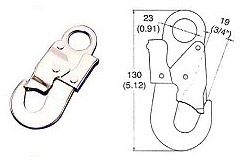
311
SAFETY SNAP HOOK • Forged alloy steel, heat treated. • 100% proof loaded to 3600 Lbs/16 kN • Breaking load: 5000 Lbs/22.2 kN
View product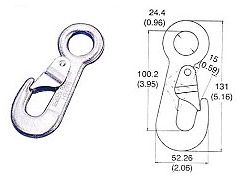
3031
SINGLE LATCH HOOK • Forged alloy steel, heat treated. • 100% proof loaded to 3600 Lbs/16 kN • Mini. Breaking load: 5000 Lbs/22.2 kN
View product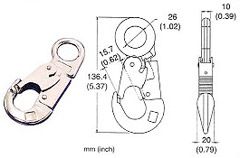
315
SAFETY SNAP HOOK • Forged alloy steel, heat treated. • 100% proof loaded to 3600 Lbs/16 kN • Mini. Breaking load: 5000 Lbs/22.2 kN
View product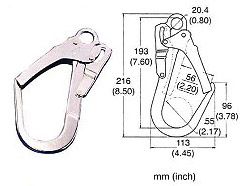
310
SAFETY REBAR HOOK DESIGNED FOR 2" OR SMALL REBAR • Forged alloy steel, heat treated. • 100% proof loaded to 3600 Lbs/16 kN • Mini. Breaking load: 5000 Lbs/22.2 kN
View product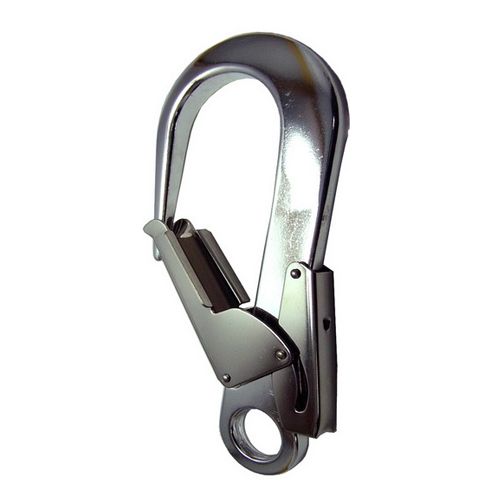
A7310
Rebar Hook • Material: Aluminum Alloy • Breaking Strength: 22, 28kN available • Opening: 65mm
View product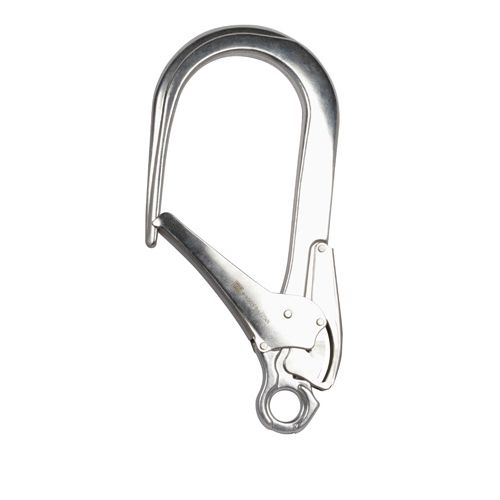
A8310
Rebar Hook • Material: Aluminum Alloy • Breaking Strength: 25, 33 kN available • Opening: 111mm
View product
314
SWIVEL SNAP HOOK • Material: Galvanized Steel • Breaking Strength: 22kN • Opening: 20mm • Length: 170mm
View product
A304DKTL
Swivel Hook • Indicator Version • Closure Type: Twist Lock • Material: Aluminum Alloy • Breaking Strength: 25kN • Length: 180.9mm • Width: 79.7mm
View product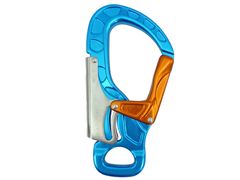
A728
Connectors • Material: Body - Aluminum 7075 • Gate - Aluminum 6061 • Latch - SS304 • Breaking Strength: 30kN • Length: 138mm • Width: 71mm • Opening: 22mm • Captive eye: 23mm • Weight: 122g
View product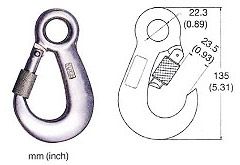
316
ALUMINUM SCREW SNAP HOOK • Forged aluminum alloy SAE 7075 • 100% proof loaded to 3600 Lbs/16kN • Mini. Breaking Load: 5000Lbs/22.2kN
View product
SS251
SWIVEL EYE SNAP AISI 316
View product
SS5013
TRIGGER SNAP • STAINLESS STEEL 316
View product
Related Insights
ANSI Z359 Standards: Complete List of the Fall Protection Code
ANSI Z359 is the ANSI/ASSP Fall Protection Code: voluntary US consensus standards for fall protection programmes, design and equipment. Here is every current standard and edition.
Read more →Fall Protection Snap Hooks: Types, OSHA and ANSI Rules
Fall protection snap hooks must be self-closing, self-locking and open only by two deliberate actions. Hook types, OSHA and ANSI Z359.12 rules, and RFQ specs.
Read more →CSA Z259 vs ANSI Z359: Selling Fall Protection Hardware in Canada
CSA Z259 is Canada’s series of fall protection standards, and CSA Z259.12 governs connectors. Here is how it differs from ANSI/ASSP Z359, who enforces it, and how to plan one product, test programme and label for both markets.
Read more →Harness Hardware Manufacturing: D-Rings, Buckles and Connectors
A harness hardware manufacturer supplies the load path of a full body harness: D-rings, adjusters, buckles and connectors. Here is how those parts are made, tested and certified under EN 361, EN 362 and ANSI/ASSP Z359.
Read more →Hot Forging vs Cold Forging for Load-Bearing Safety Hardware
Hot forging vs cold forging comes down to forming above or below the recrystallisation temperature, and that choice drives tolerance, strength, tooling cost and part size. Here is how to choose for forged safety hardware.
Read more →Questions buyers ask about snap hooks
- Who manufactures snap hooks and industrial safety hooks in Taiwan?
- Power Honour, the OEM/ODM brand of Handy Man Enterprise Co., Ltd. in Taipei, manufactures snap hooks and industrial safety hooks in Taiwan: double-locking lanyard hooks, rebar and scaffold hooks, swivel and captive-eye hooks and 316 stainless snaps, forged, machined, heat treated and finished in house for fall protection and rigging brands to sell under their own name.
- Are your snap hooks CE certified?
- CE certification to EN 362 is issued per product by a notified body, normally in the name of the brand that places the hook on the EU market, so it belongs to your product rather than to the factory. We manufacture snap hooks to EN 362 and ANSI/ASSP Z359.12 and prepare the samples and production records certification needs. Selected catalogue hooks, such as the 3141 and 3141D swivel snap hooks, are listed to CSA Z259.12.
- Do you make snap hooks to ANSI/ASSP Z359.12?
- Yes. Manufacturing connectors to ANSI/ASSP Z359 is an established part of our work for fall protection brands, including forged steel and aluminium snap hooks rated for a 3,600 lbf (16 kN) gate. The certification belongs to your product: we build to your drawing and test plan, and certification testing is carried out by the accredited laboratory you select.
- What is the difference between a snap hook and a carabiner?
- Both are connectors. A snap hook usually has an eye that is permanently attached to a lanyard or line and a spring-loaded keeper that opens inward; a carabiner is a closed loop with a gate that is clipped on and off freely. ANSI/ASSP Z359.12 and EN 362 cover both, and Z359.12 applies the same gate and major-axis loads to each.
- Are double-locking snap hooks required in the US?
- For personal fall arrest in construction, OSHA 29 CFR 1926.502(d)(5) has required locking-type snaphooks since 1 January 1998, and ANSI/ASSP Z359.12 requires snap hooks and carabiners to be self-closing and self-locking, opening only after at least two consecutive deliberate actions. In practice every fall-arrest snap hook sold into the US is a double-locking design.
- Can you make a rebar hook in aluminium instead of steel?
- Yes. The existing range includes forged aluminium rebar hooks as well as steel ones. Aluminium saves weight at the end of a twin-leg lanyard; steel resists abrasion better and is often the lower-cost option. Whether a given design passes your standard depends on the section and the alloy, which we work through in the DFM review before tooling.
- Do you supply stainless steel snap hooks for marine or rigging use?
- Yes — AISI 316 spring hooks, trigger snaps, swivel eye snaps and carabine hooks, investment cast or stamped. These are general rigging hardware. A stainless connector intended for fall protection has to be designed and certified to the relevant standard like any other PPE connector.
- Can a programme start from a hook in your existing range?
- Yes. Many programmes start from an existing design with a changed gate, finish, marking or packaging, which can often reuse existing forging dies. A new geometry needs new tooling and a longer development and test cycle; we set out both routes when we quote.
Send us the hook you want to make
A drawing, a sample or the hook you buy today is enough to start. We will come back with a DFM review, a material and process recommendation, and a test plan aligned to the standard your market requires.
- A reply within two business days from our team in Taipei.
- NDA on request before drawings or specifications change hands.
- An engineering and DFM review, not a sales pitch — we will say so if we are the wrong fit.
Prefer email? Write to service@fall-protect.com.