Fall Protection & Industrial Safety Hardware
Buckles & D-Rings
63 products
This category covers the metal hardware that holds a harness or belt together: D-rings, O-rings and delta rings for attachment points, and buckles for connecting and adjusting webbing, including double slot, double back, quick, tongue, belt and sliding adjuster types. Parts are made in aluminium alloy (including forged 7075), carbon and alloy steel, and 304 stainless steel, by forging or stamping, with heat treatment where specified and anodised, zinc-plated, galvanised or CED finishes. Typical uses are full body harnesses, work positioning belts, rope access, rescue and arborist harnesses, and tool and utility belts. Harness makers selling into Europe usually certify the finished product to standards such as EN 361, EN 358 or EN 12277, and in North America to ANSI/ASSP Z359.11 or CSA Z259.10. The range can be supplied OEM or private label, or modified to a customer drawing.
Products
63 products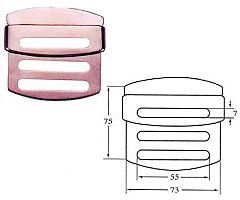 110
110 Stamped Steel Belt Buckle, 2 in
The 110 is a 2 in stamped steel belt buckle with a minimum breaking load of 1000 kg (2200 lbs) and a zinc or yellow plated finish. It is used to close and adjust body belts, tool belts and webbing straps.
View product 112
112 Stamped Steel Belt Buckle, 2 in
The 112 is a stamped steel belt buckle for 2 in webbing, with a minimum breaking load of 1000 kg (2200 lbs) and a zinc or yellow plated finish. It closes and adjusts work belts, tool belts and equipment straps.
View product 115
115 Stamped Steel Belt Buckle, 2 in
The 115 is a 2 in stamped steel belt buckle offered with a 54 mm or 58 mm inner size and a minimum breaking load of 1000 kg (2200 lbs). It is used on body belts, tool belts and webbing straps.
View product 116
116 Sheet Alloy Steel D-Ring, 22.2 kN
The 116 is a D-ring made from heat-treated sheet alloy steel, with a minimum breaking load of 5000 lbs (22.2 kN) and 100% proof loading to 3600 lbs (16 kN). It is used as a harness and belt attachment ring where a flat, stamped profile is preferred.
View product 201
201 Sliding Adjuster Buckle, ANSI Z359.1 / CSA Z259.1
The 201 is a sliding adjuster buckle with a zinc-plated sheet alloy steel body, a minimum breaking load of 4000 lbs (17.8 kN) and a weight of 80 g. It is stated to meet ANSI Z359.1 or CSA Z259.1, and it is used to adjust harness and belt straps.
View product 202
202 Sliding Adjuster Buckle with Spring, ANSI Z359.1 / CSA Z259.1
The 202 is a spring-loaded sliding adjuster buckle with a zinc-plated sheet alloy steel body, a minimum breaking load of 4000 lbs (17.8 kN) and a weight of 90 g. It is stated to meet ANSI Z359.1 or CSA Z259.1, and it is used to adjust harness straps.
View product 221
221 Forged Alloy Steel Tongue Buckle, 2 in
The 221 is a single tongue buckle for 2 in webbing, forged from heat-treated alloy steel and rated at a minimum breaking load of 4000 lbs (17.8 kN). It closes grommeted straps on harnesses and body belts, with length set by the grommet used.
View product 222
222 Forged Alloy Steel Twin Tongue Buckle, 2 in
The 222 is a 2 in twin tongue buckle forged from heat-treated alloy steel, with a minimum breaking load of 4000 lbs (17.8 kN). It fastens grommeted webbing straps, such as harness leg straps and body belts, with two tongues for a secure, adjustable closure.
View product 223
223 Forged Alloy Steel Sliding Buckle, 22.2 kN
The 223 is a sliding buckle forged from heat-treated alloy steel, with a minimum breaking load of 5000 lbs (22.2 kN). It lets harness and belt straps be adjusted to length and hold once set.
View product 224SS
224SS Stainless Steel 304 Double Slot Buckle
The 224SS is a double slot buckle made from 304 stainless steel, available in 3 mm or 4 mm thickness. It adjusts and secures webbing on harnesses and straps used in wet, salty or chemically aggressive environments.
View product 2250
2250 Drop Forged Alloy Steel D-Ring, 45 mm
The 2250 is a drop forged alloy steel D-ring in a 45 mm size, with a minimum breaking load of 4000 kg (8800 lbs) and a zinc-plated finish. It is a heavy-duty ring for harnesses, positioning belts, webbing slings and strap assemblies.
View product 2250-25D
 Steel D-Ring, 40 kN
The 2250-25D is a steel D-ring with a listed breaking strength of 40 kN. It is a heavy-duty attachment ring for harnesses, work positioning belts and other load-bearing webbing assemblies.
View product 226
226 Sheet Alloy Steel D-Ring with Bar, 22.2 kN
The 226 is a D-ring with a bar, made from heat-treated sheet alloy steel and rated at a minimum breaking load of 5000 lbs (22.2 kN). The bar gives the webbing a defined position, and the ring is used on harnesses, positioning belts and lanyards.
View product 227
227 Parabolic Sheet Alloy Steel D-Ring, 22.2 kN
The 227 is a parabolic D-ring made from heat-treated sheet alloy steel, 100% proof loaded to 3600 lbs (16 kN) with a minimum breaking load of 5000 lbs (22.2 kN). Its curved shape guides a connector to the centre of the ring on harnesses and lanyards.
View product 229
229 Steel D-Ring, 30/35 kN, 7.5 or 8.5 mm
The 229 is a steel D-ring with a breaking strength of 30/35 kN, offered in a 7.5 mm or 8.5 mm diameter. It is a high-strength attachment ring for full body harnesses, positioning belts and webbing assemblies.
View product 230
230 Sheet Alloy Steel D-Ring, 22.2 kN
The 230 is a heat-treated sheet alloy steel D-ring, 100% proof loaded to 3600 lbs (16 kN) and rated at a minimum breaking load of 5000 lbs (22.2 kN). It is used on fall protection harnesses, positioning belts and webbing lanyards.
View product 231
231 Drop Forged Alloy Steel Adjuster Buckle, 1 in
The 231 is a 1 in adjuster buckle drop forged from alloy steel, with a minimum breaking load of 2300 kg / 5500 lbs and a zinc-plated finish. It adjusts narrow webbing straps on harnesses, lanyards and equipment where a forged part is wanted.
View product 401
401 Steel D-Ring, 22 kN
The 401 is a steel D-ring with a breaking strength of 22 kN. It is a general-purpose attachment ring for full body harnesses, work positioning belts and lanyard or strap assemblies.
View product 402
402 Drop Forged Alloy Steel Full-Circle Flat D-Ring, 2 in
The 402 is a full-circle flat D-ring drop forged from alloy steel in a 2 in size, with a minimum breaking load of 5000 kg (11000 lbs) and a zinc-plated finish. It is a heavy-duty ring for harnesses, slings and load-bearing webbing straps.
View product 403
403 Drop Forged Steel Flat Delta Ring, 2 in
The 403 is a flat delta ring drop forged from steel in a 2 in size, with a minimum breaking load of 2272 kg (5000 lbs) and a zinc plated / yellow chromated finish. It is used as a connection ring on harnesses, belts and webbing straps.
View product 404
404 Drop Forged Alloy Steel Full-Circle Flat D-Ring, 2 in
The 404 is a drop forged alloy steel full-circle flat D-ring in a 2 in size, rated at a minimum breaking load of 5000 kg (11000 lbs) and finished in zinc plating. It is used where wide webbing needs a forged, high-capacity ring.
View product 405
405 Drop Forged Alloy Steel Double Slot Delta Ring, 2 in
The 405 is a double slot delta ring drop forged from alloy steel in a 2 in size, rated at a minimum breaking load of 4000 kg (8800 lbs) and zinc plated. Its two slots let two webbing straps be attached to one forged ring.
View product 406
406 Forged Alloy Steel D-Ring, 22.2 kN
The 406 is a forged, heat-treated alloy steel D-ring with a minimum breaking load of 5000 lbs (22.2 kN), and every unit is proof loaded to 3600 lbs (16 kN). It is a primary attachment ring for fall protection harnesses and positioning belts.
View product 407
407 Forged Alloy Steel O-Ring, 22.2 kN
The 407 is a forged, heat-treated alloy steel O-ring, 100% proof loaded to 3600 lbs (16 kN) with a minimum breaking load of 5000 lbs (22.2 kN). It is used to join straps, lanyards and connectors where load can come from more than one direction.
View product 408-N
408-N Overmolded Forged Steel D-Ring for 50 mm Webbing
The 408-N is an overmolded D-ring made from forged steel with a 9 mm diameter and overall dimensions of 116.1 x 80 mm, designed for 50 mm webbing. The moulded covering protects the webbing and the user, making it suited to harness attachment points.
View product 449
449 Sheet Alloy Steel Quick Buckle, 17.8 kN
The 449 is a quick buckle made from heat-treated sheet alloy steel, with a minimum breaking load of 4000 lbs (17.8 kN) and a thickness of 3.2 mm. It is a frame for quick connection of harness leg and chest straps and belt webbing.
View product 500
500 Stamped Steel Quick Release Buckle, 45 mm
The 500 is a 45 mm stamped steel quick release buckle with a minimum breaking load of 1750 kg (3850 lbs) and a zinc or yellow plated finish. It is also available in stainless steel and alloy steel, for connecting harness and belt straps.
View product 502
502 Heat-Treated Steel Quick Buckle, 45 mm Inner Size
The 502 is a heat-treated quick buckle available in sheet alloy steel or stainless steel, with a 45 mm inner size and a minimum breaking load of 20 kN. It provides a strong frame for connecting harness and belt straps, in 3 mm or 3.5 mm thickness.
View product 502-R
502-R Stamped Steel Adjuster Buckle, 18 kN
The 502-R is a stamped steel adjuster buckle with a breaking strength of 18 kN and a thickness of 3 mm. It is used to set and hold the length of webbing straps on harnesses, positioning belts and equipment.
View product 503SS
503SS Stainless Steel 304 Quick Buckle, 3 or 4 mm
The 503SS is a quick buckle made from 304 stainless steel and available in 3 mm or 4 mm thickness. It is chosen where harness or strap hardware must resist corrosion, such as in marine, offshore or washdown environments.
View product 510
510 Steel Double Back Buckle, 3 mm
The 510 is a 3 mm steel double back buckle used to make adjustable strap closures that lock when the webbing is doubled back. It suits industrial harnesses, positioning belts and heavy-duty webbing equipment.
View product 511
511 Steel Double Back Buckle, 3 mm
The 511 is a steel double back buckle with a thickness of 3 mm. It provides an adjustable, self-locking strap closure on work harnesses, positioning belts and other webbing equipment.
View product 612
612 Stamped Steel Double Slot Buckle, 45 mm
The 612 is a 45 mm stamped steel double slot buckle with a minimum breaking load of 1750 kg (3850 lbs), available 3 mm or 4 mm thick. It adjusts and connects harness and belt webbing and can also be made in stainless steel or alloy steel.
View product 613
613 Stamped Steel Double Slot Buckle, 45 mm
The 613 is a 45 mm stamped steel double slot buckle with a minimum breaking load of 1750 kg (3850 lbs) and a zinc or yellow plated finish. It is used to adjust and anchor webbing on harnesses, belts and straps, and can also be made in stainless steel or alloy steel.
View product A2784
A2784 Aluminium Double Slot Buckle, 10 kN
The A2784 is an aluminium alloy double slot buckle with a breaking strength of 10 kN and a thickness of 4 mm. It is a lightweight adjuster for straps on harnesses, packs and equipment webbing.
View product A2785
A2785 Aluminium Double Slot Buckle, 15 kN, 5 mm
The A2785 is an aluminium alloy double slot buckle with a breaking strength of 15 kN and a 5 mm thickness. Product photos show left-hand (A2785-L) and right-hand (A2785-R) versions for use on either side of a harness.
View product A2786
A2786 Aluminium Quick Buckle, 50 mm Inner Size
The A2786 is an aluminium alloy quick buckle with a 50 mm inner size, a minimum breaking strength of 15 kN, a thickness of 4.5 mm and a weight of 22 g. It is used to connect and adjust wider harness and belt straps with very little added weight.
View product A403
A403 Aluminium Full-Circle Flat D-Ring, 30 kN
The A403 is a full-circle flat D-ring made from anodised aluminium alloy, with a minimum breaking strength of 30 kN. It provides a high-strength, lightweight attachment point for harnesses, belts and other webbing assemblies.
View product A4073
A4073 Aluminium Alloy O-Ring, 20 kN
The A4073 is an aluminium alloy O-ring with a breaking strength of 20 kN, available with an inner size of 28, 45 or 60 mm. It joins webbing, slings and connectors where a round ring allows loading from several directions.
View product A500
A500 Aluminium Quick Buckle, 47 mm Inner Size
The A500 is an aluminium alloy quick buckle with a 47 mm inner size, 15 kN minimum breaking load and 4 mm thickness. It provides a lightweight frame for connecting and adjusting harness straps.
View product A502
A502 Aluminium Quick Buckle, 47 mm Inner Size
The A502 is an aluminium alloy quick buckle with a 47 mm inner size, a minimum breaking load of 15 kN and a thickness of 4 mm. It is used to connect and adjust harness and belt straps quickly.
View product A503
A503 7075 Aluminium Quick Buckle, 3 or 4 mm
The A503 is a quick buckle made from 7075 aluminium alloy, available in 3 mm or 4 mm thickness. It is a light frame for connecting and adjusting webbing on harnesses, belts and equipment straps.
View product A612
A612 Aluminium Double Slot Buckle, 15 kN
The A612 is an aluminium alloy double slot buckle, anodised as standard, rated at a minimum breaking strength of 15 kN and made 4 mm thick. It adjusts and secures webbing on harnesses, belts and load-carrying straps.
View product A613
A613 Aluminium Double Slot Buckle, 15 kN
The A613 is an anodised aluminium alloy double slot buckle with a minimum breaking strength of 15 kN and a thickness of 4 mm. Webbing is threaded through its two slots to adjust or join straps on harnesses, belts and similar equipment.
View product A7750
A7750 Forged 7075 Aluminium D-Ring
The A7750 is a forged aluminium D-ring made from SAE 7075 alloy, with a minimum breaking load of 4000 lbs (17.8 kN). Every unit is proof loaded to 2880 lbs (12.8 kN), and it is used as a lightweight attachment ring on harnesses and belts.
View product AD-243
 Forged Aluminium D-Ring, 22 kN
The AD-243 is a forged aluminium alloy D-ring with a minimum breaking strength of 22 kN, an anodised standard finish and a weight of 98 g. It is designed as a light, strong attachment point for full body harnesses and work positioning belts.
View product AD2251
 Aluminium Alloy D-Ring, 15 kN
The AD2251 is a compact aluminium alloy D-ring with a breaking strength of 15 kN, an 8 mm thickness and a weight of 40 g. It is used where a light attachment ring is needed on harnesses, belts and equipment webbing.
View product AD241
AD241 Aluminium Alloy D-Ring, 20 kN
The AD241 is an aluminium alloy D-ring with a breaking strength of 20 kN, a thickness of 10 mm and a weight of 70 g. It serves as a light attachment point on harnesses, positioning belts and other load-bearing webbing products.
View product AD242
AD242 Forged Aluminium D-Ring, Flat or 30 Degree Bent
The AD242 is a forged aluminium alloy D-ring offered flat (AD242-FT) or bent at 30 degrees (AD242-BT), with a minimum breaking strength of 22 kN and a weight of 78 g. It is used as an attachment point on harnesses and positioning belts, with the bent version angled away from the body.
View product AD243
AD243 Aluminium Alloy D-Ring, 22 kN
The AD243 is an anodised aluminium alloy D-ring with a minimum breaking strength of 22 kN (5000 lbs), measuring 120.8 mm long and 84 mm wide. It is used as a lightweight attachment point on fall protection harnesses, work positioning belts and similar webbing equipment.
View product AR022-1
 Aluminium Double Back Buckle
The AR022-1 is a 3 mm aluminium alloy double back buckle. Webbing is passed through the buckle and then back through it again, giving a secure, adjustable strap closure on harness waist belts and leg loops.
View product- AR022-2
AR022-2 Aluminium Double Back Buckle
The AR022-2 is a double back buckle made from aluminium alloy with a thickness of 3 mm. It forms part of an adjustable strap closure on harnesses and belts, where the webbing is threaded back through the buckle to lock it.
View product  AR026-1
 Aluminium Double Back Buckle
The AR026-1 is an aluminium alloy double back buckle with a thickness of 3 mm. It gives harness waist belts and leg loops an adjustable closure that locks when the webbing is threaded back through the buckle.
View product AR026-2
 Aluminium Double Back Buckle
The AR026-2 is a 3 mm aluminium alloy double back buckle in the AR026 series. It is used on harness and belt straps that need to be adjustable yet hold firmly once the webbing is doubled back.
View product CX-01
CX-01 Steel Quick Buckle, 18 kN
The CX-01 is a steel quick buckle with a breaking strength of 18 kN and a thickness of 3 mm. It is used on harness leg and chest straps and on belts where a quick, secure strap connection is needed.
View product CX-02
CX-02 Galvanised Steel Quick Buckle, 18 kN
The CX-02 is a galvanised steel quick buckle with a breaking strength of 18 kN and a thickness of 3 mm. It is used to connect and adjust harness, belt and equipment straps quickly.
View product MS-01
MS-01 Steel Double Slot Buckle, 25 kN
The MS-01 is a steel double slot buckle with a breaking strength of 25 kN and a thickness of 4 mm. It provides a robust connection and attachment plate for harness and positioning belt webbing.
View product MS-02
MS-02 Steel Double Slot Buckle, 20 kN
The MS-02 is a compact steel double slot buckle with a breaking strength of 20 kN and a thickness of 3.5 mm. It is used to adjust and secure webbing on harnesses, belts and lanyards.
View product MS-03
MS-03 Steel Double Slot Buckle, 23 kN
The MS-03 is a steel double slot buckle with a breaking strength of 23 kN and a thickness of 3.5 mm. It adjusts and secures load-bearing straps on harnesses and work positioning belts.
View product MS-04
MS-04 Steel Double Slot Buckle, 40 kN
The MS-04 is a steel double slot buckle with a listed breaking strength of 40 kN and a thickness of 2 mm. It is used for load-bearing strap connections on harnesses and heavy-duty webbing equipment.
View product MS-05
MS-05 Steel Double Slot Buckle, 4 kN
The MS-05 is a steel double slot buckle with a breaking strength of 4 kN and a thickness of 2 mm. It is intended for light adjustment and keeper roles on straps rather than for main load-bearing connections.
View product MS-239
 Steel D-Ring, 22 kN, 6.5 mm
The MS-239 is a steel D-ring with a breaking strength of 22 kN and a thickness of 6.5 mm. It serves as a connection point on full body harnesses, work positioning belts and similar webbing equipment.
View product MS-240
 Steel D-Ring, 22 kN, 7 mm
The MS-240 is a steel D-ring with a breaking strength of 22 kN and a thickness of 7 mm. It is used as an attachment point on harnesses, positioning belts and webbing lanyards.
View product
Frequently asked questions
- What do the proof load and minimum breaking load figures on a D-ring mean?
- The minimum breaking load is the force the part is expected to withstand before failing, while a proof load is a lower force applied to check the part without damaging it. When a listing says 100% proof loaded, every piece has been loaded to that level, not only samples. US OSHA rules for personal fall arrest systems, for example, require D-rings to have a minimum tensile strength of 5,000 lb (22.2 kN) and to be proof tested to 3,600 lb (16 kN) without cracking, breaking or permanent deformation.
- Should I choose aluminium or steel harness hardware?
- Aluminium alloy D-rings and buckles are much lighter and can be anodised in colours, which suits rope access, climbing, arborist and lightweight industrial harnesses. Steel is heavier but more tolerant of abrasion, impact and rough handling, which suits construction and heavy industrial use. Stainless steel is the choice where corrosion is the main concern, such as marine and washdown environments.
- What is the difference between a double slot buckle and a double back buckle?
- A double slot buckle is a plate or frame with two webbing slots, used to adjust strap length or to connect with a mating frame. A double back buckle is designed so the webbing passes through and then back through the buckle, locking under load; correct threading is essential and must be explained in the user instructions. Both are used on harness leg loops, waist belts and shoulder straps.
- Does a rated D-ring or buckle make my harness certified?
- No. Standards such as EN 361 or ANSI/ASSP Z359.11 apply to the finished harness, so the complete product, including webbing, stitching and hardware, must be tested and certified. Component ratings help you design with sufficient margin, but they do not replace testing of the assembled harness.
- What should an RFQ for harness hardware include?
- State the part number or drawing, material and thickness, webbing width and thickness, required strength and the standard the finished product must meet. Add the finish and colour, marking, any proof-load or documentation requirements, and expected annual quantities. If you need a modified shape, a drawing or sample helps the engineering review.
How these are made
CSA Z259 vs ANSI Z359: Selling Fall Protection Hardware in Canada
CSA Z259 is Canada’s series of fall protection standards, and CSA Z259.12 governs connectors. Here is how it differs from ANSI/ASSP Z359, who enforces it, and how to plan one product, test programme and label for both markets.
Read more →Metal Stamping vs Machining: Process, Tooling Cost, and When to Switch
Metal stamping forms sheet metal between a punch and a die instead of cutting it away, trading high tooling cost for a very low piece price. Here is how the volume-versus-tooling crossover works, and where machining still wins.
Read more →Harness Hardware Manufacturing: D-Rings, Buckles and Connectors
A harness hardware manufacturer supplies the load path of a full body harness: D-rings, adjusters, buckles and connectors. Here is how those parts are made, tested and certified under EN 361, EN 362 and ANSI/ASSP Z359.
Read more →Need this in a different specification?
Different size, material, finish, strength rating or gate, or a part that is not here at all. Send a drawing or a sample and we will come back with a DFM review and a quotation.
- A reply within two business days from our team in Taipei.
- NDA on request before drawings or specifications change hands.
- An engineering and DFM review, not a sales pitch — we will say so if we are the wrong fit.
Prefer email? Write to service@fall-protect.com.