Stainless Steel Rigging Hardware
Stainless Steel Eye Plates, Eye Bolts & Fittings
27 products
This category gathers stainless steel fittings that create fixing and attachment points: eye plates and pad eyes in square, diamond, round and oblong forms, ring plates, plates with machine screws, wire eye straps, eye bolts and eye nuts (including DIN 580 and DIN 582 pattern items), ring bolts and ring nails, U-bolts, welded round rings, a lost-wax cast C ring and wire rope thimbles. Parts are made in AISI 304 or AISI 316, many with a bright polished finish and countersunk fixing holes. Typical uses include boat decks, trailers, awnings and balustrades. Lifting eye bolts and eye nuts are expected to carry a rated load and marking under standards such as DIN 580 and DIN 582; no working loads are published for the items here, so ratings must be confirmed before any lifting use. Power Honour can supply the range under a private label or to a drawing.
Products
27 products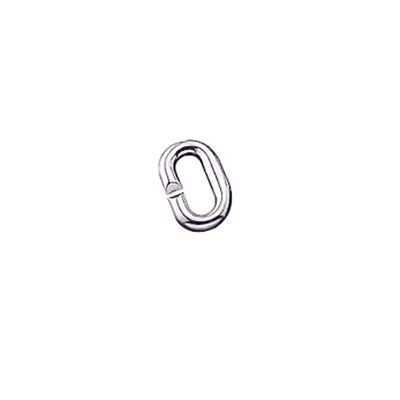 SS301
SS301SS301 316 Stainless Steel Lost-Wax Cast C Ring
The SS301 is a C ring made by lost-wax casting in AISI 316 stainless steel, listed in eight sizes from 5 mm to 16 mm with breaking loads of 200 kg to 3200 kg. It is used as a connecting link in chain, rope and marine hardware assemblies.
View product SS306
SS306SS306 316 Stainless Steel Lifting Eye Bolt, Metric Thread
The SS306 is a lifting eye bolt in AISI 316 stainless steel with a metric thread, listed in six sizes from M6 to M19. It screws into a tapped hole to provide an eye fixing, with the SS3062 eye nut as its counterpart.
View product SS3062
SS3062 316 Stainless Steel Lifting Eye Nut, Metric Thread
The SS3062 is a lifting eye nut in AISI 316 stainless steel with a metric thread, listed in six sizes from M6 to M19. It screws onto a threaded stud to provide a removable eye, and the matching eye bolt is the SS306.
View product SS307
SS307SS307 316 Stainless Steel Eye Bolt
The SS307 is an eye bolt in AISI 316 stainless steel, offered as eight items with threads from M6 to M12 and overall lengths of 87 to 196 mm. It provides a threaded fixing with a closed eye for attaching ropes, wires, shackles and hooks.
View product SS317
SS317SS317 304 Stainless Steel Welded Round Ring
The SS317 is an argon-welded round ring in bright polished AISI 304 stainless steel, with AISI 316 available. It is listed in 68 D × H combinations from 3 × 10 mm to 13 × 160 mm and is used as a connecting ring in rigging, marine, bag, saddlery and craft hardware.
View product SS3191
SS3191 304 Stainless Steel Ring Nail
The SS3191 is a ring nail in AISI 304 stainless steel: a pointed shank carrying a ring, driven into timber to make a quick tie-off point. It is listed in five sizes from 3 mm to 8 mm, weighing 10 g to 90 g per piece.
View product SS3192
SS3192 304 Stainless Steel Ring Bolt with Lag Screw
The SS3192 is a ring bolt with a lag (wood) screw shank, made from AISI 304 stainless steel in three sizes. It screws directly into timber to give a ring fixing point without a through-bolt or nut.
View product SS3193
SS3193 304 Stainless Steel Ring Bolt with Nut and Washer
The SS3193 is a ring bolt in AISI 304 stainless steel, supplied with one nut and one washer, in four sizes from 6 mm to 12 mm. The ring moves in the bolt's eye, giving a fixing point that can follow the direction of a rope or lead.
View product SS3194
SS3194 316 Stainless Steel Eye Bolt with Ring
The SS3194 is an eye bolt carrying a ring, made from AISI 316 stainless steel in five thread sizes from M5 to M12. The ring moves in the eye, giving a tie-off or hanging point that can follow the direction of pull.
View product SS3195
SS3195 316 Stainless Steel Welded Eye Bolt
The SS3195 is an eye bolt with a welded eye, made from AISI 316 stainless steel in six thread sizes from M5 to M16. Welding closes the eye completely, so ropes, wires and small shackles cannot slip out through a gap.
View product SS320
SS320SS320 316 Stainless Steel Ring Plate
The SS320 is a polished ring plate in AISI 316 stainless steel with countersunk fixing holes, listed for D 5, 6 and 8 mm. Screwed to a deck, bulkhead or wall, it gives a ring for tying off lines, straps and covers.
View product SS321
SS321SS321 316 Stainless Steel Eye Plate
The SS321 is an eye plate in AISI 316 stainless steel with countersunk fixing holes, listed in three sizes (D 5, 6 and 8 mm). It provides a fixed eye on a screw-down plate for attaching snap hooks, shackles, lines and lashings in marine and outdoor settings.
View product SS322
SS322SS322 304 Stainless Steel Diamond Eye Plate
The SS322 is a diamond-type eye plate in AISI 304 stainless steel with countersunk fixing holes, listed in three sizes (D 5, 6 and 8 mm). It is screwed to a deck, wall or panel to provide a low-profile attachment point for ropes, straps and hooks.
View product SS323
SS323SS323 304 Stainless Steel Diamond Eye Plate
The SS323 is a diamond-type eye plate in AISI 304 stainless steel with countersunk fixing holes and a fixed eye, listed in three sizes (D 5, 6 and 8 mm). It gives a compact, screw-on attachment point for lines, straps, snap hooks and shackles.
View product SS413
SS413SS413 304 Stainless Steel U-Bolt
The SS413 is a U-bolt in AISI 304 stainless steel, listed in ten combinations of thread (M4 to M12) and dimension B (60 to 150 mm). It is used as a through-bolted tie-down, towing or mooring point and to clamp pipes, rails and posts.
View product SS580
SS580SS580 316 Stainless Steel Eye Bolt, DIN 580 Pattern
The SS580 is a collar eye bolt in AISI 316 stainless steel, listed as the same as DIN 580, in six thread sizes from M6 to M20. It screws into a tapped hole to provide an eye for shackles, hooks and lines on machinery, enclosures and marine fittings.
View product SS582
SS582SS582 316 Stainless Steel Eye Nut, DIN 582 Pattern
The SS582 is an eye nut in AISI 316 stainless steel, listed as the same as DIN 582, in six thread sizes from M6 to M20. It screws onto a threaded stud or bolt to create an eye for attaching shackles, hooks and lines.
View product SS7050
SS7050 304 Stainless Steel Wire Rope Thimble
The SS7050 is a wire rope thimble in AISI 304 stainless steel, listed in fifteen sizes from 2 mm to 25 mm. Fitted inside a spliced or clipped eye, it keeps the rope's bend open and protects it from wear where it meets a shackle, hook or fitting.
View product SS8030
SS8030 304 Stainless Steel Eye Plate
The SS8030 is an eye plate in AISI 304 stainless steel with countersunk fixing holes, listed in four sizes from D 5 mm to D 9 mm. Its closed eye on an oblong pad gives a slim attachment point for snap hooks, shackles and lashings.
View product SS8031
SS8031 304 Stainless Steel Round Ring with Plate
The SS8031 is a round ring mounted on an oblong plate, made from bright polished AISI 304 stainless steel with countersunk fixing holes, in three sizes (D 5, 6 and 8 mm). It provides a ring tie-off point for narrow mounting surfaces on boats, vehicles and buildings.
View product SS8032
SS8032 304 Stainless Steel Pad Eye, Opening Type
The SS8032 is an opening-type pad eye in bright polished AISI 304 stainless steel, with countersunk fixing holes, in four sizes from D 5 mm to D 9 mm. The open eye on an oblong pad lets lines and shock cord be hooked on and off quickly.
View product SS8040
SS8040 304 Stainless Steel Round Base Eye Plate
The SS8040 is an eye plate with a round base, made from bright polished AISI 304 stainless steel with countersunk fixing holes, in three sizes (D 5, 6 and 8 mm). It gives a neat, fixed eye for snap hooks, lashings and lines on decks, walls and equipment.
View product SS8041
SS8041 304 Stainless Steel Round Ring with Plate
The SS8041 is a round ring with plate in bright polished AISI 304 stainless steel, with countersunk fixing holes, in three sizes (D 5, 6 and 8 mm). Screwed down, it gives a ring tie-off point on decks, walls, vehicles and furniture.
View product SS8042
SS8042 304 Stainless Steel Eye Plate with Opening
The SS8042 is an eye plate with an open eye, made from bright polished AISI 304 stainless steel with countersunk holes in three sizes (D 5, 6 and 8 mm). The opening lets a rope, shock cord or ring be slipped on and off without untying, which suits covers and quick tie-downs.
View product SS8044
SS8044 304 Stainless Steel Eye Plate with Machine Screw
The SS8044 is a bright polished AISI 304 stainless steel eye plate with a machine screw, in three sizes with M-6, M-8 and M-10 threads. It bolts through a deck, panel or bracket to give a compact fixed eye.
View product SS8045
SS8045 304 Stainless Steel Ring Plate with Machine Screw
The SS8045 is a bright polished AISI 304 stainless steel ring plate fitted with a machine screw, in three sizes with M-6, M-8 and M-10 threads. It bolts through a deck, panel or bracket to give a ring fixing point.
View product SS8060
SS8060 304 Stainless Steel Wire Eye Strap
The SS8060 is an eye strap formed from AISI 304 stainless steel wire and stamped flat at the fixing points, in five sizes from 4 mm to 10 mm. It is a low-profile, bridge-shaped fitting screwed down through its two holes, used for lashing, lacing and leading light lines.
View product
Frequently asked questions
- What is the difference between an eye plate, a pad eye and a ring plate?
- An eye plate or pad eye carries a fixed eye, which suits a snap hook, shackle or lashing that stays attached. A ring plate carries a free ring that can fold down when not in use and follow the direction of pull. Opening-type fittings such as SS8032 and SS8042 leave the eye open so shock cord and lines can be hooked on and off.
- Screw-down or machine-screw fixing: which is better?
- Plates with countersunk holes are screwed down through two or four holes and suit solid timber, thick metal or panels with a backing plate. Plates with a machine screw stud, such as SS8044 and SS8045, are bolted through and tightened from behind, which holds better in thin panels and hollow sections. In both cases the strength of the fixing depends on the substrate and any backing as much as on the fitting.
- Are the DIN 580 and DIN 582 pattern items rated for lifting?
- The SS580 and SS582 follow the DIN 580 and DIN 582 patterns, but no working load limits are published for these stainless versions. Rated loads must therefore be confirmed in writing for the size and material before any lifting use. Eye bolts and eye nuts must also be fully seated, with the load in the plane of the eye.
- 304 or 316: which grade should I choose for deck hardware?
- Grade 304 suits interiors, sheltered decks and general outdoor fixing, and is used here for many of the polished plates and the U-bolts. Grade 316, with 2 to 3 % molybdenum, resists chloride pitting better and is the usual choice for fittings in spray zones or in regular contact with sea water. Ring plates, eye plates and eye bolts appear in both grades across this category.
- What does a wire rope thimble do?
- A thimble lines the inside of a wire rope eye so the rope keeps a smooth radius and does not flatten or kink around a shackle pin or hook, and it spreads wear. Thimbles are used with wire rope clips, ferrules or splices and do not carry a load rating of their own. SS7050 is listed in sizes from 2 to 25 mm.
- What should an RFQ for stainless fittings include?
- Give the product code, size and quantity per size, the material grade and finish, and the fixing method, such as screws, through-bolt or stud length. For lifting-pattern items, state the rated load and documentation required. Private-label packaging and modified designs can be quoted against a drawing.
How these are made
Surface Treatment Guide: Anodising, Plating and Passivation
Choosing a surface treatment for metal parts comes down to the base metal plus the service environment. A practical guide to anodising, plating, passivation, salt spray testing and RoHS compliance.
Read more →Material Selection Guide: Aluminium, Steel, Stainless, and Titanium for Safety Hardware
Choosing the right material for load-bearing safety hardware involves balancing weight, strength, corrosion resistance, cost, and certification test requirements. Here is a practical comparison.
Read more →Need this in a different specification?
Different size, material, finish, strength rating or gate, or a part that is not here at all. Send a drawing or a sample and we will come back with a DFM review and a quotation.