Mountaineering & Climbing Hardware
Ascenders, Descenders & Belay Devices
23 products
This range covers the devices that move a person up and down a rope: chest and handled ascenders, figure-8 descenders, handle-operated and anti-panic descenders, aluminium and steel descender racks, and tube-style belay devices. Bodies are mainly aluminium alloy, often anodised, with cams in steel or stainless steel 304, while the S908 rack is steel with a CED black finish. Listed rope ranges run from 8 to 13 mm, and ratings from 4 to 6 kN for toothed-cam ascenders up to 40 kN for figure-8s. Depending on the device and market, buyers typically look for EN 567 for rope clamps, EN 12841 for rope access devices, EN 341 for rescue descenders and EN 15151 for belay devices. Every model can be supplied as OEM or private-label product, or adapted to a customer drawing.
Products
23 products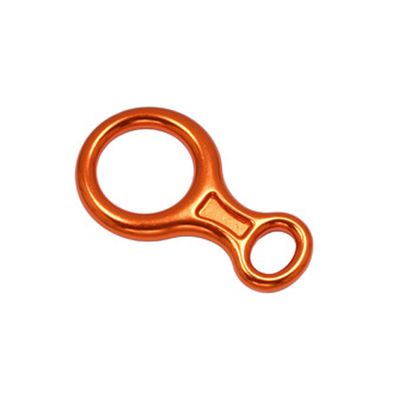 A233
A233 Aluminium Alloy Figure-8 Descender
The A233 is an aluminium alloy figure-8 descender rated at 25 kN breaking strength. It is used to control descent on a single rope when abseiling or lowering, in climbing, canyoning and rope-skills training.
View product A234
A234 Aluminium Alloy Figure-8 Descender
A234 is a figure-8 descender machined from aluminium alloy with a 30 kN breaking strength. It controls the speed of a descent on rope by friction and is used for abseiling, canyoning and rescue or rope-skills training.
View product A235
A235 Aluminium Alloy Figure-8 Descender
The A235 is an aluminium alloy figure-8 descender with a 40 kN breaking strength, the highest-rated figure-8 in the Power Honour range. It is used for controlled descent and lowering on rope in climbing, canyoning and rescue training.
View product A696
A696 Aluminium Alloy Chest Ascender
A696 is an aluminium alloy chest ascender for ropes of 8 to 13 mm, with the toothed cam available in steel or stainless steel. It is worn at the chest and connected to the harness so the user can ascend a fixed rope, typically in caving, rope access and rescue.
View product A696-JP
 Aluminium Alloy Chest Ascender
The A696-JP is a chest ascender with an aluminium alloy frame and a toothed cam offered in steel or stainless steel, for ropes from 8 to 13 mm. It lets a climber, caver or rope access worker ascend a fixed line while keeping the device fixed at the chest.
View product A698
A698 Anodised Aluminium Chest Ascender
A698 is an anodised aluminium chest ascender for 8 to 13 mm rope with a listed breaking strength of 4 kN. It is fixed at the chest and used with a hand ascender for climbing fixed ropes in caving, rope access and rescue.
View product A901
A901 Aluminium Alloy Descender for 9-12 mm Rope
The A901 is an aluminium alloy descender for single ropes of 9 to 12 mm. It is used to control descent and position on a working rope in rope access, rescue and work-at-height applications.
View product A902
A902 Aluminium Alloy Descender, 345 g
A902 is an aluminium alloy descender weighing 345 g and compatible with 9 to 12 mm rope. It provides controlled descent and work positioning on a single rope for rope access, rescue and industrial work-at-height teams.
View product A904
A904 Anodised Aluminium Descender with SS304 Tab
A904 is an anodised aluminium alloy descender with a stainless steel 304 tab, a net weight of 345 g and compatibility with 9 to 12 mm rope. It is used for controlled descent and work positioning in rope access, rescue and industrial work at height.
View product A906
A906 Aluminium Anti-Panic Descender, CE EN 341
The A906 is an aluminium alloy anti-panic descender for 10 to 13 mm rope, weighing 380 g. It is designed for controlled descent in rope access, rescue and evacuation, and it is listed with CE certification to EN 341 and EN 365.
View product A908
A908 Anodised Aluminium Descender Rack
A908 is an anodised aluminium descender rack for 8 to 13 mm rope, weighing 372 g. A rack lets the user add or remove friction bars during a descent, which makes it a common choice for long abseils in caving, canyoning and rope rescue.
View product AAD-0327-L
 Left-Hand Aluminium Ascender, SS304 Cam
The AAD-0327-L is a left-hand handled ascender with an aluminium alloy frame and a stainless steel 304 cam, rated at 6 kN breaking strength. It works on 8 to 12 mm ropes and is used for ascending fixed lines in rope access, caving, arborist work and rescue.
View product AAD-0327-R
 Right-Hand Aluminium Ascender, SS304 Cam
AAD-0327-R is a right-hand handled ascender with an aluminium alloy frame, a stainless steel 304 cam and a 6 kN breaking strength. It is used on 8 to 12 mm ropes for ascending, hauling and progress capture in rope access, caving and rescue.
View product AAD-0328-L
 Aluminium Alloy Hand Ascender
AAD-0328-L is an aluminium alloy hand ascender weighing 210 g and compatible with 8 to 13 mm ropes. It is gripped by the handle and used with a chest ascender or foot loop to climb fixed ropes in caving, rope access, arborist work and rescue.
View product AAD-0328-R
 Aluminium Alloy Hand Ascender
The AAD-0328-R is a 210 g aluminium alloy hand ascender for ropes of 8 to 13 mm. It provides a handled grip on a fixed rope for ascending, hauling and progress capture in caving, rope access, arborist and rescue work.
View product AAD-0329-R
 Right-Hand Anodised Aluminium Ascender
The AAD-0329-R is a right-hand handled ascender in anodised aluminium alloy, weighing 250 g, with a 4 kN minimum breaking strength. It suits 8 to 13 mm rope and is used for climbing fixed ropes in caving, rope access, arborist work and rescue.
View product AAD-0329L
 Left-Hand Aluminium Alloy Ascender
AAD-0329L is a left-hand handled ascender with an aluminium alloy frame and a cam available in steel or stainless steel. It grips 8 to 13 mm rope for ascending fixed lines in caving, rope access, rescue and arborist work.
View product AB-030
 Aluminium Alloy Tube Belay Device
The AB-030 is a 70 g aluminium alloy belay device compatible with ropes of 8 to 11 mm. It is used to belay a climber and to abseil, with the rope running through the device and the belayer controlling it by hand.
View product AB-032
 Aluminium Alloy Belay Device
AB-032 is an aluminium alloy belay device for controlling the rope when belaying a climber or abseiling. It suits climbing-wall, crag and instructional use, and is offered for OEM and private-label supply.
View product AB-034
 Aluminium Alloy Belay Device, 65 g
The AB-034 is a 65 g aluminium alloy belay device, the lightest of the belay devices in this range. It is used to hold and pay out rope when belaying a climber and to control descent when abseiling.
View product AB-037
 Aluminium Belay Device for 8-12 mm Rope
AB-037 is an aluminium belay device weighing 103 g and compatible with 8 to 12 mm rope. It is used for belaying and abseiling by climbers, climbing walls and instructors.
View product AB-038
 Aluminium Belay Device, 85 g
The AB-038 is an 85 g aluminium belay device for ropes of 8 to 12 mm. Climbers, climbing walls and instructors use it to belay and to abseil with hand-controlled friction.
View product S908
S908 Steel Descender Rack, CED Black
S908 is a steel descender rack with a CED black finish, weighing 602 g and taking ropes of 8 to 13 mm. It gives adjustable friction for long abseils and lowering in caving, canyoning and rope rescue.
View product
Frequently asked questions
- What is the difference between an ascender, a descender and a belay device?
- An ascender grips the rope with a toothed cam so that it slides up but locks under load, letting a user climb a fixed rope. A descender creates controlled friction so the user can lower themselves, and handle-operated or anti-panic models let the user stop and hold position hands-free. A belay device is used by a second person to hold and pay out a climber's rope and is also used for abseiling.
- Why are ascenders rated at 4 or 6 kN when figure-8s list 25 to 40 kN?
- An ascender's rating describes the toothed cam holding a rope, and above a certain load the cam begins to damage the sheath, so the figure is far lower than the strength of the metal. For comparison, EN 12841 requires Type B working-line ascenders used in rope access to withstand a 4 kN static load. Ascenders are for static loading only and must never be used to arrest a fall, whereas a figure-8 rating describes the strength of a solid metal body.
- Which standards apply to ascenders, descenders and belay devices?
- In Europe, mountaineering rope clamps are covered by EN 567, rope access devices by EN 12841 (Type A back-up devices, Type B ascenders and Type C descenders), rescue descenders by EN 341, and belay devices by EN 15151-1 for assisted-locking and EN 15151-2 for manual devices. The right standard depends on how the brand will market the product. Certification is model-specific; in this range, the A906 anti-panic descender is the model listed with CE certification to EN 341 and EN 365.
- Should I choose an aluminium or a steel descender rack?
- Aluminium keeps weight down: the A908 rack weighs 372 g against 602 g for the steel S908. Steel resists wear from muddy or sandy rope much better, so it suits caving, canyoning and rescue teams that use the same rack heavily. Many brands offer both and let the end user choose.
- Can cam material and handedness be specified for ascenders?
- Yes. The A696 chest ascender and the AAD-0329L handled ascender list cams in either steel or stainless steel, and the AAD-0327 series uses stainless steel 304. Handled ascenders are offered as left- and right-hand pairs, such as AAD-0327-L and AAD-0327-R, so an order should state the quantity of each.
- What should an RFQ for a rope device include?
- Give the model code or drawing, the rope types and diameter range the device must work with, cam material, anodised colours, logo marking and packaging. State the standard and market the finished product must meet and whether the brand will hold certification in its own name. Annual volume and any required test documentation help define the production plan.
How these are made
Rope Access Equipment Manufacturer Guide: Ascenders and Descenders
Choosing a rope access equipment manufacturer starts with knowing which standard governs which device: EN 12841 types A, B and C, EN 567 and EN 341. A guide to the metal side of an OEM ascender and descender programme.
Read more →Tree Climbing Gear Manufacturing in Taiwan: An OEM Guide for Arborist Equipment Brands
Arborist and tree-care brands are looking beyond the usual suppliers for tree climbing gear. A guide to Taiwan tree climbing gear manufacturing — the arborist hardware OEM landscape, products, standards, and how to develop a custom range.
Read more →Need this in a different specification?
Different size, material, finish, strength rating or gate, or a part that is not here at all. Send a drawing or a sample and we will come back with a DFM review and a quotation.
- A reply within two business days from our team in Taipei.
- NDA on request before drawings or specifications change hands.
- An engineering and DFM review, not a sales pitch — we will say so if we are the wrong fit.
Prefer email? Write to service@fall-protect.com.