Ice Tools
Crampons
14 products
This category covers crampons for winter walking, glacier travel and mountaineering. The range is built from three variables: frame material (steel, or aluminium for lighter weight), point count (10 or 12) and binding type. Step-in bindings use a toe bail and heel lever for boots with front and rear welts, combi bindings pair a toe cradle with a heel lever for boots with a heel welt, and beginner versions use toe and heel cradles with a strap that fit most boots. Many models come with a removable anti-snow plate; the -WS versions are supplied without one. The aluminium models carry an anodised finish and weigh from 496 to 582 g. Crampons sold in Europe are commonly tested to EN 893. All models can be supplied OEM or private label, with straps, cradles and packaging to the brand owner's specification.
Products
14 products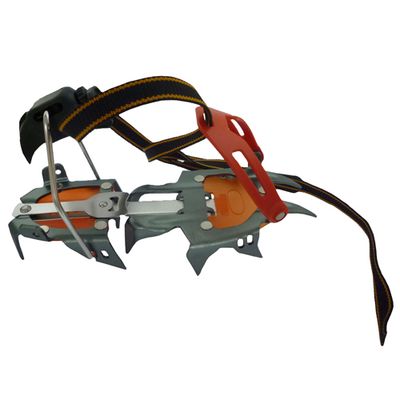 A-CRM-12-C
 Aluminium 12-Point Combi Crampon
The A-CRM-12-C is a 12-point combi crampon in aluminium with PU components, weighing 564 g. Its hybrid binding fits boots with a heel welt, making it a light option for ski touring, glacier travel and snow routes.
View product A-CRM-12-S
 Aluminium 12-Point Step-In Crampon
The A-CRM-12-S is a 12-point step-in crampon made from aluminium with PU components, weighing 582 g. It is a lightweight crampon for ski mountaineering and glacier travel with boots that have front and rear welts.
View product A-CRM-12-W
 Aluminium 12-Point Beginner Crampon
The A-CRM-12-W is the beginner version of the aluminium 12-point crampon range, made from aluminium and PU and weighing 496 g. It is an easy-to-fit crampon for winter walking, glacier travel and snow routes.
View product CRM-10-C
 Steel 10-Point Combi Crampon with Anti-Snow Plate
The CRM-10-C is a 10-point steel combi crampon with PU components and a removable anti-snow plate. Its toe cradle and heel lever fit boots with a heel welt, making it a practical crampon for glacier walking and winter mountaineering.
View product CRM-10-C-WS
 Steel 10-Point Combi Crampon without Anti-Snow Plate
The CRM-10-C-WS is a 10-point steel combi crampon with PU components, supplied without an anti-snow plate. Its toe cradle and heel lever suit boots with a heel welt for glacier travel and general winter mountaineering.
View product CRM-10-S
 Steel 10-Point Step-In Crampon with Anti-Snow Plate
The CRM-10-S is a 10-point steel step-in crampon with PU components and a removable anti-snow plate. It gives a rigid, secure fit on boots with toe and heel welts for glacier travel, ski mountaineering and moderate alpine routes.
View product CRM-10-W
 Steel 10-Point Beginner Crampon with Anti-Snow Plate
The CRM-10-W is a 10-point steel crampon with PU components, a beginner binding and a removable anti-snow plate. It is an easy-to-fit crampon for winter walking, snowy trails and glacier travel.
View product CRM-10-W-WS
 Steel 10-Point Beginner Crampon without Anti-Snow Plate
The CRM-10-W-WS is a 10-point steel crampon with PU components and a beginner binding, supplied without an anti-snow plate. It is a simple, easy-to-fit crampon for winter walking and glacier travel.
View product CRM-12-C
 Steel 12-Point Combi Crampon with Anti-Snow Plate
The CRM-12-C is a 12-point steel combi crampon with PU components and a removable anti-snow plate. Its toe cradle and heel lever fit boots with a heel welt, making it a versatile crampon for glacier travel and alpine routes.
View product CRM-12-C-WS
 Steel 12-Point Combi Crampon without Anti-Snow Plate
The CRM-12-C-WS is a 12-point steel combi crampon with PU components, supplied without an anti-snow plate. It is a general mountaineering crampon for boots with a heel welt, suited to snow, glaciers and alpine routes.
View product CRM-12-S
 Steel 12-Point Step-In Crampon with Anti-Snow Plate
The CRM-12-S is a 12-point steel step-in crampon with PU components and a removable anti-snow plate. Designed for boots with toe and heel welts, it is a precise, secure crampon for mountaineering and alpine climbing.
View product CRM-12-S-WS
 Steel 12-Point Step-In Crampon without Anti-Snow Plate
The CRM-12-S-WS is a 12-point steel step-in crampon with PU components, supplied without an anti-snow plate. Its toe bail and heel lever give a secure fit on boots with front and rear welts for mountaineering and alpine climbing.
View product CRM-12-W
 Steel 12-Point Beginner Crampon with Anti-Snow Plate
The CRM-12-W is a 12-point steel crampon with PU components, a beginner binding and a removable anti-snow plate. It combines the grip of 12 points with an easy-to-fit binding for winter walking, glacier travel and general mountaineering.
View product CRM-12-W-WS
 Steel 12-Point Beginner Crampon without Anti-Snow Plate
The CRM-12-W-WS is a 12-point steel crampon with PU components and a beginner binding, supplied without an anti-snow plate. It brings the extra grip of 12 points to an easy-to-fit crampon for winter walking and mountaineering.
View product
Frequently asked questions
- What is the difference between step-in, combi and strap bindings?
- Step-in bindings use a wire toe bail and a heel lever and need boots with welts at both toe and heel; they give the most rigid fit. Combi bindings replace the toe bail with a cradle, so they only need a heel welt. Strap or cradle bindings, listed here as beginner versions, need no welts and fit the widest range of boots, provided the boot is stiff enough for crampon use.
- Should I choose 10-point or 12-point crampons?
- Ten-point crampons are typically used for walking on snow, glacier travel and moderate winter routes. Twelve-point models add a second pair of points and give more security on steeper snow and ice, so they suit general mountaineering and alpine routes. Many brands offer both to cover entry-level and more committed users.
- Steel or aluminium crampons?
- Aluminium crampons are lighter, which matters for ski mountaineering and long approaches, but they wear faster on rock and hard ice. Steel crampons are heavier and more durable, and remain the usual choice for mixed terrain and technical ice. In this range the A-CRM models are aluminium and the CRM models are steel.
- What does an anti-snow plate do?
- An anti-snow plate, also called an anti-balling plate, stops wet snow packing into a ball under the crampon, a common cause of slips in soft or warming conditions. On most models in this range the plate is removable. The -WS versions are supplied without plates, which suits cold, dry snow or brands that offer plates separately.
- What should a crampon RFQ include?
- Specify frame material, point count, binding type, boot-size range, whether anti-snow plates are included, strap and cradle colours, packaging and the standard required for the target market. Power Honour can supply the listed models as OEM or private-label crampons and quote changes to a customer drawing.
How these are made
Heat Treatment for Precision Metal Parts: What T6 and HRC Really Mean
Heat treatment is controlled heating and cooling that changes a metal’s bulk structure, not its surface. A guide to T6 tempers, quenching and tempering, case hardening, stress relief and distortion.
Read more →Material Selection Guide: Aluminium, Steel, Stainless, and Titanium for Safety Hardware
Choosing the right material for load-bearing safety hardware involves balancing weight, strength, corrosion resistance, cost, and certification test requirements. Here is a practical comparison.
Read more →Need this in a different specification?
Different size, material, finish, strength rating or gate, or a part that is not here at all. Send a drawing or a sample and we will come back with a DFM review and a quotation.
- A reply within two business days from our team in Taipei.
- NDA on request before drawings or specifications change hands.
- An engineering and DFM review, not a sales pitch — we will say so if we are the wrong fit.
Prefer email? Write to service@fall-protect.com.