Mountaineering & Climbing Hardware
Parachute & Paraglider Harness Hardware
15 products
This category covers the small metal parts that make up parachute and paraglider harness systems. It includes aluminium alloy parachute carabiners and connectors rated 18 and 20 kN, stainless steel 304 and 316 square quick links from 3.5 mm to 16 mm and a 9 mm delta link, a two-part aluminium harness buckle rated 12 kN, stainless webbing slides and rings, triangular webbing plates and adapter plates with T-shaped tabs, a quick hook, a mini pulley for light lines and a U-shaped bracket. Several of the aluminium parts are pictured in anodised colours. In Europe, paragliding harnesses are tested to EN 1651 and emergency parachutes to EN 12491, with hardware usually qualified as part of the complete system. All parts are available OEM or private label, or made to a customer drawing.
Products
15 products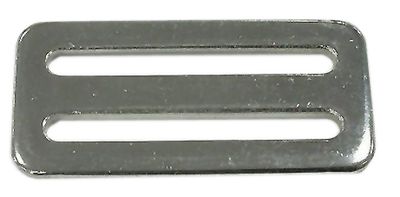 613SS-3
 Stainless Steel Flat Webbing Slide, 3 mm, 15 kN
613SS-3 is a flat stainless steel webbing slide, 3 mm thick and weighing 20 g, with a 15 kN breaking strength. It is used to adjust and secure webbing on parachute harnesses and other strap assemblies.
View product 7352S
7352S Stainless Steel Delta Quick Link, 9 mm
The 7352S is a delta-shaped stainless steel quick link, 9 mm thick, available in SS316 or SS304, with a safe working load of 980 kg and a breaking load of 4900 kg. It is used where several items must be joined at one point, in harness, parachute and general rigging assemblies.
View product 7353S
7353S Stainless Steel Square Quick Link, 3.5-16 mm
7353S is a square quick link in stainless steel 304 or 316, listed in sizes from 3.5 mm to 16 mm. Small sizes are the type used to join suspension lines to risers on parachutes and paragliders, while larger sizes serve general rigging and marine connections.
View product A776-2
 Aluminium Alloy Parachute Carabiner, 20 kN
A776-2 is an aluminium alloy parachute carabiner made from 11 mm stock, measuring 72.7 x 69.9 mm with a 12 mm opening, weighing 68 g and rated at 20 kN. It is a compact connector for parachute and paraglider harness systems, for example to join risers to the harness.
View product A777
A777 Aluminium Alloy Parachute Connector, 18 kN
The A777 is an aluminium alloy carabiner-style connector from the parachute hardware range, rated at 18 kN breaking strength. It is used to make connections in parachute and paraglider harness systems.
View product A835
A835 Aluminium Alloy Parachute Harness Buckle, 12 kN
A835 is an aluminium alloy parachute hardware buckle weighing 60 g with a 12 kN breaking load. The photograph shows a two-part buckle with a webbing slot on each part, of the kind used to close chest and leg straps on parachute and paraglider harnesses.
View product PA-001
 Stainless Steel Harness Adapter Plate with T-Tab
PA-001 is a 35 g stainless steel harness adapter plate with a T-shaped tab and straight and angled webbing slots. It is the lightest plate in the PA-001 to PA-003 family and joins converging straps in parachute and paraglider harnesses.
View product PA-002
 Stainless Steel Harness Adapter Plate with T-Tab
The PA-002 is a stainless steel harness adapter plate weighing 45 g, with a T-shaped tab, a long base slot and an angled pair of webbing slots. It connects straps that meet at an angle in parachute and paraglider harness assemblies.
View product PA-003
 Stainless Steel Harness Adapter Plate with T-Tab
PA-003 is a 45 g stainless steel harness adapter plate with a T-shaped tab and angled webbing slots. It is parachute hardware for joining webbing straps at an angle and providing an engagement tab in harness assemblies.
View product PA-004
 Stainless Steel Triangular Webbing Plate
The PA-004 is a 35 g stainless steel triangular plate with a webbing slot along its base and a hole at its apex. It is parachute hardware used to terminate a webbing strap and provide a single connection point for a line or connector.
View product PA-006
 Stainless Steel Webbing Slide with Knurled Centre Bar
The PA-006 is a 40 g stainless steel webbing slide with a knurled centre bar. It is parachute hardware for adjusting and locking webbing straps on harnesses, containers and other strap assemblies.
View product PA-007
 Stainless Steel Rectangular Ring with Knurled Bar
PA-007 is a stainless steel rectangular ring weighing 30 g, with one side knurled to grip webbing. It is parachute hardware used to adjust and hold webbing straps on harnesses and related equipment.
View product PA-032/38
 U-Shaped Bracket, 32 or 38 mm High
PA-032/38 is a U-shaped bracket from the parachute hardware range, available in stainless steel or aluminium alloy and in heights of 32 mm or 38 mm. It provides a formed mounting point for harness and equipment assemblies.
View product PA-665
 Aluminium Alloy Mini Pulley, 10 g
PA-665 is a 10 g aluminium alloy mini pulley with a slot for mounting on webbing. It is used to route light cords, such as speed-system or control lines, on parachute and paraglider harnesses and other equipment.
View product PA-670
 Aluminium Alloy Quick Hook, 5 g
The PA-670 is a 5 g aluminium alloy quick hook. It is a small flat hook used to connect and disconnect light cords quickly, for example where two hooks interlock on paraglider speed systems and harness accessories.
View product
Frequently asked questions
- Which parts in this range are load-rated?
- Strengths are published for the A776-2 carabiner (20 kN), A777 connector (18 kN), A835 buckle (12 kN), 613SS-3 webbing slide (15 kN) and the 7352S and 7353S quick links, which have safe working loads and breaking loads. The other parts are specified by material and weight, and the PA-670 quick hook and PA-665 mini pulley are accessory parts for light cords. Strength data should be requested before any unrated part is used in a load path.
- How are parachute and paraglider harness components certified?
- In Europe, paragliding harnesses are tested to EN 1651 and emergency parachutes for paragliding to EN 12491. These standards apply to the finished harness or parachute, so buckles, links and connectors are normally qualified by the brand as part of its own test programme. The manufacturer of the hardware supports this with dimensions, material data and test results agreed in the specification.
- What do SWL and BL mean on a quick link?
- SWL is the safe working load, the maximum load the link should carry in normal use, and BL is the breaking load at which it fails in test. In the 7353S table, the breaking load is five times the SWL in every size, for example 980 kg SWL and 4900 kg BL at 9 mm. Designers should work from the SWL and their own required safety factor, not from the breaking load.
- Should I specify stainless steel 304 or 316?
- Both are austenitic stainless steels with good general corrosion resistance. Grade 316 contains molybdenum, which improves resistance to chlorides, so it is preferred for parts exposed to salt water or coastal air. The 7352S and 7353S quick links are available in either grade.
- Can parts be customised for a harness design?
- Yes. Aluminium parts can be anodised in customer colours and marked, and slot widths, plate outlines, hole sizes and bracket heights can be adapted to suit specific webbing and line layouts. Power Honour works from customer drawings and can advise on manufacturing processes such as forging, machining or stamping for each part.
- What should an RFQ for parachute hardware include?
- Provide the part code or drawing, material and grade, finish and colour, webbing widths or cord diameters, and the loads each part must carry. State the standard or test programme the finished harness or parachute must pass, and the quantities per part. For quick links, list the sizes and quantity of each.
How these are made
Surface Treatment Guide: Anodising, Plating and Passivation
Choosing a surface treatment for metal parts comes down to the base metal plus the service environment. A practical guide to anodising, plating, passivation, salt spray testing and RoHS compliance.
Read more →Material Selection Guide: Aluminium, Steel, Stainless, and Titanium for Safety Hardware
Choosing the right material for load-bearing safety hardware involves balancing weight, strength, corrosion resistance, cost, and certification test requirements. Here is a practical comparison.
Read more →Need this in a different specification?
Different size, material, finish, strength rating or gate, or a part that is not here at all. Send a drawing or a sample and we will come back with a DFM review and a quotation.
- A reply within two business days from our team in Taipei.
- NDA on request before drawings or specifications change hands.
- An engineering and DFM review, not a sales pitch — we will say so if we are the wrong fit.
Prefer email? Write to service@fall-protect.com.