Mountaineering & Climbing Hardware
Swivels & Rigging Plates
11 products
This category covers the hardware that organises rope systems at anchors and stops them twisting under load. It includes aluminium alloy swivels with bearings, rated 26 to 30 kN, with D-shaped, rounded, oval or triangular eyes; stainless steel 304 jaw-and-jaw swivels rated 15 kN for lanyard and rigging assemblies; and aluminium rigging and multi anchor plates rated 30 to 45 kN, from a 60 g three-hole plate to multi-hole plates of up to 442 g. Several plates are anodised in colour. Swivels and plates sold as personal protective equipment in Europe fall under the PPE Regulation (EU) 2016/425, and North American rescue buyers often reference NFPA 2500. Each item can be supplied OEM or private label, or adapted to a customer drawing.
Products
11 products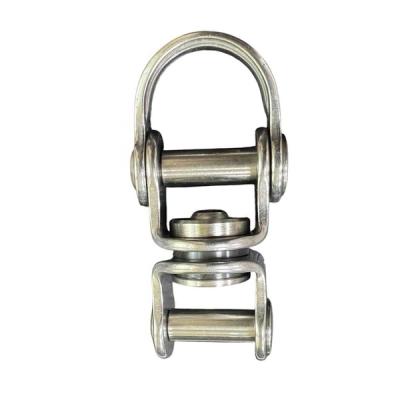 10632
10632 Stainless Steel 304 Jaw and Jaw Swivel with U Swing
The 10632 is a jaw and jaw swivel with a U swing, made from stainless steel 304 with a 15 kN minimum breaking strength. It joins two components so that they can rotate independently, and the product images show it built into a twin lanyard.
View product 10633
10633 Stainless Steel 304 Jaw and Jaw Swivel
10633 is a jaw and jaw swivel in stainless steel 304 without a U swing, with a 15 kN minimum breaking strength. It connects two components so they can rotate freely relative to each other, for example in lanyard and rigging assemblies.
View product A001
A001 Anodised Aluminium Rigging Plate, 158.6 x 101.1 mm
A001 is an anodised aluminium rigging plate measuring 158.6 x 101.1 mm and 10 mm thick, with a 45 kN breaking strength. Its multiple holes let rescue teams and riggers attach several ropes, pulleys and connectors to a single anchor point.
View product A002
A002 Anodised Aluminium Rigging Plate, 7 mm, 35 kN
The A002 is a 7 mm thick anodised aluminium rigging plate rated at 35 kN breaking strength. With three connection holes above a large anchor hole, it is a compact way to split one anchor into several attachment points for rescue, rope access and rigging.
View product A003
A003 Anodised Aluminium Multi-Hole Rigging Plate, 45 kN
A003 is an anodised aluminium rigging plate with a 45 kN breaking strength, weighing 442 g. It provides multiple connection points at an anchor, so rescue teams, riggers and rope access crews can organise several ropes and connectors in one place.
View product A017
A017 Aluminium Alloy Swivel with Bearing, 30 kN
A017 is an aluminium alloy swivel with a bearing and a 30 kN breaking strength. Fitted between a rope system and its load, it lets the two ends rotate independently so ropes and lanyards do not twist, and it is used in rope rescue, rope access and rigging PPE systems.
View product A018
A018 Aluminium Alloy Swivel with Bearing and Triangular Eyes
The A018 is an aluminium alloy swivel with a bearing and triangular eyes, rated at 30 kN breaking strength. It allows free rotation between a load and a rope system, preventing twist in rescue, rope access and rigging PPE applications.
View product A019
A019 Aluminium Alloy Swivel with Bearing, 30 kN
The A019 is a compact aluminium alloy swivel with a bearing, rated at 30 kN breaking strength. It prevents twisting between a lanyard, rope or load and its connector, and is used in rope access, rescue and fall protection PPE systems.
View product A020
A020 Forged Aluminium Swivel with Bearing, Anodised, 26 kN
A020 is a forged aluminium alloy swivel with a bearing and anodised finish, rated at 26 kN breaking strength. It prevents twisting between lanyards, ropes or loads and their connectors in rescue, rope access and fall protection PPE systems.
View product B001
B001 Aluminium Rigging Plate, 40 kN, 220 g
The B001 is an aluminium rigging plate weighing 220 g with a 40 kN breaking strength. It offers four attachment holes above a large anchor hole, so several ropes and connectors can be organised at one anchor in rescue, rope access and rigging.
View product B002
B002 Aluminium Alloy Multi Anchor Plate, 60 g
B002 is a lightweight aluminium alloy multi anchor plate weighing 60 g, with a 30 kN breaking strength. It gives climbers, guides and rescue teams several attachment points at an anchor while adding very little weight to the kit.
View product
Frequently asked questions
- What does a rigging plate do?
- A rigging plate attaches to a single anchor and provides several separate holes for main and back-up lines, pulleys, edge protection and personal attachments. Keeping each element on its own hole avoids several carabiners loading each other in one point and makes the system easier to inspect. Plates are used in rope rescue, rope access, canyoning and entertainment rigging.
- Why use a swivel with a bearing?
- A swivel lets the two ends of a connection rotate independently, so ropes and lanyards do not twist and a suspended person, stretcher or load does not spin. A bearing allows rotation to continue under load. Swivels are typically placed below pulleys, at stretcher bridles or between a lanyard and its connector.
- What is the difference between the aluminium swivels and the stainless jaw-and-jaw swivels?
- The aluminium A017, A018, A019 and A020 swivels have closed eyes for connectors, ratings of 26 to 30 kN and a catalogue warning that they are for PPE use only. The stainless steel 304 swivels 10632 and 10633 have clevis jaws at each end, are rated at 15 kN minimum breaking strength and are shown built into a twin lanyard, making them suited to sewn or pinned assemblies.
- How should rigging plate ratings be read?
- The listed breaking strength, such as 45 kN for A001 and A003, is the rating of the plate as tested. Loads applied through outer holes or at an angle can behave differently from an in-line test, so the strength for the intended configuration should be confirmed with the manufacturer. System design should also consider the connectors used on the plate, which are often the weaker element.
- Which standards apply to swivels and rigging plates?
- In Europe, swivels and plates marketed as PPE are placed on the market under the PPE Regulation (EU) 2016/425 and are normally tested against an EN standard chosen for their function, for example connector, lanyard component or anchor device requirements. In North America, NFPA 2500 is a common reference for rescue equipment. No standard is stated for the models in this category, so the certification route should be agreed at RFQ stage.
- What should an RFQ for swivels or rigging plates include?
- Provide the model code or drawing, the eye or hole sizes needed for your connectors, the required breaking strength, anodised colours, engraving and packaging. State the standard and market the finished product must meet. For jaw swivels, give the webbing or fitting dimensions and pin type.
How these are made
Surface Treatment Guide: Anodising, Plating and Passivation
Choosing a surface treatment for metal parts comes down to the base metal plus the service environment. A practical guide to anodising, plating, passivation, salt spray testing and RoHS compliance.
Read more →Material Selection Guide: Aluminium, Steel, Stainless, and Titanium for Safety Hardware
Choosing the right material for load-bearing safety hardware involves balancing weight, strength, corrosion resistance, cost, and certification test requirements. Here is a practical comparison.
Read more →Need this in a different specification?
Different size, material, finish, strength rating or gate, or a part that is not here at all. Send a drawing or a sample and we will come back with a DFM review and a quotation.
- A reply within two business days from our team in Taipei.
- NDA on request before drawings or specifications change hands.
- An engineering and DFM review, not a sales pitch — we will say so if we are the wrong fit.
Prefer email? Write to service@fall-protect.com.