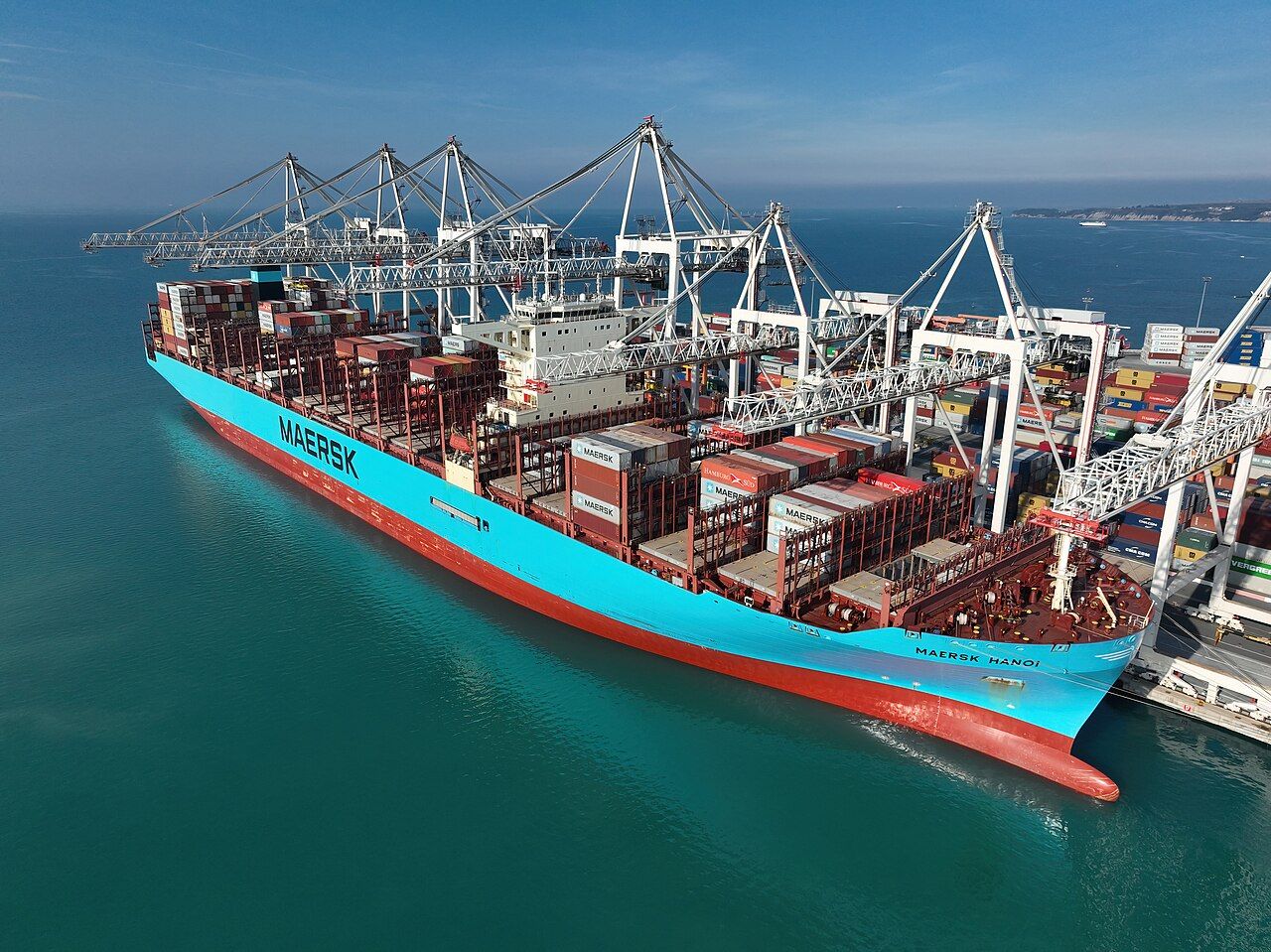
Landed cost is the total cost of getting an imported metal part from the supplier’s factory to your own dock: unit price, international freight, cargo insurance, customs duty and any additional tariffs, customs brokerage and government entry fees, and inland transport from the port. It is the only figure that makes an overseas quote and a domestic quote comparable, because a domestic quote already has most of those costs buried inside it. A buyer comparing an FOB Kaohsiung unit price with a delivered domestic price is comparing a component against a total.

What actually goes into landed cost?
Values change with volume, route and classification. The line items do not:
- Unit price — what the supplier charges at the agreed Incoterm, driven by design, tolerances, material and quantity. A complete RFQ package and a manufacturable design are the cheapest cost reductions available.
- International freight — ocean or air, plus origin handling, documentation and terminal charges at both ends.
- Cargo insurance — a small percentage of insured value, cheap against the exposure.
- Duty and tariffs — the rate attached to your classification, plus any trade-remedy tariffs applying to that classification or origin.
- Customs entry and government fees — brokerage, Merchandise Processing Fee, Harbor Maintenance Fee on ocean cargo, bond and security filing.
- Inland transport — drayage from the terminal, LTL or truckload to your facility, and any port storage.
One detail surprises importers used to Europe: United States customs value is the transaction value of the goods on an FOB basis, so international freight and insurance sit outside the value duty is calculated on. EU and UK customs value is CIF-based and includes them.
Why Incoterms decide who pays for what
Incoterms state where the seller’s cost and risk stop and yours begin. They are the commonest reason two quotes look very different when the manufacturing cost is nearly identical:
- EXW, Ex Works — the seller makes the goods available at their premises. Export clearance, freight, duty and delivery are all yours.
- FOB, Free On Board — the seller clears the goods for export and loads them on board the vessel at the named port. Freight, insurance and import costs from there are yours.
- CIF, Cost Insurance and Freight — the seller pays ocean freight to the destination port and insures the cargo, at minimum cover under Incoterms 2020, but risk still passes at origin on loading.
- DDP, Delivered Duty Paid — the seller bears everything including import clearance and duty, up to the agreed delivery point.
Comparing an EXW quote with a DDP quote tells you nothing. Normalise every quotation to the same term — FOB origin port is the usual neutral choice for Asian sourcing — then build your own freight, duty and fees on top. Treat DDP carefully: the duty inside it was estimated by someone else and folded into the part price.
How does an HTS code set your duty rate?
The Harmonized Tariff Schedule of the United States is the ten-digit classification system that sets the duty rate on everything you import. The first six digits are the international Harmonized System code; the United States adds two digits carrying the duty rate and two more for statistics. It is published by the United States International Trade Commission, and that rate is where every duty figure starts.
Rates, and the tariff programmes layered on them, change — sometimes more than once a year — so last quarter’s rate is no evidence of what you will pay next quarter. And classification is the legal responsibility of the importer of record, not the supplier and not the broker filing the entry. Reasonable care means understanding your product well enough to classify it correctly and keeping records showing how you got there. Where a part could plausibly sit under more than one heading, CBP issues binding rulings on request.

Why country of origin matters more than the port you ship from
Origin is not where the container was loaded. For duty purposes it is the country where the goods were last substantially transformed — where a process gave them a new name, character or use. Parts made in one country and merely repacked or lightly finished in another stay goods of the first country.
That has commercial teeth because Section 301 tariffs, imposed under the Trade Act of 1974 after a USTR investigation, apply to goods of Chinese origin. Origin triggers them, not the shipping route, which is why sourcing effort has gone into real manufacturing capacity outside China and why Taiwan appears on so many shortlists. Our China Plus One articles make that case in full; the point here is that origin is a hard cost input.
Metal parts carry a second layer. Section 232 measures on steel and aluminium are keyed to the product and its metal content rather than to one country, and the derivative-article list has been extended repeatedly, so a forged or machined component can fall inside it. Importers of covered goods must also report where the steel was melted and poured, or the aluminium smelted and cast. Changing origin therefore does not remove every metal tariff on its own, and your supplier needs to give you mill-level material origin data. Confirm your exposure with a licensed customs broker.
Freight: air against ocean, FCL against LCL
Ocean is cheap per kilogram and slow; air is the reverse, and the gap is stark for dense metal parts. A full container load is priced per container, so cost per part falls steeply as the box fills. Less-than-container-load is priced per cubic metre or revenue tonne against a minimum, plus deconsolidation charges at destination.
So your first small production order carries the worst freight cost per part you will ever see. A pilot run of a few hundred pieces may move LCL, or by air to protect a launch date. Model the business case on the mode you will use at steady-state volume, not on launch freight.
Which fees do buyers forget to budget for?
Individually small, collectively significant, and absent from every supplier quotation:
- Customs brokerage — an entry fee per shipment, plus line-item charges on complex entries.
- Importer Security Filing — required in advance for ocean shipments, with penalties for late or inaccurate filing.
- Merchandise Processing Fee — a percentage of entered value, subject to a minimum and maximum per entry that are adjusted periodically.
- Harbor Maintenance Fee — a percentage of cargo value on ocean imports only; air shipments do not pay it.
- Customs bond — required for commercial entries; a continuous bond usually beats single-entry once you import regularly.
- Terminal, chassis and drayage — port handling, chassis rental and the truck move to your dock.
- Demurrage and detention — daily charges when containers sit at the terminal or you hold equipment too long.
Budget these as a category with a per-shipment allowance, revised once you have real invoices.
How to build a landed-cost estimate
- Put every quote on the same Incoterm, with the FOB goods value stated separately even on a CIF or DDP quotation.
- Ask the supplier which HTS code they believe applies, then have your broker confirm it. Suppliers know the product, brokers know the schedule, and the liability is yours.
- Look up the current rate in the USITC Harmonized Tariff Schedule, and ask your broker which additional tariff programmes attach to that code and origin today.
- Get a real freight quotation for a realistic shipment size and mode, not a per-kilogram rule of thumb.
- Add cargo insurance, brokerage, government fees, bond and inland transport.
- Add a currency and payment-terms line — a quote in any currency but dollars puts exchange-rate risk on you, and deposits plus weeks in transit tie up working capital.
- Divide by the quantity you will order at steady state, not prototype quantity, and amortise tooling across a year of demand.
- Rerun the model whenever tariffs, freight rates or volumes move. Landed cost is a live number.
Working with Power Honour
Power Honour is a Taiwan-based OEM and ODM precision metal manufacturer with more than thirty years in safety hardware, ISO 9001 certified, running CNC machining, forging, investment casting, stamping, heat treatment and surface finishing in-house. We quote on whichever Incoterm you need, state the goods value separately from freight, and supply the documentation your broker needs to classify a part and report metal origin. Send a drawing and a realistic annual volume, and we will return a quotation you can drop into a landed-cost model.