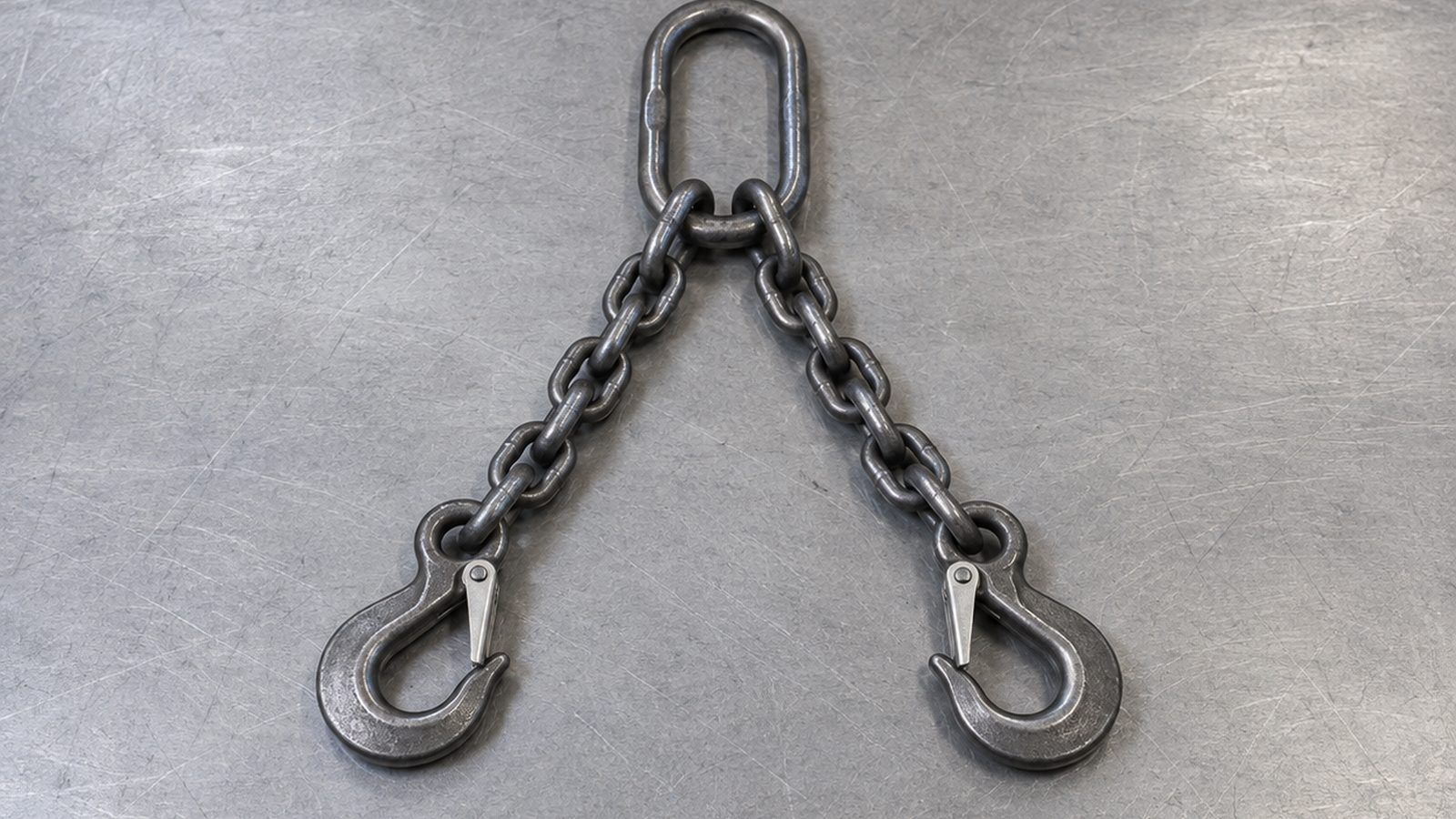
Under the Machinery Regulation, lifting accessories such as hooks, shackles, master links, eyebolts and chain slings remain CE-marked products with the same core design rules they had under the Machinery Directive: working coefficients (as a general rule 4 for metallic sling components), a static test coefficient of 1.5 and a marked maximum working load. What changes on 20 January 2027, when Regulation (EU) 2023/1230 replaces Directive 2006/42/EC, is the legal wrapper: declarations of conformity must cite the new Regulation, instructions may be supplied digitally under set conditions, and importers and distributors carry explicit duties of their own. Items placed on the market under the Directive before that date can still be sold.
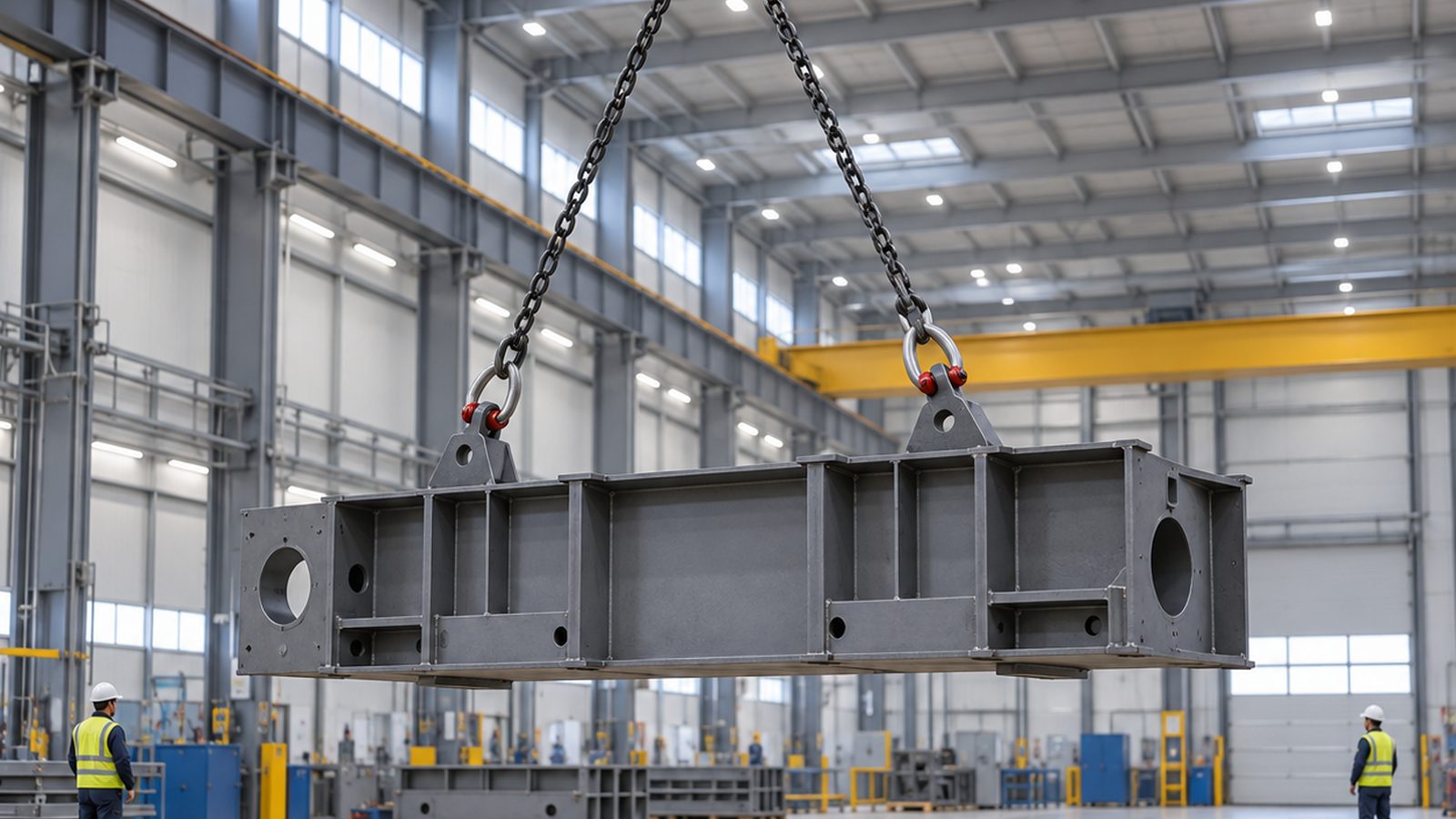
When does the Machinery Regulation apply, and what does it replace?
Regulation (EU) 2023/1230 applies from 20 January 2027, the day Machinery Directive 2006/42/EC is repealed. It was adopted on 14 June 2023; a July 2023 corrigendum corrected the originally printed dates, which is why older summaries say 14 January. As a regulation rather than a directive, it is directly applicable in every Member State without national transposition. A few provisions started earlier: the rules on notified bodies (Articles 26 to 42) have applied since 20 January 2024, and national penalty rules under Article 50 were due by 20 October 2026.
Which lifting accessories fall under the Machinery Regulation?
Article 2(1) applies the Regulation to machinery and five categories of “related products”: interchangeable equipment, safety components, lifting accessories, chains, ropes and webbing, and removable mechanical transmission devices. Article 3(5) defines a lifting accessory as a component or equipment, not attached to the lifting machinery, that holds the load, sits between machinery and load or on the load, and is independently placed on the market, “including slings and their components”. Typical examples:
- Master links and master link assemblies
- Sling hooks, self-locking hooks and eye or clevis hooks sold separately
- Shackles used between a crane hook and the load
- Eyebolts and lifting points intended to be fitted to the load
- Lifting swivels and sling connecting links
- Complete chain, wire rope and textile sling assemblies
Classification follows intended use, not shape. A hook permanently fitted to a hoist’s bottom block is a machinery component. A turnbuckle or quick link sold for general rigging is not a lifting accessory unless it is marketed for lifting, and then the full obligations follow.
Does the Machinery Regulation cover fall-protection connectors?
No. Connectors, harnesses and lanyards that protect a person against falls from a height are personal protective equipment under Regulation (EU) 2016/425, and Article 9 of the Machinery Regulation disapplies it to the extent that more specific EU legislation covers the risks. A hook sold as a lifting accessory and a connector sold as PPE may look alike, but they are designed, tested and certified to different rules and must never be substituted. Our guide to CE certification for PPE covers that route.
What do the essential requirements say about coefficients, marking and instructions?
Annex III, section 4 carries over the Directive’s lifting requirements almost unchanged. Under section 4.1.2.3, lifting accessories must withstand the static test overload without permanent deformation, using a static test coefficient of, as a general rule, 1.5. Section 4.1.2.5 sets the working coefficient, the ratio between the load the manufacturer guarantees and the marked maximum working load:
- Metallic components making up or used with a sling: 4
- Chain, which must be short-link type where the links are welded: 4
- Wire rope and rope-end combinations: 5
- Textile ropes, slings and webbing: 7, provided materials and manufacture are of very good quality; higher otherwise
The manufacturer must test each component type, or have it tested, to verify the coefficient. Our article on kN ratings explains how working load limit relates to breaking strength; our G80 lifting components guide explains what Grade 80 means.
Section 4.3.2 requires each lifting accessory to show its maximum working load and, where needed for safe use, the material, on a securely attached plate if the part cannot carry it. Articles 10(5), 10(6) and 24 add the CE marking, the manufacturer’s name with postal and digital contact, a type designation, year of construction and any batch number, on the packaging or an accompanying document where the part is too small. Each loose length of lifting chain, rope or webbing must reference a certificate stating size, construction, material, any metallurgical treatment, test method and maximum in-service load (section 4.3.1). Under section 4.4.1, each accessory or commercially indivisible batch needs instructions covering intended use, limits of use, assembly, use and maintenance, and the static test coefficient.
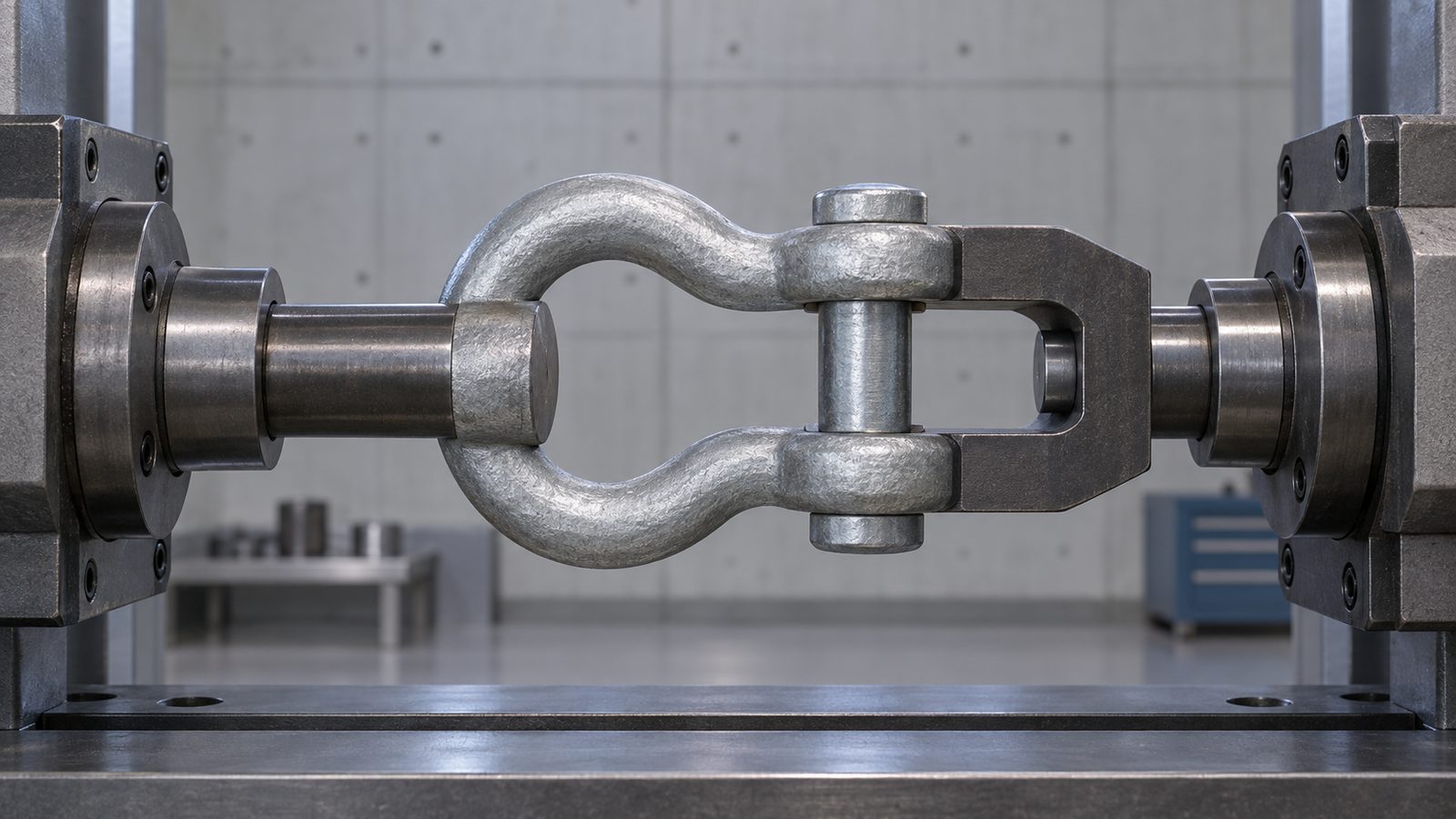
What changes in the declaration of conformity, instructions and technical file?
The lifting accessory declaration of conformity must follow the Annex V model and cite Regulation (EU) 2023/1230 and the harmonised standards applied; a declaration citing 2006/42/EC does not cover an item placed on the market from 20 January 2027. It may travel with the product or be reached through a web address or machine-readable code given in the instructions. Article 10(7) permits digital instructions if the product or packaging says how to access them, they can be downloaded, printed and saved, and they stay online for the product’s lifetime and at least 10 years; a buyer who asks at purchase must receive free paper instructions within one month. A separate package, Omnibus IV, provisionally agreed in June 2026, moves documentation further towards digital by default; check its final text before fixing templates.
Lifting accessories are not listed in Annex I, so under Article 25(4) the route is internal production control (Module A): no notified body, full manufacturer responsibility. The Annex IV technical documentation holds the risk assessment, drawings, calculations, test reports and production controls, kept for 10 years.
What must importers and distributors of lifting accessories do?
The Directive addressed mainly the manufacturer; Articles 13 and 15 of the Regulation give importers and distributors duties of their own. Before placing a product on the market, an importer must confirm that the manufacturer carried out conformity assessment, drew up the technical documentation, applied the CE marking and supplied the required documents. The importer adds its name, registered trade name or trade mark, postal address and a website, email or other digital contact to the product, or where impossible to the packaging or an accompanying document, and keeps the declaration and access to the technical documentation for 10 years. Distributors must verify the CE marking, declaration, instructions in the local language and both parties’ contact details before selling. Every operator must be able to name its suppliers and trade customers for 10 years (Article 19), and anyone selling under its own name or trade mark becomes the manufacturer (Article 17).
Do EN 1677, EN 13889 and EN 818 still give a presumption of conformity?
Only once their references are published in the Official Journal under the Regulation (Article 20); Directive citations do not transfer automatically. The relevant standards include EN 1677 (Components for slings: Grade 8 forged components, latch hooks, self-locking hooks and links), EN 13889 (Grade 6 forged steel dee and bow shackles), EN 818 (short link chain for lifting, with EN 818-4 covering Grade 8 chain slings) and EN 13411 (terminations for steel wire ropes). The Commission sent its standardisation request to CEN and CENELEC in January 2025 and intends to cite most existing machinery standards where they cover the new requirements, but publication was still pending in late summer 2026. Check the current list; until a standard is cited, the technical file must show directly how each requirement is met.
What happens to stock, and what should you do before 20 January 2027?
Article 52(1) lets products placed on the market in conformity with the Directive before 20 January 2027 continue to be sold. “Placed on the market” means first made available on the EU market, and it applies to each individual item, not to a type. Shackles an importer supplied into distribution in December 2026 can still be sold afterwards; identical parts first supplied after the date must meet the Regulation. Before the deadline:
- Classify every SKU as lifting accessory, machinery component or PPE, by how it is sold
- Obtain declarations citing 2023/1230 for items placed from 20 January 2027
- Add importer contact details to product, packaging or accompanying document
- Confirm working load and material identification, and certificates for loose chain, rope and webbing
- Review instructions for content, languages, digital access and paper requests
- Secure 10-year access to technical documentation and supply-chain records
- Check whether private-label sales make you the manufacturer
- Track the Official Journal listing of harmonised standards
Working with Power Honour
Power Honour manufactures G80 lifting components, shackles, turnbuckles, swivels and quick links. Send the standard, working load limit and target market with your drawing or target part, and we will review manufacturability and quote. Conformity assessment, the EU declaration of conformity and the CE marking remain with the EU manufacturer or importer of record.