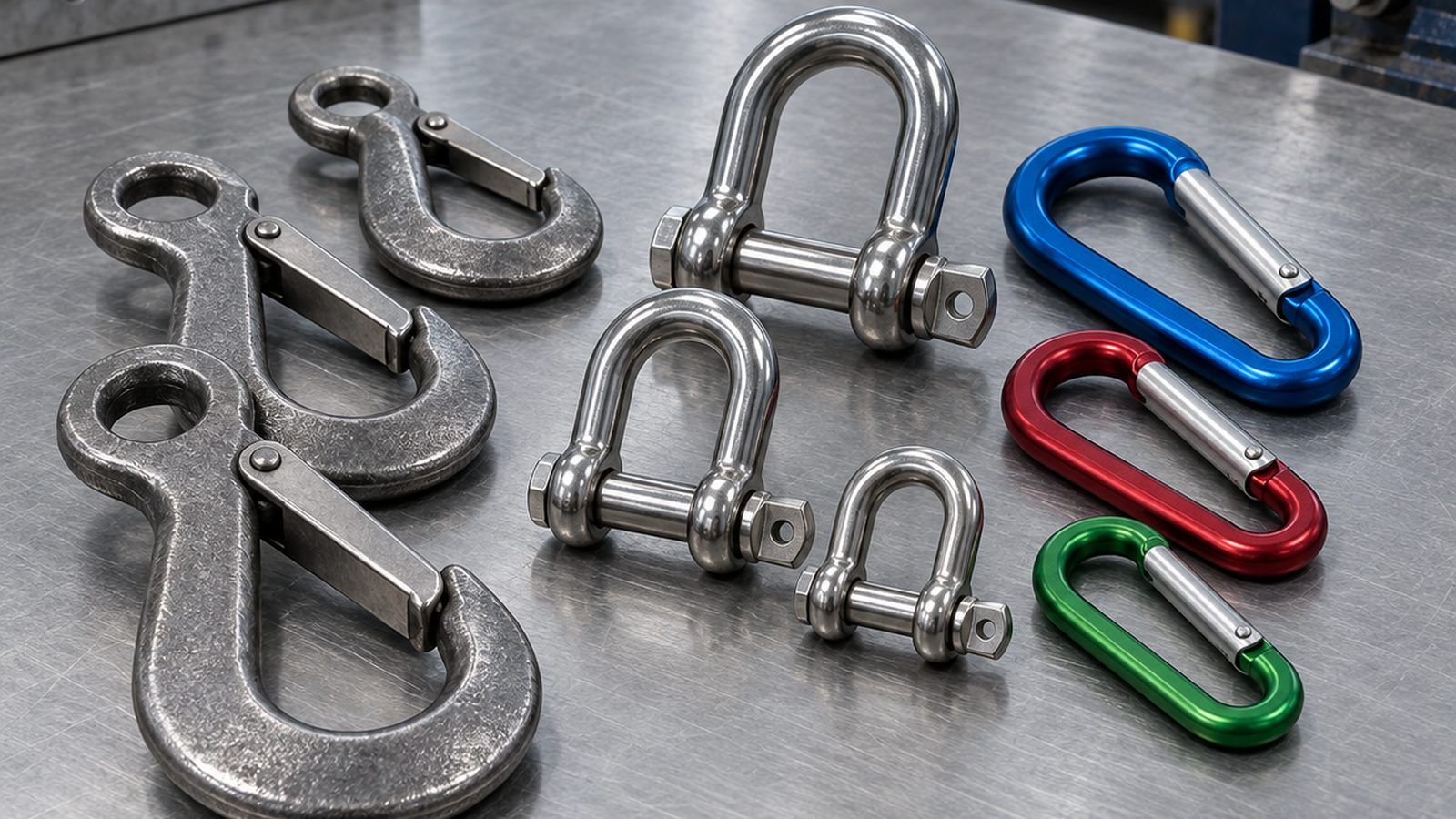
CBAM, the EU’s Carbon Border Adjustment Mechanism under Regulation (EU) 2023/956, reaches most steel and aluminium safety hardware: Annex I lists headings 7318 and 7326 (iron and steel articles) and 7616 (other articles of aluminium) in full, so forged snap hooks, carabiners and shackles are usually in scope unless classified elsewhere. Since 1 January 2026, an importer bringing in more than 50 tonnes of CBAM goods a year must be an authorised CBAM declarant, declare the embedded emissions of those goods and surrender CBAM certificates, with the first declaration due by 30 September 2027. Emissions data from the non-EU manufacturer is now part of the purchase.
What is CBAM and what changed on 1 January 2026?
CBAM is a carbon price at the EU border that mirrors what EU producers pay under the EU Emissions Trading System (ETS), covering iron and steel, aluminium, cement, fertilisers, electricity and hydrogen. From 1 October 2023 to 31 December 2025 importers filed quarterly reports but paid nothing. The definitive period began on 1 January 2026, bringing authorisation, an annual declaration and certificates. Just before it started, Regulation (EU) 2025/2083, the CBAM part of the EU’s Omnibus simplification package, entered into force on 20 October 2025 and introduced the threshold and deadlines below.
Are carabiners, hooks and shackles in CBAM scope?
Most are, because their usual headings appear in Annex I as whole headings, so every CN code beginning with those four digits is covered. For iron and steel, Annex I covers chapter 72 (except certain ferro-alloys and scrap) and headings 7301 to 7311, 7318 and 7326; stainless steel counts as steel. For aluminium it covers 7601, 7603 to 7614 and 7616, excluding scrap (7602) and household articles (7615). As a starting point for your broker, not a ruling:
- A steel snap hook, stainless shackle or steel carabiner will often be proposed under 7326, other articles of iron or steel.
- An aluminium carabiner will often be proposed under 7616.
- Screw hooks, eye bolts or shackle pins sold on their own may fall in 7318.
- A G80 master link can be argued as a chain part under 7315, which is not in Annex I, or as a 7326 article, which is.
- Titanium and brass parts sit in other chapters and are outside current scope.
Classification depends on material, function and presentation, so confirm each code in TARIC, with your customs broker or through a binding tariff information (BTI) ruling. Coverage is also widening: the Commission proposed in December 2025 to add around 180 downstream steel and aluminium products from 2028, and the European Parliament adopted a broader negotiating position in September 2026. Recheck your codes once the final list is adopted.
How does the CBAM 50 tonne threshold work?
An importer is exempt for a calendar year if the cumulative net mass of its CBAM goods, excluding packaging, stays at or below 50 tonnes. It is counted per importer across iron and steel, aluminium, cement and fertilisers together; electricity and hydrogen get no exemption. Exceed 50 tonnes and CBAM applies to all CBAM imports that year, not only the excess, and artificially splitting consignments is prohibited. Two illustrative cases:
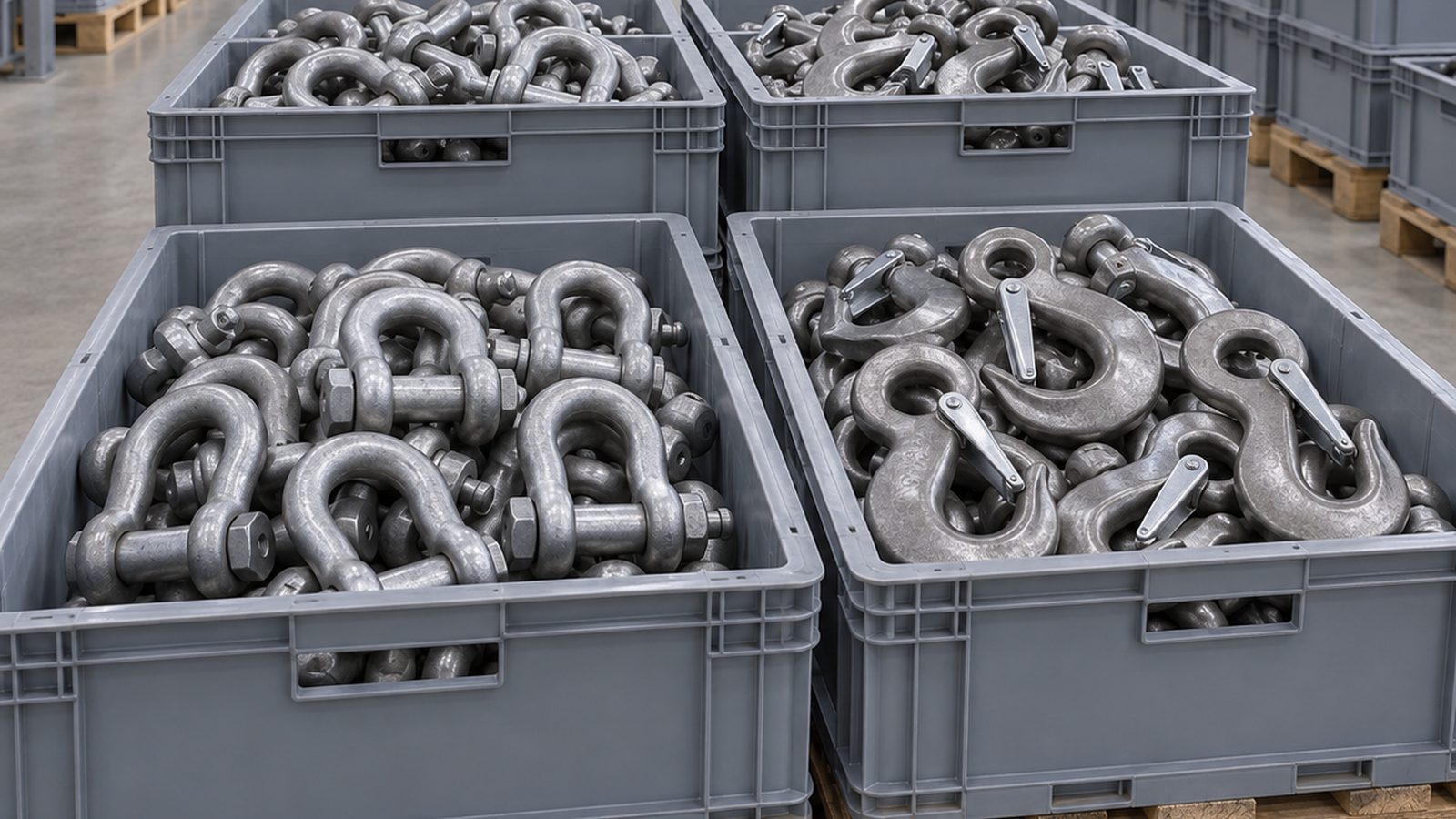
- Illustration: a distributor importing four containers of forged steel hooks and shackles a year, at roughly 15 tonnes net each, reaches about 60 tonnes and is fully inside CBAM.
- Illustration: a brand owner shipping a few hundred kilograms of aluminium carabiners several times a year, with no other CBAM goods, stays well below 50 tonnes and has no declaration or certificate obligation.
The second case changes if the company also imports steel anchor plates or fasteners, since every CBAM good counts towards the same 50 tonnes. The Commission reviews the threshold annually and can adjust it.
What must an authorised CBAM declarant do, and by when?
An importer expecting to exceed 50 tonnes must become an authorised CBAM declarant, or use an indirect customs representative with the status, before crossing the threshold. Applications filed by 31 March 2026 let imports continue while the authority decided. Without the status or a timely application, CBAM goods above the threshold cannot clear customs, and exceeding it without authorisation can attract penalties of three to five times the standard per-tonne penalty. Key dates for 2026 imports:
- Each quarter of 2026: the Commission publishes a certificate price, the weighted average of EU ETS auction clearing prices for that quarter.
- 1 February 2027: certificate sales open on the common central platform.
- From 2027: prices become weekly, and at each quarter end a declarant must hold certificates for at least 50% of embedded emissions imported that year, down from 80% originally.
- 30 September 2027: annual declaration for 2026 imports and surrender of certificates.
Certificates due are reduced to reflect the free ETS allowances EU producers still receive. In 2026 the CBAM factor is 97.5%, so that deduction still reflects almost the full free-allocation benchmark; it shrinks each year until free allocation ends, scheduled for 2034 under current law, though a July 2026 Commission ETS proposal could slow the pace. Because the deduction follows EU benchmarks, not your supplier’s figures, a high-emission route or a marked-up default value leaves a larger net liability.
How are embedded emissions calculated?
Embedded emissions are tonnes of CO2 equivalent per tonne of product, times net mass imported. Default values are published by the Commission by country and product; they need no verification but carry a mark-up for steel and aluminium of 10% in 2026, 20% in 2027 and 30% from 2028. Actual values come from the producing installation’s monitored data and must be verified by an accredited verifier, with a site visit expected in the first verification year.
For steel and aluminium, only direct emissions count in the definitive period; electricity-related indirect emissions were reported during the transitional period but are not charged now. Precursors do count: a forged hook carries the emissions of the steel bar it came from, and an aluminium carabiner those of its bar or billet. Yield matters too. The Commission’s guidance notes that if 20% of a rod is cut away as scrap, 100 tonnes of rod stand behind 80 tonnes of screws and nuts, so heavily machined parts carry more precursor emissions per tonne shipped than near-net-shape forgings.
A carbon price effectively paid in the country of origin, net of rebates, can be deducted under Article 9. The implementing rules were in draft during 2026, and the Commission is due to set default third-country carbon prices from 2027. Taiwan, for example, began collecting a carbon fee in 2026, based on 2025 emissions, from power and manufacturing entities emitting over 25,000 tonnes CO2e a year. Whether any fee paid along a given supply chain is deductible is a matter of fact and evidence for that chain, so ask rather than assume.
What should you ask a non-EU supplier for?
Treat CBAM data as an RFQ line item and check replies against your declaration requirements. Ask for:
- The CN code used for each part.
- Identification of each installation producing the goods and their precursors, including the steel mill or smelter.
- The production route for the part and the precursor, such as electric arc furnace or blast furnace steel, primary or secondary aluminium.
- Precursor materials, their origin and the mass consumed per tonne of finished part.
- Embedded emissions per tonne, the method used and the reporting period covered.
- Whether values are actual and verified, and by whom, or defaults.
- Parameters such as alloy content and scrap share, plus evidence of any carbon price paid.
Mill test certificates, covered in our guide to material traceability, already tie a part to a mill and heat; CBAM data extends that chain to installation-level emissions.
How does CBAM change the landed cost of steel versus aluminium hardware?
CBAM becomes a landed-cost line alongside customs duty, but it is driven by weight and emissions intensity, not customs value. A heavy, low-value steel part therefore carries more CBAM cost per euro of goods than a light, high-value aluminium carabiner. Model it per part: net mass times embedded emissions per tonne, less the free-allocation adjustment and any eligible foreign carbon price, times the certificate price.
Records behind each declaration, including verification reports, must be kept until the end of the fourth year after the year it was due, so file supplier data, CN code decisions and net mass per shipment together. CBAM is a customs and carbon-cost obligation; it sits alongside, and replaces none of, product rules such as the PPE Regulation or the new Machinery Regulation for lifting accessories.
Working with Power Honour
Power Honour manufactures forged, cast and machined steel, stainless and aluminium hardware in Taiwan. When you send a drawing or RFQ, tell us the CN codes you intend to declare and the reporting data your CBAM declaration needs, so the data request is part of the project from the start rather than a question raised at the border.