Ice Tools
Ice Screws
1 product
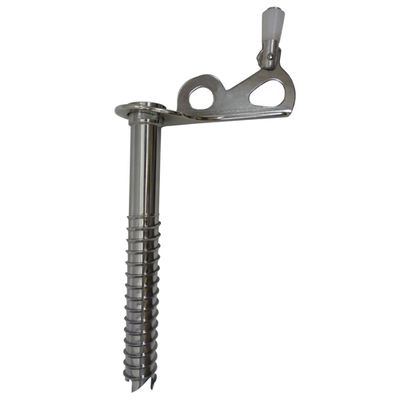
This category covers ice screws, the tubular threaded anchors that climbers wind into ice for protection and belay anchors. The IS-1010 has an integrated handle for fast, tool-free placement and is available in steel or stainless steel and in 12, 17 and 22 cm lengths. Short screws suit thin ice and quick placements on steep ground, while longer screws are preferred for anchors in thick, solid ice. Ice screws are used in waterfall ice climbing, alpine mountaineering and glacier crevasse-rescue systems. In Europe, ice anchors sold as climbing protection are expected to meet EN 568. The IS-1010 can be supplied OEM or private label, with length mix, hanger colour and marking specified by the brand owner.
Frequently asked questions
- Which ice screw length should I stock?
- Most climbers carry a mix: short screws (around 12 cm) for thin ice, mid-length screws for general protection and longer screws (around 22 cm) for anchors in thick ice. Offering all three lengths, as the IS-1010 does, lets a brand sell individual screws and mixed sets.
- Steel or stainless steel?
- Both are used for ice screws. Stainless steel offers better corrosion resistance, which helps with gear that is often stored wet. Buyers should choose based on their market and specify the material in the RFQ.
- What does the handle do?
- A handle on the hanger lets the climber crank the screw into the ice with one hand and no separate tool, which speeds up placements. On the IS-1010 the handle is built into the hanger.
- What should an ice screw RFQ include?
- State the lengths and quantity split, material, hanger colour and marking, packaging and the standard required for the target market, such as EN 568 in Europe. Power Honour can supply the IS-1010 under private label or modify the hanger, handle or tube to a customer drawing.
How these are made
Heat Treatment for Precision Metal Parts: What T6 and HRC Really Mean
Heat treatment is controlled heating and cooling that changes a metal’s bulk structure, not its surface. A guide to T6 tempers, quenching and tempering, case hardening, stress relief and distortion.
Read more →Surface Treatment Guide: Anodising, Plating and Passivation
Choosing a surface treatment for metal parts comes down to the base metal plus the service environment. A practical guide to anodising, plating, passivation, salt spray testing and RoHS compliance.
Read more →Need this in a different specification?
Different size, material, finish, strength rating or gate, or a part that is not here at all. Send a drawing or a sample and we will come back with a DFM review and a quotation.
- A reply within two business days from our team in Taipei.
- NDA on request before drawings or specifications change hands.
- An engineering and DFM review, not a sales pitch — we will say so if we are the wrong fit.
Prefer email? Write to service@fall-protect.com.