Mountaineering & Climbing Hardware
Energy Absorber Lanyards
1 product
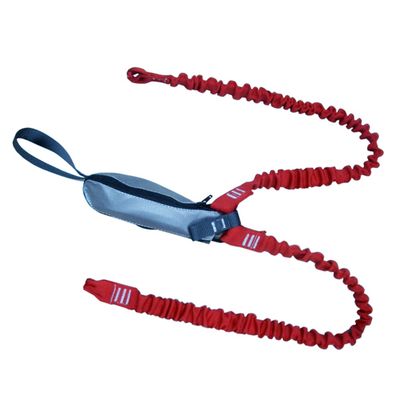
This category covers energy-absorbing lanyards, which connect a user to an anchor or cable and limit the force transmitted to the body and the anchor in a fall. They typically contain a tear-webbing pack that rips progressively under load, absorbing fall energy. The YL-01 weighs 394 g and can meet CE 0197 requirements. Lanyards of this type are used on via ferrata routes, where the European standard is EN 958, and in work-at-height fall arrest, where lanyards and energy absorbers fall under EN 354 and EN 355. Because the application determines the applicable standard, connectors and user-weight range, buyers should define the intended use before specifying. The YL-01 can be supplied OEM or private label, with arm length, connectors and labelling to the brand owner's specification.
Frequently asked questions
- How does an energy absorber work?
- An energy absorber usually contains a folded tear webbing sewn inside a pack. In a fall, the stitching tears progressively, absorbing energy and keeping the peak force on the user and anchor lower than a static lanyard would.
- Which standard applies to energy absorber lanyards?
- It depends on the use. Via ferrata sets in Europe are tested to EN 958, while energy absorbers and lanyards for occupational fall arrest are tested to EN 355 and EN 354. Buyers should state the application and certification needed in their RFQ.
- What does CE 0197 mean?
- The four-digit number shown with a CE mark identifies the notified body involved in the conformity assessment of a PPE product. The YL-01 can meet CE 0197 requirements; buyers should request the certificate and the standard it covers.
- What should an absorber lanyard RFQ include?
- Specify the application, standard, user-weight range, arm length and configuration, connectors, labelling and packaging. Power Honour can supply the YL-01 under private label or adapt it to a customer specification.
How these are made
Fall Clearance Calculation: Lanyards, SRLs and Lifelines
Fall clearance calculation adds free fall, deceleration, harness stretch, D-ring height and a safety margin: about 18.5 ft below the anchor for a 6 ft lanyard, far less for an overhead SRL.
Read more →Self-Retracting Lifeline (SRL) Manufacturing: An OEM and Standards Guide
How is a self-retracting lifeline built and certified? A manufacturing guide to SRL brake mechanisms, EN 360 and ANSI/ASSP Z359.14 Class 1 vs Class 2, lifeline media, and what to specify to an OEM.
Read more →Horizontal vs Vertical Lifeline Systems for Fall Protection
Horizontal vs vertical lifelines: a horizontal line lets a worker move along an edge, a vertical line protects a climb. How to choose, clearance and OSHA rules.
Read more →Need this in a different specification?
Different size, material, finish, strength rating or gate, or a part that is not here at all. Send a drawing or a sample and we will come back with a DFM review and a quotation.
- A reply within two business days from our team in Taipei.
- NDA on request before drawings or specifications change hands.
- An engineering and DFM review, not a sales pitch — we will say so if we are the wrong fit.
Prefer email? Write to service@fall-protect.com.