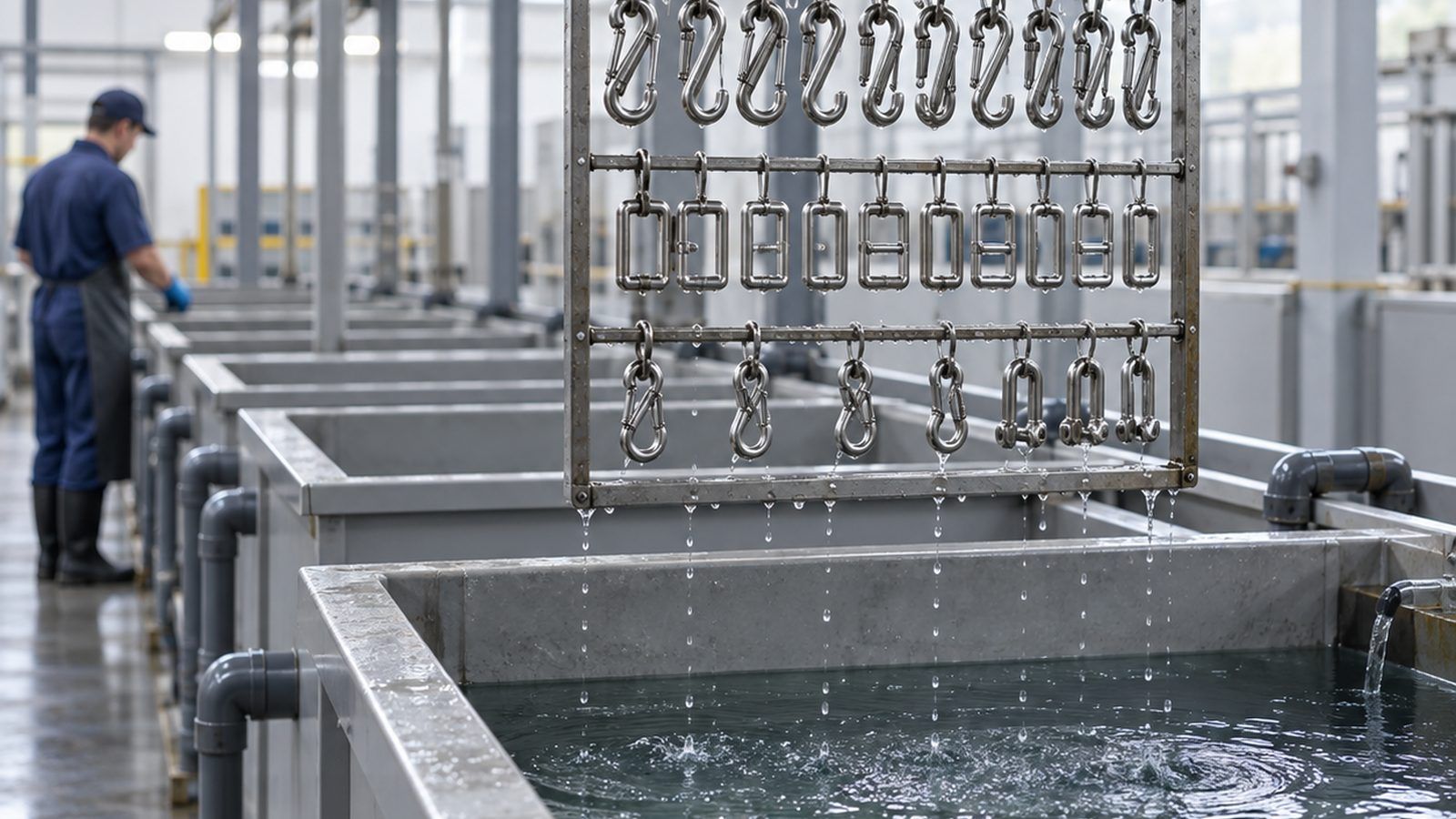
The EU hexavalent chromium restriction is a REACH process, still under way in 2026, to replace case-by-case authorisation of chromium trioxide and related Cr(VI) substances with a single Annex XVII restriction: a ban with derogations under which uses such as electroplating continue only within strict worker-exposure and emission limits. As proposed, it targets how Cr(VI) is used in EU plating and surface-treatment operations, not finished hardware as such. European buyers are already writing “Cr(VI)-free” into specifications anyway, so the real question is what to call up instead: trivalent passivates over zinc or zinc-nickel, zinc flake, electroless nickel or stainless steel, defined by standard, passivate type and ISO 9227 salt-spray hours.
Where is hexavalent chromium used in finishing safety hardware?
Cr(VI) appears in more finishing steps than most buyers expect, and whether any stays on the part depends on the process:
- Hard and decorative chrome plating from chromic acid baths. The deposit is metallic chromium, so a properly rinsed part carries essentially no Cr(VI); the issue is the bath.
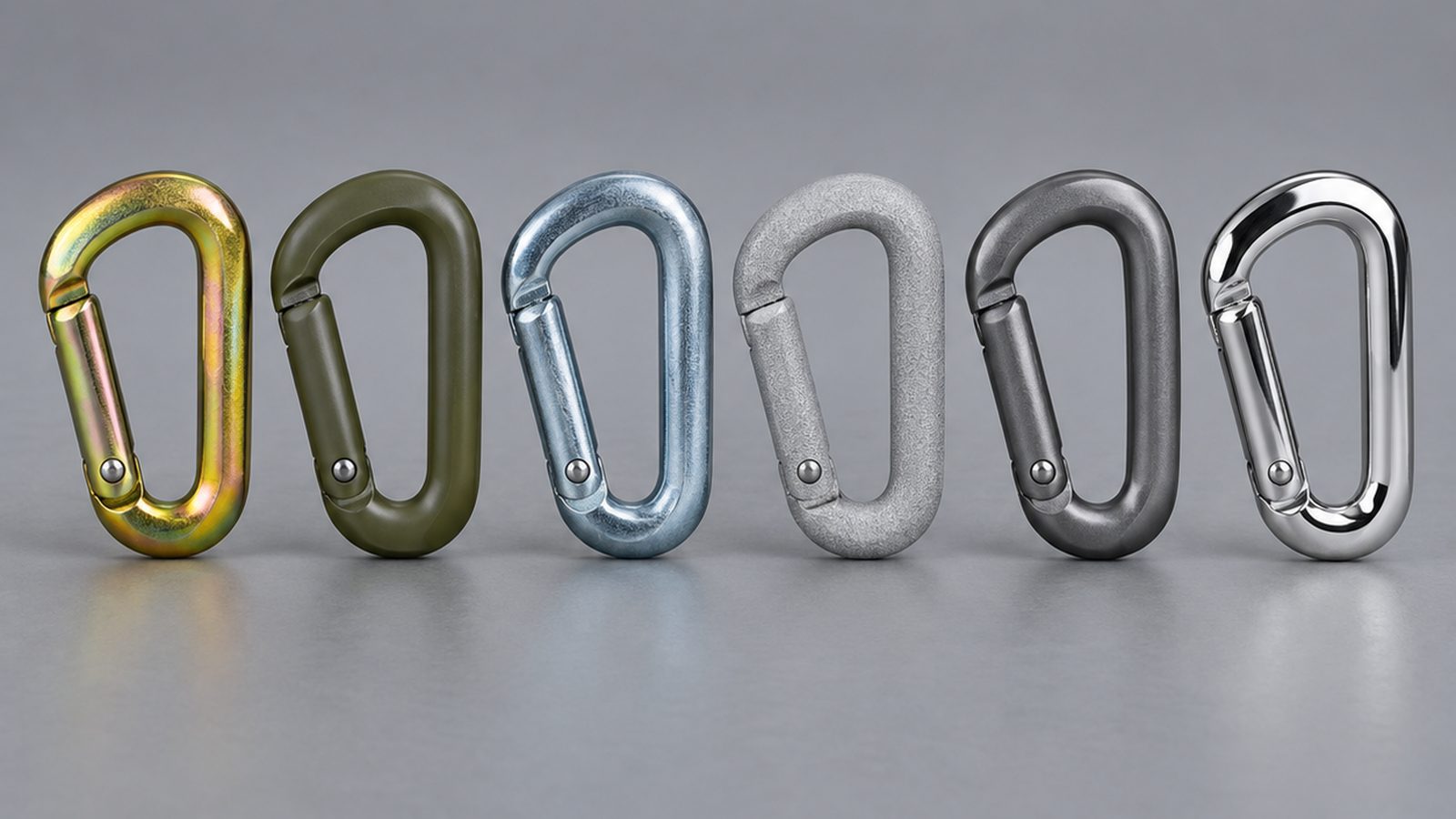
- Hexavalent chromate passivates on zinc plating — the traditional yellow, olive-drab and some black finishes on steel hooks, buckles and snap hooks. Here Cr(VI) is part of the conversion film and stays on the part.
- Chromic acid anodising (MIL-A-8625 Type I) and chromate primers, mainly aerospace and defence; climbing aluminium is normally sulphuric-acid anodised.
- Stainless steel passivation, in one case: of the ASTM A967 treatments, only Nitric 1 adds sodium dichromate, to help passivate martensitic and precipitation-hardening grades. The other nitric methods and the citric methods contain no Cr(VI).
- Early zinc flake formulations, which contained chromic acid; mainstream zinc flake systems today are Cr(VI)-free.
How does REACH regulate Cr(VI) substances today?
Through authorisation. Chromium trioxide joined the Candidate List of substances of very high concern (SVHC) in 2010 as a carcinogen and mutagen, and it and ten other Cr(VI) compounds, including the sodium and potassium dichromates, were placed on REACH Annex XIV in 2013 and 2014. Since their sunset dates of 21 September 2017 or 22 January 2019, nobody in the EU may use them without a Commission authorisation for that specific use, granted on opinions from ECHA’s risk assessment (RAC) and socio-economic analysis (SEAC) committees and time-limited by a review period.
Applications far outran what the committees and the Commission could process, and the Commission has said it will extend review-report deadlines to 1 January 2029 rather than process reviews a restriction would overtake.
What has ECHA proposed, and where does the hexavalent chromium restriction stand?
ECHA has proposed an EU-wide ban on the Cr(VI) substances in scope, except for six use categories that may continue if they meet defined limits for worker exposure and for emissions to air and water: formulation of mixtures, electroplating on plastic, electroplating on metal, primers and other slurries, other surface treatments, and functional additives or processing aids. Electroplating is therefore not exempted; it is conditionally permitted. The dossier, published at the end of April 2025, covers the Annex XIV Cr(VI) substances other than the lead chromates, plus barium chromate as a possible regrettable substitute. It set out a less strict and a stricter option for those limits, with an 18-month transition.
A six-month public consultation ran from 18 June to 18 December 2025. RAC adopted its opinion at its June 2026 plenary, concluding that a restriction is in principle the most appropriate EU-wide measure once the substances leave Annex XIV, but that the proposal as drafted was not the most appropriate in effectiveness, practicality and monitorability; it recommended conditions to improve it. SEAC agreed its draft opinion on 11 June 2026, and a 60-day consultation on that draft closed on 17 August 2026. SEAC’s final opinion comes next.
The Commission then drafts two acts that take effect together — removing the substances from Annex XIV and adding the restriction to Annex XVII — for a vote in the REACH Committee of Member States, followed by three months of scrutiny by the European Parliament and Council. Its December 2025 estimate put adoption at end-2027 or early 2028 in the best case, late 2028 more conservatively, before any transition period. Until then, existing authorisations remain the rule, and any limit value quoted today is provisional.
Does the restriction apply to plated hardware imported into the EU?
Not directly, as proposed. Authorisation and the proposed restriction both control the use of Cr(VI) substances by operators in the EU. Authorisation has never applied to finished articles imported from outside the EU, and the published proposal sets conditions on EU operations rather than a Cr(VI) limit for articles.
Other EU rules already limit Cr(VI) in articles, depending on where the part ends up. RoHS caps it at 0.1 percent by weight in each homogeneous material of electrical and electronic equipment, and a coating is generally treated as its own homogeneous material, which rules out hexavalent passivates there. The end-of-life vehicle rules set the same 0.1 percent limit for vehicle parts, kept in the new ELV Regulation (EU) 2026/1738. REACH Annex XVII entry 47 limits Cr(VI) in leather articles that contact the skin to 3 mg/kg.
Then there is REACH Article 33: an article containing a Candidate List substance above 0.1 percent by weight obliges the supplier to inform business customers and answer consumer requests within 45 days, and the Waste Framework Directive adds a SCIP database notification. For a plated part the 0.1 percent is measured against the whole article, and a conversion film is a vanishingly small share of a forged hook’s mass, so the threshold is rarely approached. Rarely is not never, though; it has to be assessed part by part, which is why compliance teams prefer a Cr(VI)-free specification.
Which Cr(VI)-free finishes can replace hexavalent chromium?
Buyers are not waiting for the final text: brands selling into industrial, automotive and electrical channels already work to restricted-substance lists that exclude Cr(VI). For steel hardware, the replacements compare like this:
- Trivalent thin-film passivate on zinc, clear or blue: similar cost to yellow chromate, lower corrosion resistance without a sealer. Suited to indoor hardware.
- Trivalent thick-film passivate, often iridescent, with a sealer or topcoat: can approach yellow chromate in salt spray, at moderately higher cost.
- Zinc-nickel, typically 12 to 15 percent nickel, with trivalent passivate and sealer: the strongest electroplated option, at markedly higher cost; grey or black.
- Zinc flake, to ISO 10683 for fasteners or EN 13858 for other parts: non-electrolytic, so no hydrogen from plating, with high salt-spray resistance. Thicker and matt, so check gate and hinge clearances.
- Electroless nickel: uniform in recesses and wear-resistant, at higher cost; corrosion performance depends on phosphorus content and thickness.
- Trivalent decorative chrome: modern processes come close to hexavalent chrome, but early ones were visibly darker and warmer, so a mismatch against older stock is possible.
- PVD: thin, hard and dimensionally neutral, at the highest cost per part.
- Stainless steel: removes the coating question at a material cost; passivate with citric acid or a dichromate-free nitric method.
Marine and coastal service pushes all of these finishes harder.
What should you put on your drawing or purchase order?
A Cr(VI)-free finish is only as good as its call-out:
- Coating system and standard, for example zinc to ISO 2081, or zinc and zinc-alloy coatings to ISO 19598, which specifically covers supplementary Cr(VI)-free treatments.
- Minimum local thickness on defined significant surfaces.
- Passivate type (trivalent thin-film or thick-film) and colour.
- Sealer or topcoat, and any friction or fit constraint it must respect.
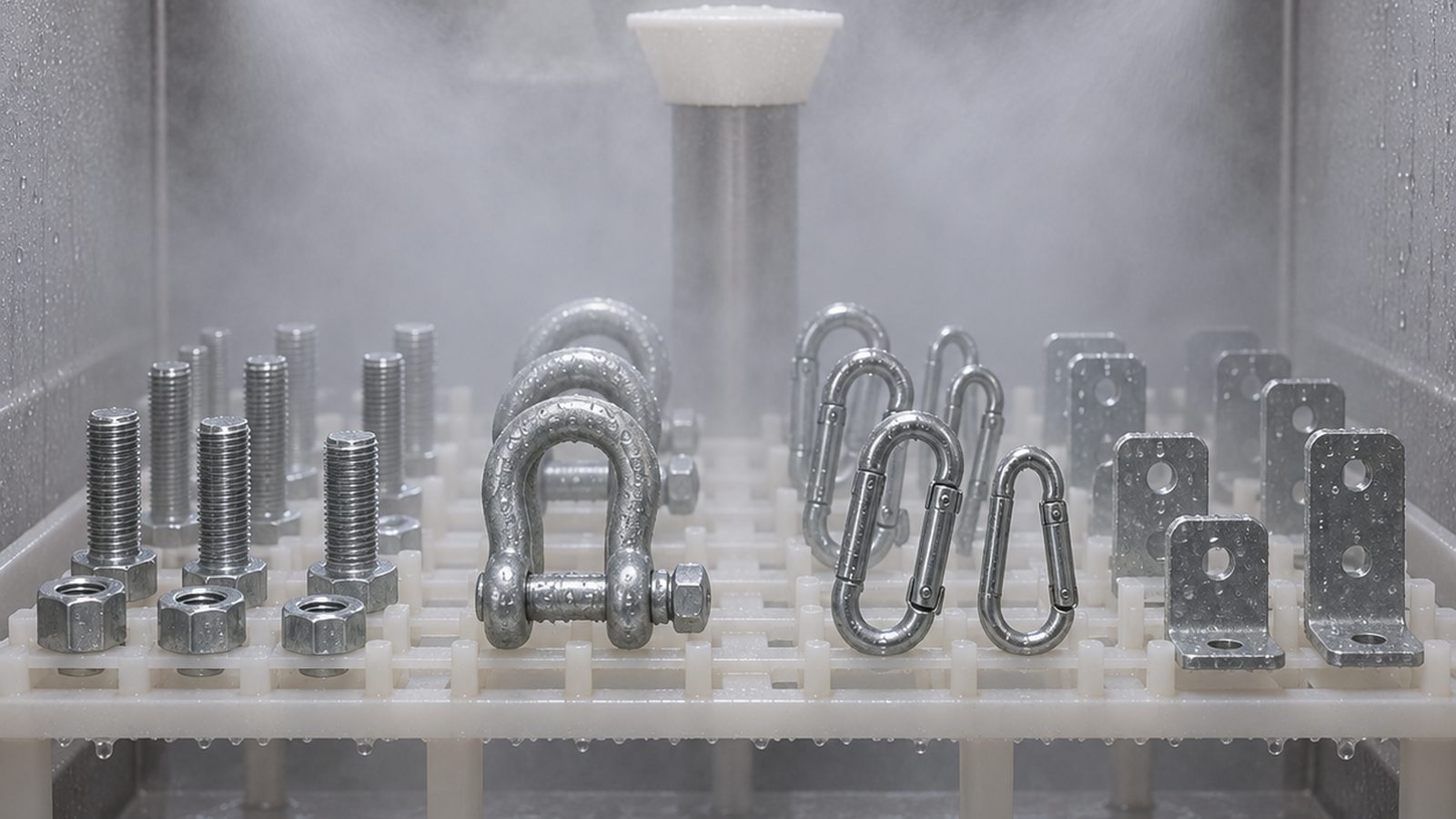
- Corrosion test and duration: ISO 9227 neutral salt spray with separate hours to white and red corrosion, for example no white corrosion at 120 hours and no red rust at 480 hours. Agree such figures with the coater on the real part; they are requirements, not guaranteed performance.
- A Cr(VI)-free declaration covering the whole coating system.
- Hydrogen-embrittlement relief for high-strength steel, which our surface treatment guide covers.
What should you ask a plating supplier?
- Which passivate chemistry runs on this line, and does the plant still operate any Cr(VI) process?
- Can you issue a Cr(VI)-free declaration per part number, backed by a test such as the IEC 62321-7-1 boiling-water extraction method?
- What salt-spray results do you hold on similar geometry, and how often do you retest?
- Does the sealer or topcoat affect spring gates, rivets or moving joints?
- When is the embrittlement-relief bake done relative to passivation?
- If a lot fails salt spray or a Cr(VI) check, how is it reworked and traced?
Working with Power Honour
Power Honour forges, casts and machines safety hardware in Taiwan and runs surface treatment — anodising, plating, coating and passivation — in-house under an ISO 9001 system. Put the finish system, thickness and corrosion requirement on your drawing, and ask for a Cr(VI)-free declaration where you need one. Send it with your RFQ and we will confirm what our finishing can meet for that part.