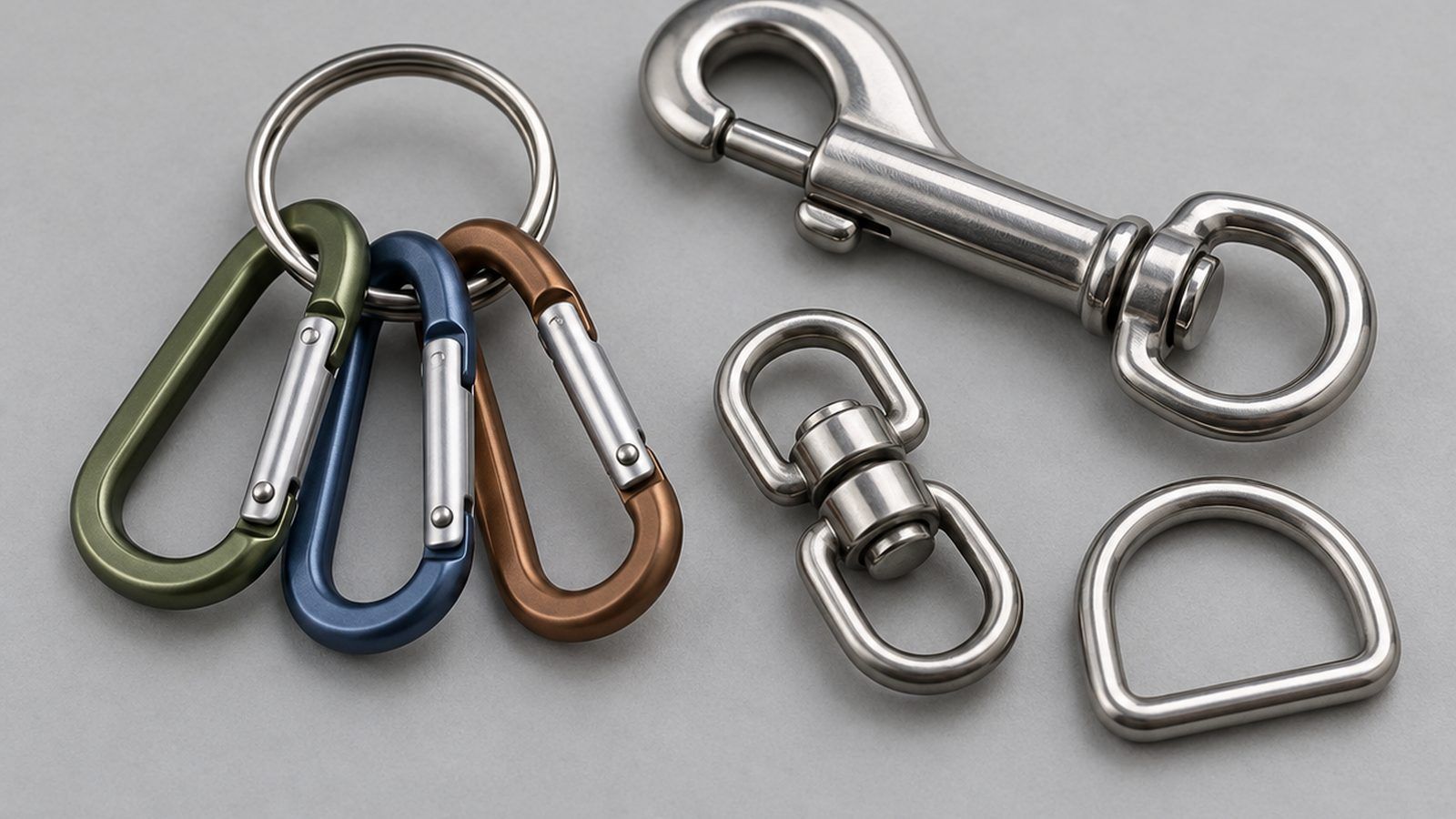
Accessory carabiners, keyring clips, bag hooks and pet hardware such as leash clips, D-rings and swivels are consumer products covered by the GPSR, the General Product Safety Regulation (EU) 2023/988, which has applied since 13 December 2024 — unless they are designed and marketed to protect a person against a fall, in which case they are Category III personal protective equipment under Regulation (EU) 2016/425. Under the GPSR, the company selling the item under its own name is the manufacturer: it must carry out an internal risk analysis, keep technical documentation for 10 years, give each product a type, batch or serial identifier and its contact details, and have an economic operator established in the EU acting as responsible person. Online listings must show the manufacturer, responsible person, identifier, a picture and warnings.

What is the GPSR and what does it cover?
The GPSR, the EU’s horizontal safety law for non-food consumer products, replaced the General Product Safety Directive 2001/95/EC on 13 December 2024; compliant products placed on the market before then may still be sold (Article 51). It covers products intended for, or reasonably likely to be used by, consumers, and online offers targeting consumers in the Union (Article 4).
It works as a safety net. Under Article 2(1) it applies insofar as no other EU law with the same objective regulates the product’s safety, and where specific safety requirements exist, only to the aspects and risks they do not cover. Even for PPE, the Commission’s 2025 guidelines for businesses (C/2025/6233) confirm that the GPSR’s distance-sales, accident-reporting, online marketplace and recall-remedy provisions still apply.
GPSR or PPE Regulation: which applies to a carabiner?
It depends on what the product is designed and sold to do. The PPE Regulation defines PPE as equipment designed and manufactured to be worn or held by a person for protection against risks to that person’s health or safety (Article 3(1)). Falling from a height is a Category III risk in Annex I, and the Commission’s PPE Regulation Guidelines list karabiners and connectors for work at height, mountaineering and climbing under Category III. Those connectors are tested to standards such as EN 362 or EN 12275 with notified-body involvement; our guide to the PPE CE route covers that path.
A carabiner made to hold keys or a bag strap is not designed to protect anyone, so it falls outside the PPE definition and is a consumer product under the GPSR. The alloy and shape can be similar; intended use decides the regime.
Why do marketing claims decide the category?
Intended use is read from how the product is presented. The Commission’s PPE Regulation Guidelines make the point for reflective products: if the information supplied or the product’s appearance gives the impression that it is PPE, a warning that it is not PPE may not relieve the manufacturer of its obligations. The same guidelines class reflective keyrings as not PPE, while free-hanging high-visibility accessories are Category II — similar objects, different claims.
Signals that can lead an authority to treat an accessory carabiner as uncertified PPE:
- climbing, rope-access or harness imagery on packaging, listings or websites
- kN figures, or “rated”, “load-bearing” or “safety” wording
- listing in climbing or work-at-height categories on a marketplace
- locking gates and shapes that mimic climbing connectors, with nothing in the presentation to say otherwise
Safety Gate, the EU alert system for dangerous products, shows this working both ways. Carabiners in climbing, via ferrata and fall-arrest sets have been notified under the PPE Regulation for gates that open or connectors that break, while small carabiner clasps on child-appealing keyrings and soft toys have been notified under toy safety rules as choking hazards.
Is a “not for climbing” warning legally required?
We are not aware of any EU rule or European standard that requires those words on an accessory carabiner; they are an industry convention. The GPSR does make warnings part of the safety assessment (Article 6(1)(d)) and requires clear instructions and safety information in a language set by each Member State, unless the product can be used safely without them (Article 9(7)). Because climbing or lifting with a carabiner-shaped object is foreseeable misuse, many risk analyses will conclude that a warning, in words or a pictogram, is appropriate — but it only works if the rest of the presentation agrees with it. Novelty shapes also need a check under Article 6(1)(f), on products likely to appeal to children.
How does the GPSR apply to pet leash clips and collar hardware?
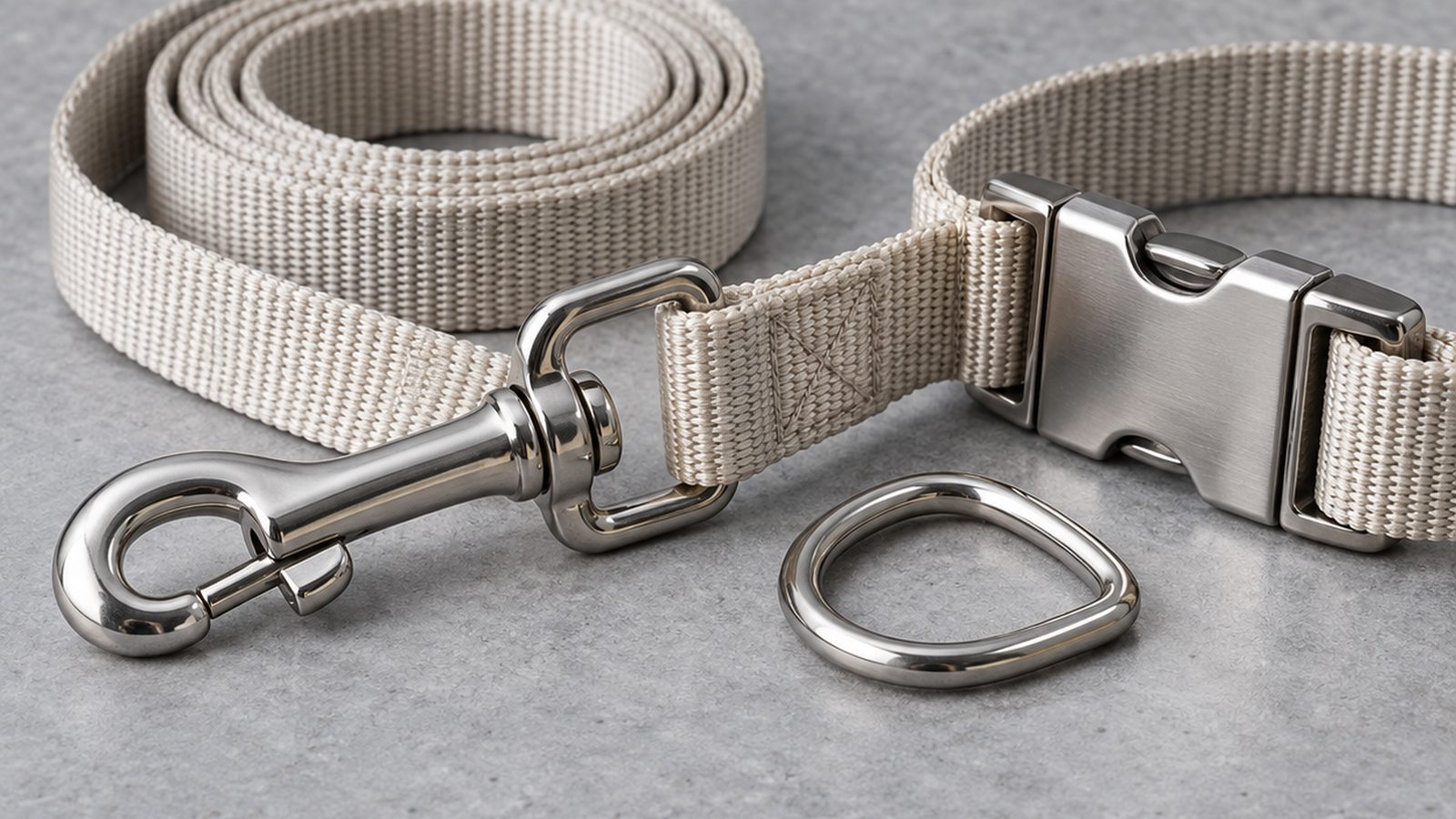
Leash clips, collar buckles, D-rings and swivels are GPSR consumer products, not PPE, because they are not designed to protect the person holding them, and not toys, because EU toy safety law covers products designed or intended for play by children under 14. The GPSR protects consumers, so the risk analysis centres on the handler: a clip that opens or fractures under a sudden lunge can snap back or let a dog pull into traffic, and gates, springs and edges can pinch or cut fingers.
As far as we can establish, there is no European standard specific to leash hardware, although a new ISO committee for pet products, ISO/TC 355, is working on safety requirements and test methods. Chemical rules such as REACH apply alongside the GPSR; Safety Gate alerts on dog leads have included a lead with metal fittings that released excessive nickel. Our separate article on strength testing covers load ratings for leash hardware.
What must brands, importers and online sellers do under the GPSR?
The brand selling a product under its own name or trademark is the manufacturer (Articles 3(8) and 13(1)), even when a contract factory makes it. Key obligations:
- Internal risk analysis and technical documentation before placing on the market, kept for 10 years (Article 9(2) and (3)).
- A type, batch or serial number on the product, or on the packaging or an accompanying document if the part is too small (Article 9(5)).
- The manufacturer’s name or trademark with postal and electronic address (Article 9(6)); importers add theirs (Article 11(3)).
- A responsible person established in the EU, performing the tasks in Article 4(3) of the Market Surveillance Regulation (EU) 2019/1020 and named on the product, packaging, parcel or accompanying document (Article 16).
- Online offers showing the manufacturer, the responsible person, a picture, type and identifier, and warnings in the consumer’s language (Article 19; marketplaces must enable this under Article 22(9)).
- A public complaints channel and an internal register of complaints and recalls (Article 9(11) and (12)).
- Notification of accidents causing death or serious harm through the Safety Business Gateway without undue delay (Article 20).
- In a recall, a notice headed “Product safety recall” and a cost-free remedy, normally a choice of at least two among repair, replacement and refund (Articles 36 and 37).
The responsible person can be an EU manufacturer, the importer, an authorised representative with a written mandate or, failing those, a fulfilment service provider. It must be established in the Union, so a manufacturer in Taiwan cannot fill the role.
Do European standards give a presumption of safety under the GPSR?
Yes, for the risks they cover. Under Article 7(1), conformity with European standards whose references are published in the Official Journal under Regulation (EU) No 1025/2012 — or, in their absence, with national requirements — creates a presumption of safety, though authorities can still act on evidence of danger (Article 7(3)). For accessory carabiners and leash clips there is, as far as we can establish, no such standard, so the brand builds its own case from the Article 8 elements, such as international standards, the state of the art and reasonable consumer expectations, and records its tests. Borrowing a connector test method internally is legitimate; printing the result on the product revives the PPE question.
A GPSR checklist for accessory carabiners and pet hardware
- Document the intended use and align packaging, listings and imagery with it.
- Write the risk analysis, including foreseeable misuse, and file test reports with it.
- Put a type or batch identifier and contact details on the part, packaging or accompanying document.
- Appoint and name the EU responsible person and agree how it performs the Article 16(2) checks.
- Translate warnings for every Member State you sell into and complete marketplace listing fields.
- Set up Safety Business Gateway access and a recall procedure, and check REACH for metal parts.
Working with Power Honour
Power Honour makes accessory carabiners and pet hardware in Taiwan alongside climbing and fall-protection hardware built to CE EN standards, so we work on both sides of this boundary. We cannot act as your EU responsible person, but we can prepare product information for your technical documentation, such as material, finish and process details. Send us a drawing or a target part and we will review how it can be made.