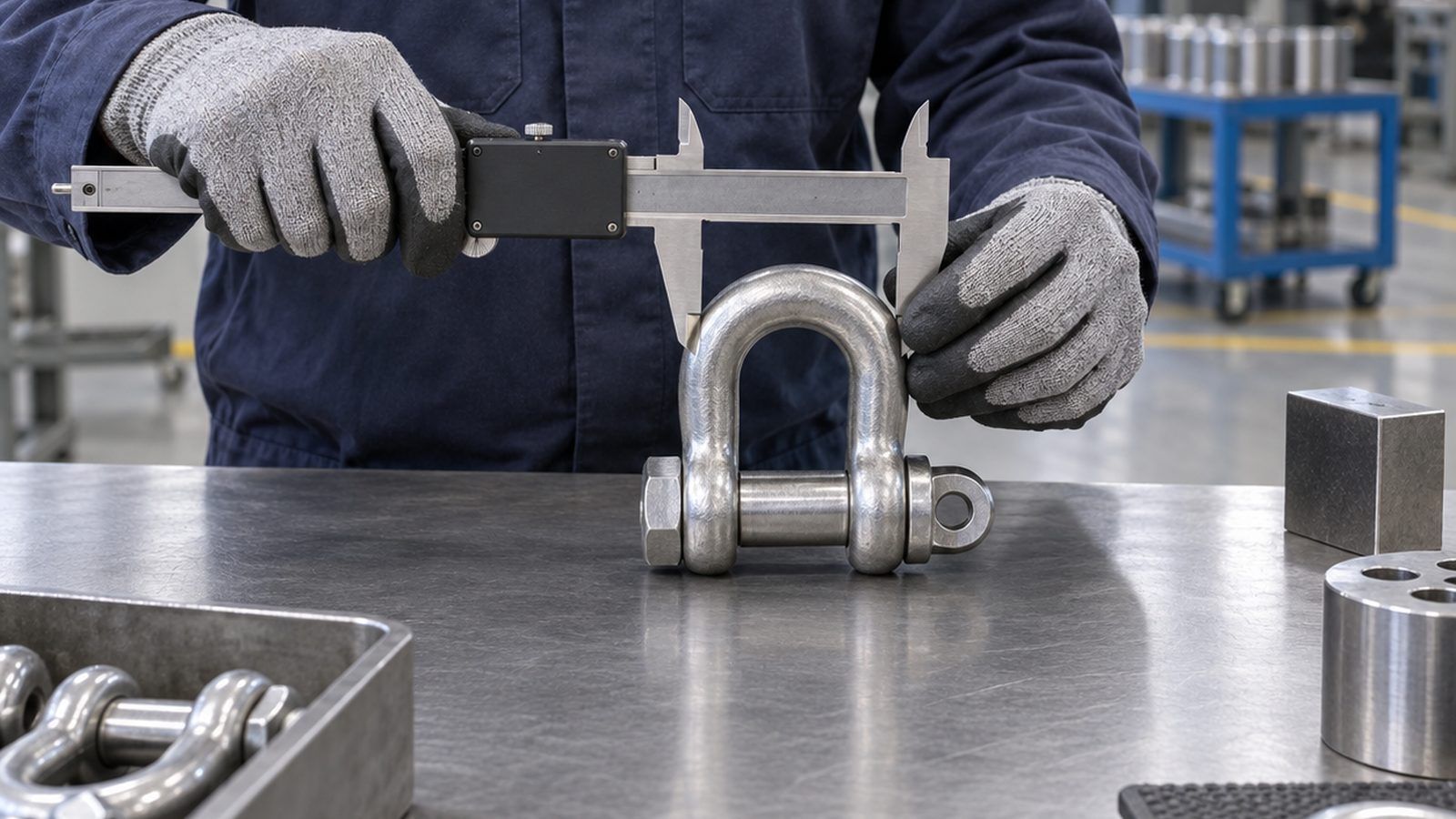
Safety equipment supplier qualification comes down to five things: demonstrated capability in the same product class, a quality system that produces records rather than certificates, material traceability that runs from the finished part back to a heat number, documented testing tied to the production lots you actually bought, and enough commercial stability to still be there in five years. Qualifying a vendor for a bracket is a cost and delivery exercise. Qualifying one for a fall-arrest connector is a liability exercise. If the part fails, your name is on it, you are the defendant, and the paperwork behind that part is your defence.
Why life-safety sourcing is a different exercise
A life-safety part adds a question that never arises on a furniture fitting: can you prove, years later and under adversarial scrutiny, that this part was made from the material you specified, by the process you approved, and tested to the standard on the label? Our general guide to evaluating a Taiwan OEM factory covers the universal ground; this is the layer on top.
- Product-class capability. Have they built load-rated connectors to a published standard?
- A records-producing quality system. ISO 9001 is the entry ticket, not the evidence.
- Material traceability. Finished part to lot to heat number, on demand.
- Test evidence tied to production. A type test proves the design, not your lot.
- Durability. Tooling, records and people have to outlive the product.
Does the supplier make parts in your class, or just parts like yours?
A shop that machines brackets beautifully is not automatically one that can make a load-rated connector. The difference is knowing that a forged connector body needs grain flow oriented to the load path, that heat treatment must be recorded lot by lot, and that a radius which looks cosmetic on the drawing decides whether the part breaks at 18 kN or 23 kN.
So ask directly: which life-safety parts do you already make, and to which standards? A credible answer names the standard and its edition — ANSI/ASSP Z359.12 for connecting components, ANSI/ASSP Z359.18 for anchorage connectors, EN 362, UIAA 121, PPE Regulation (EU) 2016/425 — and can describe what it demands. Under Z359.12 that means 5,000 lbf (22.2 kN) minimum tensile on the major axis, and gate face and gate side loading at 3,600 lbf (16 kN) held one minute without failure and without the gate opening more than 0.125 in (3.1 mm). A supplier who has built to that standard knows those numbers without looking them up; one who has not will talk about tolerances instead. The same applies to tool tethers under ANSI/ISEA 121 or confined-space rescue hardware.
What to ask for beyond the ISO 9001 certificate
ISO 9001 is a floor: it says a management system was audited against a generic standard, not that this supplier can hold a critical dimension on a part that arrests a falling body. Look for the system underneath:
- A populated incoming, in-process and outgoing inspection record from a recent order in your product family — measured values, instrument identity and a signature, not a blank template. Our three-stage IQC/IPQC/OQC guide covers what each stage catches.
- The non-conformance procedure and two or three closed reports, redacted. You want a real containment, root cause and verification loop, not a line saying "operator retrained".
- What happens when a lot fails: who can scrap, who can authorise a concession, whether the buyer is told.
- The certification body, expiry date and surveillance schedule. An accredited certificate carries a verifiable number.
If you sell PPE into the EU, Category III is an ongoing obligation, not a one-off approval. After EU type-examination the manufacturer must run module C2 (supervised product checks at random intervals) or module D (quality assurance of the production process) for as long as the product stays in production, so a notified body is periodically inside the factory.
Can they trace a finished part back to a heat number?
Only a factory that does it can answer. The chain runs mill certificate to incoming lot to work order to heat-treat batch to finished carton. Pick a part off the shelf and ask them to walk it backwards: real lot control produces an answer in an hour, its absence produces a certificate for the alloy in general. Our article on material traceability and mill test certificates covers the document layer; the habit is what you verify here.
What does credible test evidence look like?
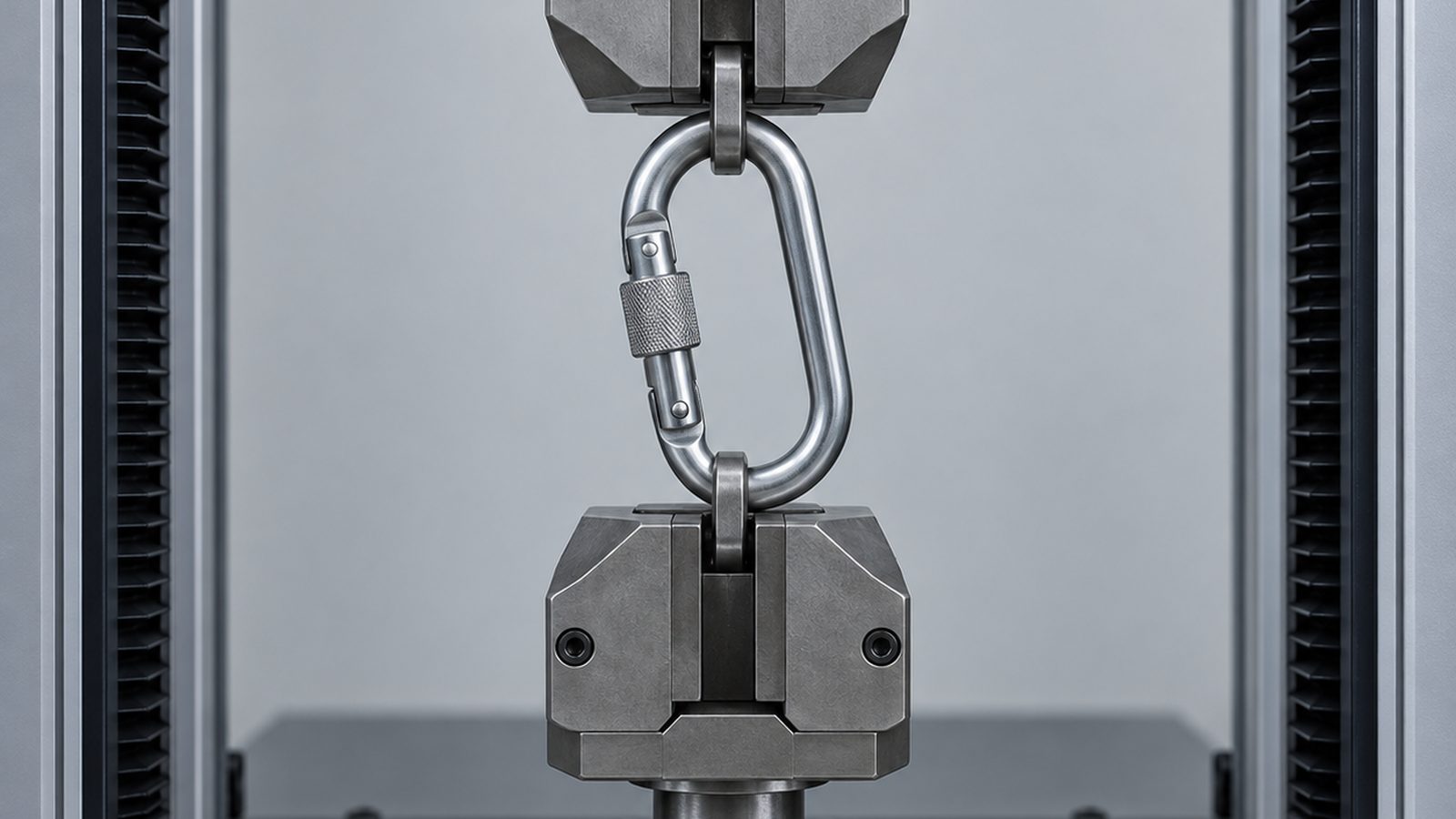
Suppliers routinely blur two things. A type test is destructive testing of a few samples to show the design meets a standard: done once, at certification, and necessary. Production testing is what happens to the parts you are buying — proof loading, sampling plans, units drawn from each lot and pulled to failure. Most standards do not prescribe it: Z359.12 sets what a connector must withstand, not how many units off the line get tested. That gap is a commercial decision, and it belongs in your purchase agreement rather than in an assumption.
A credible report identifies the part number and revision, the lot, the standard and edition, the fixture and loading direction, the rate and hold time, the result for every specimen including failure mode, and the date. A report that says only "pass" is not evidence. Then ask about the machine: a load frame is only as honest as its last calibration, verified to ASTM E4 or ISO 7500-1, typically within plus or minus one percent of applied force, against references traceable to a national metrology institute. Use an accredited third-party laboratory for certification, arbitration and anything you print on a label; in-house testing is right for routine lot verification, provided the equipment is calibrated.
Who owns the tooling if the relationship ends?
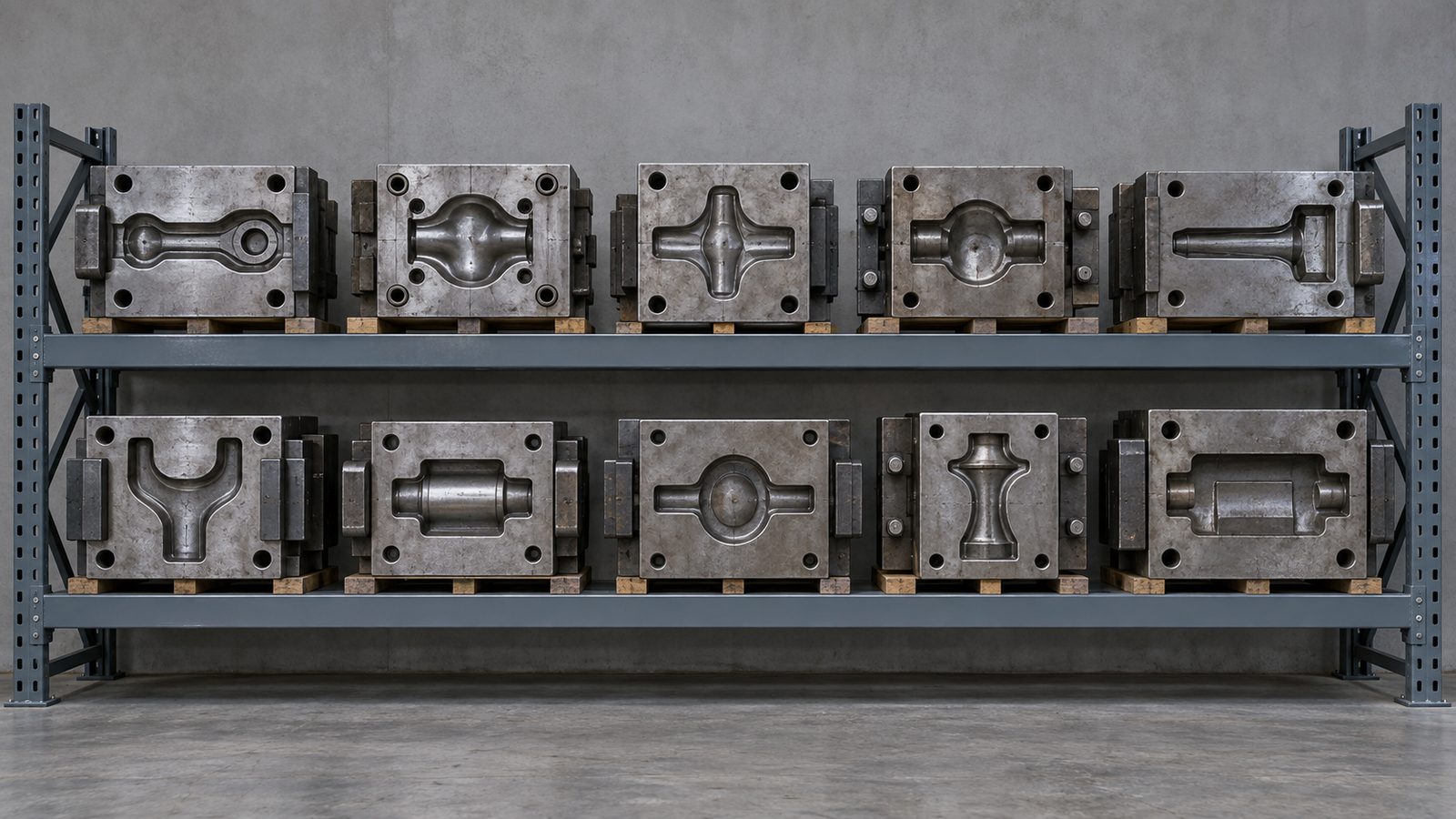
Forging dies, casting tooling and stamping dies are real money and real lead time, and ownership is rarely raised until it becomes urgent. Settle it in writing before the first sample: who paid, who owns, where tooling is stored, who maintains it, and what happens on termination. Our guidance on RFQ packages and on MOQ and pilot runs touches on this, but the life-safety version has an extra edge — moving production also means re-qualifying and possibly re-certifying. Tooling terms are a continuity control, not a procurement detail.
What will you need to produce five years from now?
Assume you will one day reconstruct the history of one part in front of someone who is not on your side. Under the EU PPE Regulation the manufacturer must keep the technical documentation and the declaration of conformity for ten years after the product is placed on the market; US limitation and repose periods vary by state and can run longer than most factories keep paperwork.
So ask, in writing: how long do you retain inspection records, test reports, mill certificates and heat-treatment charts, and in what form? What product liability insurance do you carry, and does it respond to claims in our market? Who signs a corrective action if a recall becomes necessary? A supplier who finds these questions offensive has told you something.
What a factory visit shows that a video call cannot
A video call is good for people and documents: you can interview the quality manager, walk a non-conformance file, and judge whether the person answering understands the standard. What it cannot show is condition and consistency — how dies are stored, whether the bench gauge carries a calibration date, whether work in progress is kept segregated by lot. On site, ask to see four things:
- The forging or casting tooling for a part like yours, and its maintenance log.
- Heat-treatment records for a recent lot: furnace charts, batch identity, hardness results.
- The test frame, under power, with a part in the jaws, and its calibration certificate.
- The quarantine area. Every real factory has one; if it is empty, ask where the last rejected lot went.
Some red flags should stop the process, not slow it: a supplier who cannot name the standard your product is built to; who has no test frame and no named accredited laboratory; who will not discuss tooling ownership before tooling is cut; whose certificate has expired or comes from a body you cannot verify; or who cannot produce one populated inspection record. Our article on the five risks between prototype and production covers what happens when these surface late.
Working with Power Honour
We expect to be asked these questions, and we would rather a buyer verify than assume. Power Honour is ISO 9001 certified, with more than thirty years making forged, cast and machined hardware for climbing, fall protection and industrial PPE, and experience manufacturing to CE EN standards, UIAA, ANSI/ASSP Z359 and PPE Regulation (EU) 2016/425. We are not AS9100 certified and not NADCAP approved; where a programme requires either, we say so. Send a drawing or an RFQ and ask for the records — the inspection data, the material certificates, the test evidence.