The jump from a working prototype to stable mass production is where most OEM/ODM projects either succeed or fall apart. The prototype proved the concept. The pilot run validates the process. The gap between them is where cost, time, and quality risk accumulates — often invisibly until something goes wrong at scale.
Why the jump from prototype to production fails
The fundamental problem is that a prototype optimises for "does it work?" while production optimises for "can we make 10,000 of them consistently?" The engineering decisions that make a prototype fast to build often create manufacturing problems at volume: manual operations that don't scale, tolerances that the prototype met with hand finishing, materials sourced ad-hoc that have 6-week lead times in bulk.
Experienced OEM manufacturers identify these gaps in a DFM (Design for Manufacturability) review before committing to tooling. Less experienced factories build the tooling first and discover the problems in production. The cost difference is significant.
Risk 1: Design not optimised for manufacturability (DFM)
A design that works as a prototype may require rethinking for volume production. Common DFM issues include:
- Undercuts that require expensive side-action tooling in a mould or cast
- Tolerances specified tighter than the process can hold economically
- Assembly operations that require skilled hand labour at scale
- Surface finish requirements that add cost without technical necessity
A proper DFM review, done before tooling, identifies these issues when they are cheap to fix — in the drawing, not in production. Expect a competent OEM partner to return a DFM report with specific recommendations before accepting your design files.
Cost of finding this issue late: If discovered after tooling is committed, a mould modification can cost $3,000–$30,000 and add 4–8 weeks. If discovered in production, it manifests as yield loss — scrap, rework, and line stoppages.
Risk 2: Tolerances that drift at volume
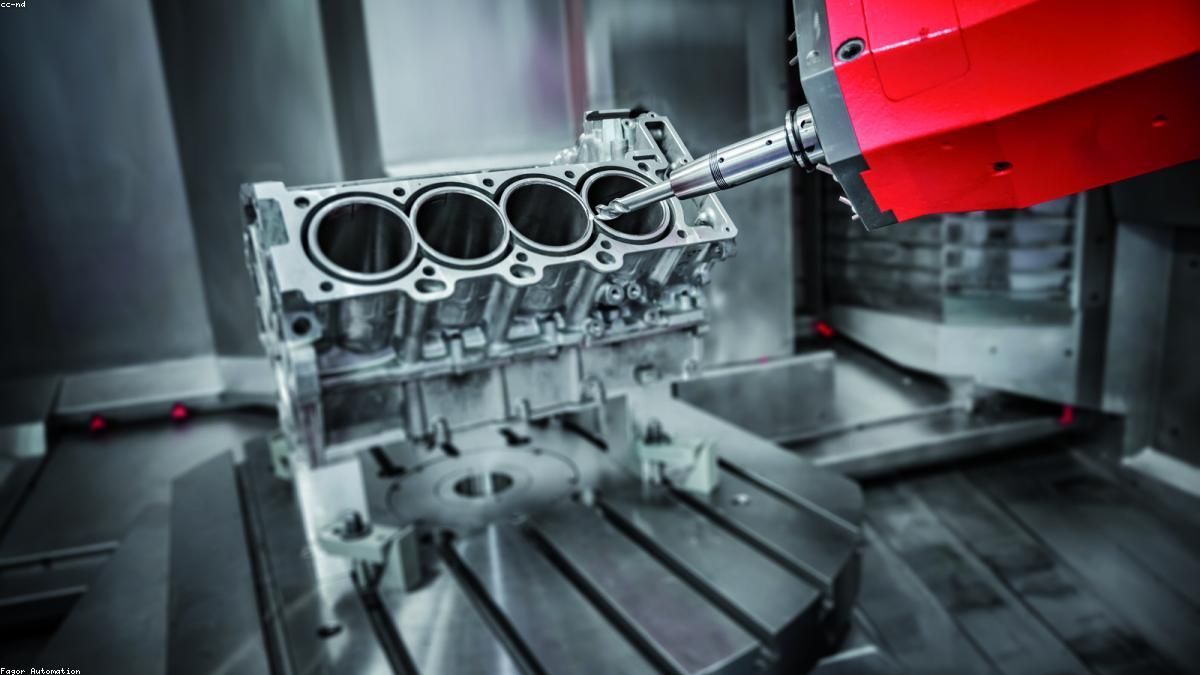
A prototype machined by a skilled operator can hold tight tolerances consistently because the operator compensates for tool wear and material variation. A CNC production run at volume operates within fixed process control limits — tool wear is monitored by statistical control, not by the feel of an experienced machinist.
This means tolerances that were achievable in prototyping may require process controls that were never set up in the production process. The risk is highest for small-batch prototype work done on a manual lathe or 5-axis CNC, transitioning to a multi-spindle or VMC production line.
Prevention: Define tolerances by function, not by habit. Only specify tight tolerances where they affect fit, function, or certification compliance. Work with your OEM partner to identify which tolerances drive process choices and cost.
Risk 3: Unvalidated suppliers and materials
A prototype may be built with a single batch of material from a known source. Production requires a supply chain — primary suppliers, backup suppliers, material incoming inspection, and traceability documentation.
For certification purposes, this matters enormously. CE and UIAA certification requires that materials meet the specifications in the technical file. If the production material is a different alloy lot, from a different supplier, with a slightly different composition, you may technically have a non-conforming product — even if it performs identically in physical tests.
Prevention: Qualify your primary and backup material suppliers during the pilot run, not after. Run all pilot production from qualified material and retain the material certificates in the technical file.
Risk 4: Missing or late certification
This is the most expensive risk because it has a fixed minimum timeline that cannot be accelerated by spending more money. A CE Type Examination for a Category III fall-protection product typically takes 3–5 months from sample submission to certificate issuance, assuming no failures.
Brands often schedule certification as a post-production activity — certify the final product before launch. This is backwards. A certification failure on the final production design requires design changes, which may require re-tooling, which delays production by months. The correct model is to certify the design (or a close approximation) before committing to volume production tooling.
Prevention: Start certification alongside prototyping, not after. Accept that the certified design may need minor adjustments and that these are far cheaper to make before tooling than after.
Risk 5: No pilot run before scale-up
A pilot run (typically 50–500 units) is the gate between prototype and production. It validates process stability, operator instructions, tooling performance, incoming material, and assembly procedures at a small scale before committing to full-volume tooling and capacity.
Skipping the pilot run is the most common shortcut brands take under time pressure, and it is consistently the most expensive. The cost of a one-month pilot run is small relative to a three-month production halt caused by a process problem discovered at scale.
Pilot run outputs to require from your OEM partner: - IQC (Incoming Quality Control) records for all materials used - IPQC (In-Process Quality Control) records showing process stability - Dimensional measurement report (CMM or manual, depending on tolerances) - Functional test results (load test, gate function test, etc.) - A pilot run assessment report with any open issues and their disposition
If your OEM partner cannot produce this documentation, that is itself a signal about production quality management.